

iPhone 11 Pro Vs OnePlus 10 Pro

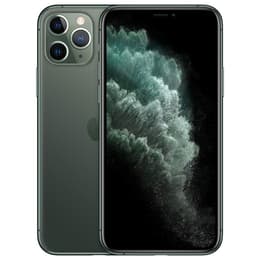
iPhone 11 Pro
iPhone 11 Pro
Starting at

Refurbished price:£151.00

Versus £639.00 new

See options
OnePlus 10 Pro
OnePlus 10 Pro
Starting at

Refurbished price:£391.00

Versus £769.39 new

See options

Ratings

The iPhone 11 Pro, released in September 2019, and the OnePlus 10 Pro, launched in January 2022, represent different generations and operating system philosophies in the smartphone market. While both were flagship devices at their respective launches, they offer distinct experiences shaped by their age, software ecosystems, display technologies, and camera approaches. This comparison aims to highlight the practical differences between these two devices.

Scores

Durability

The practical lifespan of a smartphone is heavily influenced by its release date and the manufacturer's software support policy.

  • Software Longevity: The iPhone 11 Pro, being an older device, has received several major iOS updates since its 2019 release. While still functional, its window for future major OS updates is narrowing. The OnePlus 10 Pro, released in 2022, benefits from a more recent launch, ensuring a longer period of major Android and security updates, which contributes to its extended practical usability.
  • Build Quality: Both devices feature premium construction with glass fronts and backs, and metal frames. The iPhone 11 Pro has an IP68 rating for water and dust resistance, offering protection against immersion. The OnePlus 10 Pro also carries an IP68 rating in some regions, providing similar protection.
  • Repairability: The iPhone 11 Pro received a repairability score of 6 out of 10 from iFixit, indicating that some components like the display and battery are prioritized for repair, though specialized tools are often required. The OnePlus 10 Pro's repairability is considered average, with accessible battery and screen components, but adhesive use can complicate repairs. Some durability tests have shown the OnePlus 10 Pro to be susceptible to bending under significant pressure.

Year of Release

2019

2022

Compatible with latest Update

Yes

Yes

OS

iOS

Android

Foldable

No

No

Performance

Performance is a key differentiator, reflecting the technological advancements between the two release dates.

  • Processing Power: The iPhone 11 Pro is equipped with a capable processor that handles everyday applications, web browsing, and moderate gaming smoothly. For its release year, it offered strong performance. The OnePlus 10 Pro, with its newer generation processor, delivers significantly more power, resulting in faster app loading, smoother multitasking, and a more fluid experience with graphically intensive games and demanding applications.
  • Multitasking and Storage: The iPhone 11 Pro typically comes with 4GB of RAM, which is sufficient for most daily tasks but can show limitations with numerous apps open simultaneously. The OnePlus 10 Pro offers 8GB or 12GB of RAM, providing greater headroom for heavy multitasking and ensuring applications remain active in the background for longer. Both devices offer various internal storage options, ranging from 64GB or 128GB up to 512GB, without expandable storage.
  • Battery Life and Charging: The iPhone 11 Pro features a 3046 mAh battery, providing a full day of use for many users. The OnePlus 10 Pro houses a larger 5000 mAh battery, which generally translates to longer usage times between charges. Additionally, the OnePlus 10 Pro supports significantly faster wired and wireless charging speeds compared to the iPhone 11 Pro.

Memory (GB)

4 GB

8 GB

Screen quality

The display experience varies considerably due to advancements in screen technology over time.

  • Display Technology and Size: The iPhone 11 Pro features a 5.8-inch Super Retina XDR OLED display, known for its deep blacks and vibrant colors. The OnePlus 10 Pro boasts a larger 6.7-inch LTPO2 Fluid AMOLED display, which also offers excellent color reproduction and contrast.
  • Resolution and Clarity: The iPhone 11 Pro has a resolution of 2436 x 1125 pixels, resulting in a sharp image. The OnePlus 10 Pro offers a higher resolution of 3216 x 1440 pixels, providing even finer detail on its larger screen.
  • Refresh Rate and Brightness: The iPhone 11 Pro has a standard 60Hz refresh rate. The OnePlus 10 Pro features an adaptive refresh rate that can dynamically scale from 1Hz to 120Hz, offering a smoother visual experience for scrolling and gaming while conserving power. Both displays offer high peak brightness, with the iPhone 11 Pro reaching up to 1200 nits for HDR content and the OnePlus 10 Pro reaching up to 1300 nits, ensuring good visibility in various lighting conditions.

Resolution

1125 x 2436

1440 x 3216

Screen type

Super Retina XDR OLED

LTPO2 Fluid AMOLED

Audiovisual

Both devices offer versatile camera systems, but with different strengths and capabilities.

  • Rear Camera System: The iPhone 11 Pro features a triple 12MP camera setup, including wide, ultrawide, and telephoto lenses. It introduced features like Night mode and Deep Fusion, known for consistent image quality and excellent video recording for its time. The OnePlus 10 Pro comes with a triple camera system comprising a 48MP main sensor, a 50MP ultrawide lens with a 150-degree field of view, and an 8MP telephoto lens, benefiting from Hasselblad color calibration for natural tones.
  • Photography Performance: The iPhone 11 Pro excels in producing balanced and natural-looking photos in various conditions, with its Night mode significantly improving low-light shots. The OnePlus 10 Pro, with its higher megapixel sensors and Hasselblad tuning, can capture detailed images with vibrant colors, particularly in good lighting. Its ultrawide lens offers a broader perspective.
  • Video Recording: The iPhone 11 Pro supports 4K video recording at up to 60 frames per second, with good stabilization. The OnePlus 10 Pro pushes video capabilities further, offering 8K video recording at 24 frames per second and 4K at up to 120 frames per second, providing more options for high-resolution and slow-motion content.
  • Front Camera: The iPhone 11 Pro has a 12MP front camera capable of 4K video recording. The OnePlus 10 Pro features a higher-resolution 32MP front camera.

Main camera

12 megapixels

48 megapixels

Front camera

12 megapixels

32 megapixels

Miscellaneous

Beyond core features, several practical elements contribute to the overall user experience.

  • Connectivity: The iPhone 11 Pro supports 4G LTE, Wi-Fi 6, and Bluetooth 5.0. The OnePlus 10 Pro offers more advanced connectivity, including 5G capabilities, along with newer Wi-Fi and Bluetooth standards, providing faster data speeds and improved wireless performance.
  • Ports and Biometrics: The iPhone 11 Pro uses Apple's proprietary Lightning port for charging and data transfer, and relies on Face ID for secure authentication. The OnePlus 10 Pro features a universal USB-C port and an in-display fingerprint sensor for biometric security, alongside face unlock.
  • Physical Design: The iPhone 11 Pro is a more compact device, weighing 188 grams with a 5.8-inch display. The OnePlus 10 Pro is larger and slightly heavier at 200.5 grams, accommodating its bigger 6.7-inch display and larger battery. Both devices feature premium glass and metal constructions.

Weight

188 g

201 g

Screen size (in)

5.8

6.7

Mobile network

4G

5G

SIM card

Physical SIM + eSIM

Physical SIM

Carrier compatibility

Unlocked

Unlocked

Connector

Lightning

USB-C

The iPhone 11 Pro and OnePlus 10 Pro cater to different user preferences, largely due to their generational gap and distinct operating system ecosystems.

Users often praise the iPhone 11 Pro for its consistent and reliable performance, the intuitive iOS ecosystem, and its compact form factor, which is increasingly rare in modern smartphones. Criticisms frequently point to its 60Hz display, the absence of 5G connectivity, and its older design compared to newer models. The OnePlus 10 Pro is generally lauded for its vibrant, high-refresh-rate display, its powerful performance suitable for demanding tasks, and its rapid charging capabilities. However, some users have noted inconsistencies in camera processing and there have been isolated concerns regarding its structural durability in extreme bend tests.

Users prioritizing a compact device, a deeply integrated software ecosystem, and consistent performance for everyday applications may find the iPhone 11 Pro well-suited to their needs. Conversely, individuals who value a large, smooth display, cutting-edge performance for gaming and heavy multitasking, faster charging, and access to 5G connectivity will likely lean towards the OnePlus 10 Pro. Both devices, when considered as quality-assured refurbished options, offer an eco-friendly alternative for consumers seeking reliable technology.

See all articles

Our recent comparisons