
Google Pixel 8 Vs Motorola Moto E13

Google Pixel 8
Google Pixel 8
Starting at

Refurbished price:£187.00

Versus £699.99 new

See options
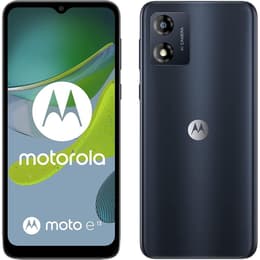
Motorola Moto E13
Motorola Moto E13
Starting at

Refurbished price:£74.00

Versus £83.99 new

See options

Ratings

The Google Pixel 8, released in October 2023, and the Motorola Moto E13, launched in January 2023, represent distinct segments within the Android smartphone market. While both operate on the Android platform, they cater to different user needs through their varied specifications and feature sets. The Pixel 8 emphasizes advanced camera capabilities, a premium display, and extensive software support, whereas the Moto E13 focuses on delivering essential smartphone functions with a more modest hardware profile.

Scores

Durability

The longevity and update commitment differ significantly between these two devices, impacting their practical lifespan.

  • Software Support: The Google Pixel 8 offers an industry-leading commitment of seven years of operating system and security updates from its release date. This ensures the device remains current and secure for an extended period. In contrast, the Motorola Moto E13 typically receives one major Android operating system update and approximately two years of security updates, providing a shorter window of official software support.
  • Build Quality: The Pixel 8 features a more robust construction with Gorilla Glass Victus on both the front and back, complemented by an aluminum frame, and boasts an IP68 rating for dust and water resistance. The Moto E13 utilizes a plastic back and frame, offering an IP52 rating for splash resistance, which provides protection against light water exposure but not full submersion.
  • Repairability: While specific repairability scores can vary, the Pixel 8's more complex internal design and premium materials may present different repair considerations compared to the Moto E13's simpler construction. The Pixel 8's extended software support also implies a longer expected functional life before hardware or software obsolescence becomes a significant factor.

Year of Release

2023

2023

Compatible with latest Update

Yes

No

OS

Android

Android

Foldable

No

No

Performance

The performance capabilities of the Google Pixel 8 and Motorola Moto E13 are tailored to different usage patterns, reflecting their respective hardware configurations.

  • Processing Power: The Pixel 8 is equipped with a current-generation processor designed to handle demanding applications, complex multitasking, and advanced on-device artificial intelligence features smoothly. Users can expect fluid navigation and efficient execution of intensive tasks. The Moto E13 features a processor suitable for everyday communication, web browsing, and light applications, providing a responsive experience for essential smartphone functions.
  • Multitasking and Storage: The Pixel 8 typically comes with 8GB of RAM, facilitating seamless transitions between multiple open applications and robust background process management. It offers internal storage options of 128GB or 256GB. The Moto E13 is available with 2GB, 4GB, or 8GB of RAM, with lower RAM configurations being more common, which means it is best suited for managing fewer applications simultaneously. It offers 64GB or 128GB of internal storage, with the added flexibility of expandable storage via a microSD card.
  • Real-world Responsiveness: For users who frequently engage in mobile gaming, video editing, or heavy productivity tasks, the Pixel 8 provides a more capable and consistent experience. For those whose primary needs involve messaging, social media, and streaming, the Moto E13 delivers adequate performance. Some Pixel 8 users have noted that while overall performance is strong, the device can experience some heating during prolonged intensive use, and gaming performance, while good, might not match some other high-end devices.

Memory (GB)

8 GB

2 GB

Screen quality

The visual experience offered by these two smartphones differs considerably due to their display technologies and specifications.

  • Display Technology and Resolution: The Google Pixel 8 features a 6.2-inch OLED display with a resolution of 1080 x 2400 pixels, providing deep blacks, vibrant colors, and sharp image clarity. The Motorola Moto E13 has a larger 6.5-inch IPS LCD panel with a resolution of 720 x 1600 pixels, offering a clear viewing experience for general use.
  • Brightness and Smoothness: The Pixel 8's display supports a 120Hz refresh rate, contributing to smoother scrolling and more fluid animations. It can achieve a peak brightness of up to 2000 nits, with typical brightness reaching 1400 nits and up to 1600 nits in full-screen mode when the 120Hz refresh rate is active, ensuring good visibility even in bright outdoor conditions. The Moto E13 operates at a standard 60Hz refresh rate and offers adaptive brightness, with typical brightness levels around 400 nits, which is suitable for indoor and moderate outdoor environments.
  • Viewing Experience: Users prioritizing a highly immersive and visually rich experience for media consumption, detailed photo viewing, or gaming will find the Pixel 8's OLED display with its higher resolution and refresh rate more appealing. The Moto E13 provides a functional display for everyday tasks and casual content viewing.

Resolution

1080 x 2400

720 x 1600

Screen type

OLED

IPS LCD

Audiovisual

The camera systems on the Google Pixel 8 and Motorola Moto E13 are designed for different levels of photographic ambition and capability.

  • Rear Camera System: The Pixel 8 features a dual-camera setup on the rear, including a 50 MP wide-angle main sensor with optical image stabilization (OIS) and a 12 MP ultrawide sensor with autofocus. This configuration, combined with Google's computational photography, excels in capturing detailed images, performing well in various lighting conditions, including low light, and offering advanced features like Macro Focus. The Moto E13 is equipped with a single 13 MP main camera on the rear, suitable for basic photography in well-lit environments.
  • Front Camera and Video: For selfies and video calls, the Pixel 8 includes a 10.5 MP front-facing camera. Both front and rear cameras on the Pixel 8 are capable of recording video at 4K resolution at 60 frames per second, with features like HDR video and improved stabilization. The Moto E13 has a 5 MP front camera, and both its front and rear cameras support video recording up to 1080p at 30 frames per second.
  • Photography Features: The Pixel 8 offers a comprehensive suite of photography features, including advanced AI-driven enhancements for photos and videos. The Moto E13 provides essential camera functions such as digital zoom, auto flash, and face detection, catering to straightforward point-and-shoot needs.

Main camera

50 megapixels

13 megapixels

Front camera

10.5 megapixels

5 megapixels

Miscellaneous

Beyond core performance and display, several practical elements differentiate the user experience of these two devices.

  • Connectivity and Ports: The Google Pixel 8 supports advanced connectivity standards, including 5G and Wi-Fi 7, along with Bluetooth 5.3 and NFC for contactless payments. It features a USB-C 3.2 port for data transfer and charging, but it does not include a 3.5mm headphone jack. The Motorola Moto E13 offers 4G connectivity, Wi-Fi 5 (dual-band), and Bluetooth 5.0. It includes both a USB-C 2.0 port and a traditional 3.5mm headphone jack, providing more versatile audio options.
  • Security and Biometrics: The Pixel 8 incorporates an optical under-display fingerprint sensor for secure unlocking, alongside facial recognition. The Moto E13 relies on basic facial recognition for unlocking and does not feature a fingerprint sensor.
  • Design and Handling: The Pixel 8 has dimensions of 150.5 x 70.8 x 8.9 mm and weighs 187 grams, offering a compact and premium feel with its glass and aluminum construction. The Moto E13 is slightly larger at 164.2 x 75 x 8.5 mm but lighter at 179.5 grams, with a plastic build that contributes to its lighter feel. The Pixel 8 features stereo speakers, while the Moto E13 has a mono speaker.

Weight

187 g

181 g

Screen size (in)

6.2

6.5

Mobile network

5G

4G

SIM card

Physical SIM + eSIM

Dual Physical SIM

Carrier compatibility

Unlocked

Unlocked

The Google Pixel 8 and Motorola Moto E13 cater to distinct user needs, with each device excelling in different areas. User feedback for the Pixel 8 frequently praises its exceptional camera capabilities, the smooth and intuitive Android experience, and the commitment to long-term software support. However, some users have noted concerns regarding battery efficiency, with performance described as adequate rather than outstanding, and occasional heating during intensive tasks or gaming.

Conversely, the Motorola Moto E13 is often commended for its practical battery life and the inclusion of a 3.5mm headphone jack, making it a functional choice for essential communication and media consumption. Criticisms typically revolve around its more basic performance, lower resolution display, and limited camera features, alongside a shorter software update cycle.

Users prioritizing advanced photography, a vibrant and fluid display, and a device with extensive software longevity will find the Google Pixel 8 well-suited to their requirements. It is ideal for those who engage with demanding applications and appreciate cutting-edge features. For individuals seeking a straightforward smartphone for daily communication, light browsing, and media, where a headphone jack is a priority and high-end specifications are not essential, the Motorola Moto E13 presents a practical option. Both devices are available as quality-assured refurbished options, offering an eco-friendly alternative for consumers.


See all articles

Our recent comparisons