

Google Pixel 7A Vs Google Pixel 8

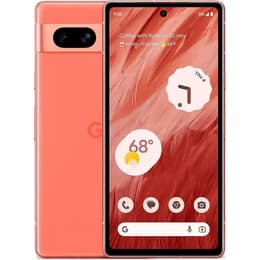
Google Pixel 7A
Google Pixel 7A
Starting at

Refurbished price:£128.00

Versus £649.99 new

See options
Google Pixel 8
Google Pixel 8
Starting at

Refurbished price:£187.00

Versus £699.99 new

See options

Ratings

The Google Pixel 7a, released in May 2023, and the Google Pixel 8, launched in October 2023, are both Android smartphones from Google's Pixel line. While sharing a similar design philosophy and the Android operating system, the Pixel 8 introduces advancements in its internal components, display technology, and software support, building upon the foundation set by its predecessor.

Scores

Durability

When considering the long-term usability of these devices, their release timelines and software support policies are key factors. The Pixel 7a, released in May 2023, benefits from Google's commitment to software updates, while the Pixel 8, launched a few months later in October 2023, offers an extended support period.

  • Software Longevity: The Pixel 7a is expected to receive OS updates until at least May 2026 and security updates until May 2028, providing a solid period of support. In contrast, the Pixel 8 boasts an impressive commitment of seven years of OS and security updates, extending its support until at least October 2030. This longer update cycle means the Pixel 8 will remain current with the latest Android features and security patches for a significantly longer duration.
  • Repairability: Both devices demonstrate a reasonable degree of repairability. The Pixel 7a initially scored 4/10 on the iFixit repairability scale, later uprated to 5/10 after Google provided service manuals. The Pixel 8 generally receives higher repairability scores, with some assessments placing it at 7/10, indicating that self-repairs are possible for those with some technical skill. Google's provision of service manuals and OEM replacement parts for both models supports their practical lifespan.
  • Expected Practical Lifespan: For users prioritizing the longest possible software support and access to the newest features, the Pixel 8 offers a considerably extended practical lifespan due to its seven-year update promise. For those content with a still substantial five years of security updates, the Pixel 7a remains a viable option.

Year of Release

2023

2023

Compatible with latest Update

Yes

Yes

OS

Android

Android

Foldable

No

No

Performance

The performance of both Pixel phones is driven by Google's custom-designed processors, with the Pixel 8 featuring a newer generation chip. This translates to differences in how they handle demanding applications, multitasking, and overall system responsiveness.

  • Processor Capabilities: The Pixel 7a is equipped with a processor that capably handles everyday tasks, ensuring smooth app loading and general navigation. The Pixel 8, featuring a newer generation processor, offers improved performance, particularly noticeable in more demanding applications and gaming. This newer chip also contributes to better power efficiency and heat management.
  • Battery Behavior: The Pixel 7a houses a 4385 mAh battery, which for some users may require more frequent charging during periods of heavy use. The Pixel 8, with a slightly larger 4575 mAh battery and a more efficient processor, generally offers better battery endurance, often lasting a full day even with heavy usage.
  • System Responsiveness and Storage: Both devices come with 8GB of RAM, providing a solid foundation for multitasking. The Pixel 7a is typically available with 128GB of storage, while the Pixel 8 offers options for both 128GB and 256GB, catering to users with larger storage needs.

Memory (GB)

8 GB

8 GB

Screen quality

The visual experience on both Pixel phones is delivered through OLED technology, but the Pixel 8 introduces several enhancements that contribute to a more refined display.

  • Display Technology and Clarity: Both the Pixel 7a and Pixel 8 feature OLED displays, known for their deep blacks and vibrant colors. Both offer a Full HD+ resolution (2400x1080 pixels), ensuring sharp and clear visuals for everyday viewing.
  • Brightness and Refresh Rate: The Pixel 7a has a 90Hz refresh rate, providing a smooth scrolling experience. Its display reaches around 1000 nits of peak brightness. The Pixel 8 elevates this with an adaptive 60-120Hz refresh rate, offering even smoother motion, and significantly higher brightness levels, reaching up to 1400 nits in high brightness mode and a peak of 2000 nits for HDR content. This makes the Pixel 8's screen noticeably more visible in bright outdoor conditions.
  • Screen Size and Protection: The Pixel 7a features a 6.1-inch display protected by Corning Gorilla Glass 3. The Pixel 8 has a slightly larger 6.2-inch display with slimmer bezels, making it feel more expansive despite the phone's compact size. It is protected by the more advanced Corning Gorilla Glass Victus, offering enhanced durability.

Resolution

1080 x 2400

1080 x 2400

Screen type

OLED

OLED

Audiovisual

Google Pixel phones are recognized for their camera capabilities, and both the Pixel 7a and Pixel 8 deliver strong photographic performance, though the Pixel 8 introduces hardware and software refinements.

  • Camera System Capabilities: The Pixel 7a features a 64MP main camera and a 13MP ultrawide lens. The Pixel 8 comes with a 50MP main sensor and a 12MP ultrawide lens. While the Pixel 7a has a higher megapixel count on its main sensor, the Pixel 8's 50MP main sensor is physically larger with a wider aperture, allowing it to capture more light and produce larger individual pixels. The Pixel 8's ultrawide camera also offers a wider field of view and autofocus, enabling a macro mode that the Pixel 7a lacks.
  • Photography Performance: Both phones excel in computational photography, a hallmark of the Pixel line, delivering excellent color and detail. The Pixel 8's larger sensor and wider aperture contribute to improved low-light performance and dynamic range. The newer processor in the Pixel 8 also enables advanced AI-powered editing features not available on the Pixel 7a.
  • Video and Audio: Both devices are capable of recording 4K video at 30fps and 60fps with their main cameras. The Pixel 8 generally offers a more refined video experience due to its improved hardware and processing. Both phones feature stereo speakers for media consumption.

Main camera

64 megapixels

50 megapixels

Front camera

13 megapixels

10.5 megapixels

Miscellaneous

Beyond the core features, several practical elements differentiate the Pixel 7a and Pixel 8, impacting daily usability and overall device experience.

  • Connectivity and Ports: Both devices support 5G connectivity, Wi-Fi 6E, and Bluetooth 5.3, ensuring modern wireless communication standards. They both utilize a USB-C port for charging and data transfer.
  • Biometric Security and Durability: Both phones include an in-display fingerprint sensor for secure unlocking. The Pixel 8 further enhances security with Face Unlock capabilities for high-security applications. In terms of physical durability, the Pixel 7a carries an IP67 rating for dust and water resistance, meaning it can withstand immersion in up to 1 meter of water for 30 minutes. The Pixel 8 steps up to an IP68 rating, offering protection in up to 1.5 meters of water for the same duration.
  • Design and Handling: The Pixel 7a measures 152 x 72.9 x 9 mm and weighs 193.5g, featuring a back made of recycled plastics. The Pixel 8 is slightly more compact and lighter at 150.5 x 70.8 x 8.9 mm and 187g, with a glass back and more refined, rounded corners. This makes the Pixel 8 feel slightly more premium and potentially more comfortable for one-handed use.

Weight

193 g

187 g

Screen size (in)

6.1

6.2

Mobile network

5G

5G

SIM card

Physical SIM + eSIM

Physical SIM + eSIM

Carrier compatibility

Unlocked

Unlocked

The Google Pixel 7a and Pixel 8 both offer a strong Android experience, each catering to slightly different user priorities. User feedback often praises the Pixel 7a for its excellent camera performance and overall value, making it a compelling choice for those seeking a capable smartphone without needing the absolute latest features.

Conversely, the Pixel 8 frequently receives acclaim for its significantly brighter and smoother display, improved battery endurance, and the promise of an extended software support period. Common criticisms for the Pixel 7a often point to its battery life under heavy use and slower charging speeds. For the Pixel 8, some users note that while the camera hardware is improved, the core photographic experience is already strong across the Pixel line, and the design changes are subtle.

Users prioritizing long-term software support, a more vibrant and fluid display, and slightly better battery life will find the Pixel 8 well-suited to their needs. Its enhanced durability and more refined build also contribute to a premium feel. On the other hand, users who value a highly capable camera and a solid Android experience, and who are comfortable with a slightly shorter software update window, may find the Pixel 7a to be a practical choice. Both devices represent quality options within the Pixel ecosystem, and considering a quality-assured refurbished option for either model can be an eco-friendly alternative for making an informed choice.


See all articles

Our recent comparisons