

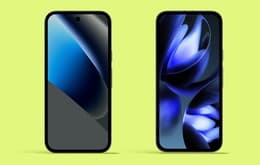
Google Pixel 8 Vs Google Pixel 9

Google Pixel 8
Google Pixel 8
Starting at

Refurbished price:£185.99

Versus £699.99 new

See options
Google Pixel 9
Google Pixel 9
Starting at

Refurbished price:£330.00

Versus £892.46 new

See options

Ratings

The Google Pixel 8, released in October 2023, and the Google Pixel 9, launched in August 2024, represent successive generations of Google's smartphone line, both operating on the Android platform. While they maintain a consistent software experience, the Pixel 9 introduces updates to its internal components, camera system, and overall build, offering a refined experience over its predecessor. Both devices are designed to deliver a clean Android experience with a strong emphasis on computational photography and artificial intelligence features.

Scores

Durability

The longevity of a smartphone is influenced by its build quality and the duration of software support it receives. Both the Pixel 8 and Pixel 9 offer substantial commitments from Google regarding updates, aiming for an extended practical lifespan.

  • Release Timeline: The Pixel 8 was released in October 2023, while the Pixel 9 followed in August 2024. This means the Pixel 9 benefits from a slightly newer hardware foundation and a later starting point for its software support cycle.
  • Software Longevity: Both models are part of Google's commitment to providing seven years of software support, encompassing Android OS upgrades, security updates, and Feature Drops. The Pixel 8 is supported until at least October 2030, and the Pixel 9 until at least August 2031, offering users a long period of up-to-date functionality and security.
  • Durability Features: The Pixel 8 features Gorilla Glass Victus on its front and back, along with an aluminum frame and an IP68 rating for dust and water resistance. The Pixel 9 enhances this with Gorilla Glass Victus 2 on both the front and back, maintaining the IP68 rating. Google indicates the Pixel 9 series is designed to be more durable than its predecessor, with improved performance in drop tests.

Year of Release

2023

2024

Compatible with latest Update

Yes

Yes

OS

Android

Android

Foldable

No

No

Performance

Performance in daily use is a key consideration, with both Pixel models offering capable hardware for a smooth user experience. The newer generation brings incremental advancements in processing power and efficiency.

  • Processing Capabilities: The Pixel 8 is powered by the Google Tensor G3, which handles demanding applications and multitasking effectively. The Pixel 9 features the newer Google Tensor G4, providing enhanced performance and improved power efficiency. This translates to faster app loading and smoother operation, particularly with new on-device AI features.
  • Multitasking and Storage: The Pixel 8 typically comes with 8GB of RAM, suitable for most multitasking needs. The Pixel 9 increases this to 12GB of RAM, which can provide a more fluid experience when running numerous applications simultaneously or handling memory-intensive tasks. Both models offer storage options of 128GB and 256GB, with the Pixel 9 also commonly available in 256GB.
  • Battery Behavior: The Pixel 8 is equipped with a 4575mAh battery, generally providing a full day of mixed usage for many users, though heavy users might require an afternoon charge. The Pixel 9 includes a larger 4700mAh battery. Combined with the more efficient Tensor G4 processor, the Pixel 9 generally offers improved battery longevity, with many users reporting it comfortably lasts through a full day, even with substantial use.

Memory (GB)

8 GB

12 GB

Screen quality

The display is a primary interface for smartphone interaction, and both Pixel devices offer high-quality viewing experiences with some notable distinctions.

  • Display Technology and Clarity: Both the Pixel 8 and Pixel 9 feature OLED displays, known for their deep blacks and vibrant colors. The Pixel 8 has a 6.2-inch display with a resolution of 1080x2400 pixels. The Pixel 9 has a slightly larger 6.3-inch display (some sources indicate 6.24 inches) with a resolution of 1080x2424 pixels, offering comparable clarity.
  • Brightness and Outdoor Visibility: The Pixel 8's display can reach up to 1400 nits in high brightness mode and a peak of 2000 nits, providing good visibility in various lighting conditions. The Pixel 9's display offers increased brightness, with a peak of 1800 nits (some reports suggest up to 2700 nits peak), enhancing outdoor readability and HDR content viewing.
  • Smoothness and Responsiveness: Both models feature a 120Hz adaptive refresh rate, which dynamically adjusts between 60Hz and 120Hz to provide smooth scrolling and animations while conserving battery life. This ensures a fluid visual experience during everyday use and gaming.

Resolution

1080 x 2400

1080 x 2424

Screen type

OLED

OLED

Audiovisual

Google Pixel phones are recognized for their camera capabilities, and both the Pixel 8 and Pixel 9 continue this tradition with advanced computational photography and hardware enhancements.

  • Rear Camera System: The Pixel 8 features a dual-camera setup with a 50MP main sensor and a 12MP ultrawide sensor with autofocus and Macro Focus. The Pixel 9 also has a dual-camera system, retaining the 50MP main sensor but upgrading the ultrawide to a 48MP sensor with autofocus and Macro Focus, offering improved light gathering and detail. Both support features like Night Sight, Astrophotography, and Super Res Zoom (up to 8x).
  • Front Camera and Video: The Pixel 8 includes a 10.5MP front camera without autofocus. The Pixel 9 upgrades its 10.5MP front camera to include autofocus, leading to sharper selfies. Both devices are capable of 4K video recording at 60fps. The Pixel 9 introduces new video features and enhancements like 10-bit HDR video and improved stabilization.
  • Computational Photography Features: Both phones leverage Google's advanced AI for features like Real Tone for accurate skin representation, Face Unblur, and Audio Magic Eraser. The Pixel 9 introduces new AI-powered camera features such as 'Add Me' and an updated Panorama mode with Night Sight integration.

Main camera

50 megapixels

50 megapixels

Front camera

10.5 megapixels

10.5 megapixels

Miscellaneous

Beyond core performance and camera, several practical elements contribute to the overall user experience of these devices.

  • Connectivity and Ports: Both the Pixel 8 and Pixel 9 support modern connectivity standards, including 5G, Wi-Fi (Wi-Fi 7 on Pixel 8, Wi-Fi 6E/7 on Pixel 9), and Bluetooth 5.3. They both utilize a USB Type-C port for charging and data transfer, and neither includes a traditional 3.5mm headphone jack.
  • Biometric Security: The Pixel 8 uses an optical under-display fingerprint sensor for secure unlocking. The Pixel 9 upgrades to an ultrasonic under-display fingerprint sensor, which is generally considered faster and more accurate, particularly in various conditions. Both also offer secure facial recognition.
  • Design and Handling: The Pixel 8 features a design with contoured edges, a satin metal finish, and a polished glass back, weighing 187 grams. The Pixel 9 adopts a slightly blockier design with a redesigned camera module and a weight of 198 grams. Its dimensions are 152.8 x 72.0 x 8.5 mm, compared to the Pixel 8's 150.5 x 70.8 x 8.9 mm, making the Pixel 9 slightly taller and wider but thinner.

Weight

187 g

198 g

Screen size (in)

6.2

6.3

Mobile network

5G

5G

SIM card

Physical SIM + eSIM

Physical SIM + eSIM

Carrier compatibility

Unlocked

Unlocked

User feedback for the Google Pixel 8 often highlights its excellent camera performance, particularly its computational photography features, and the long-term software support commitment. Some users have noted that while battery life is adequate, it may not be a standout feature for heavy usage. The optical fingerprint sensor, while functional, has sometimes been a point of discussion regarding its speed compared to other technologies.

For the Google Pixel 9, common praise points include its significantly improved battery life, the enhanced durability with Gorilla Glass Victus 2, and the upgraded camera system, especially the higher-resolution ultrawide lens and autofocus on the selfie camera. The transition to an ultrasonic fingerprint sensor is also generally well-received for its responsiveness. Criticisms are less prevalent but may include its slightly increased weight and a design that some find less ergonomic than its predecessor.

Users prioritizing a compact device with a strong camera and extensive software support may find the Pixel 8 well-suited to their needs. Those who value the latest performance enhancements, a more robust build, improved battery longevity, and a more versatile camera system, particularly for ultrawide shots and selfies, may lean toward the Pixel 9. Both devices offer a compelling Android experience, and choosing between them often comes down to the importance placed on these specific generational improvements. For consumers considering a sustainable choice, both models are available as quality-assured refurbished options, extending their lifecycle and reducing electronic waste.

See all articles

Our recent comparisons