
Compare models
Google Pixel 7 Vs iPhone Air
- 1-year minimum warranty
- Free delivery on all items
- Free 30-day returns
Differences at a glance
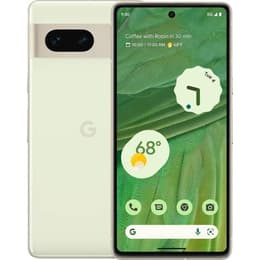
The Google Pixel 7 (2022) and the iPhone Air (2025) represent two different approaches to modern smartphone design, platform architecture, and everyday functionality. While the Pixel 7 focuses on an accessible, balanced software experience powered by Google, the iPhone Air emphasizes an ultra-slim profile and advanced hardware integration within the iOS ecosystem. These distinct design philosophies result in varying user experiences across daily tasks, software interaction, and physical handling.
Available Models
Colour
Storage (GB)
Scores
Durability
Both devices offer robust long-term support schedules, though their release years and ecosystem update frameworks differ significantly.
- Release timeline and age: The Pixel 7 launched in late 2022, whereas the iPhone Air arrived in late 2025, placing them in different generational brackets for hardware aging.
- OS support duration: Google provides several years of major software upgrades and security patches from launch, while Apple typically supports devices with iOS updates for five to seven years, giving the newer iPhone Air a longer remaining support window.
- Expected practical lifespan: Both models utilize durable frame construction and high-grade glass protection, though users seeking extended software support timelines will find the newer iPhone Air naturally suited for prolonged daily deployment.
Year of Release
2022
2025
Compatible with latest Update
Yes
Yes
OS
Android
iOS
Foldable
No
No
Performance
Performance characteristics vary due to generational advancements in internal components and memory allocation between the two devices.
- Storage options: The Pixel 7 typically starts at 128 GB and 256 GB capacities, while the iPhone Air begins at 256 GB and scales higher for extensive local media storage.
- System responsiveness: Both devices handle daily multitasking, web browsing, and demanding applications smoothly, with modern processors ensuring rapid app loading times and fluid user interface transitions.
- Battery behavior: The Pixel 7 relies on a conventional battery capacity that handles standard daily workflows reliably, whereas the iPhone Air balances its ultra-thin chassis with energy-efficient processing to manage typical daily use before requiring a recharge.
Screen quality
Visual output and display technologies offer vibrant viewing experiences tailored to media consumption and outdoor readability.
- Display technology: Both models feature advanced OLED panels that deliver deep contrast levels, rich colors, and wide viewing angles for daily use.
- Refresh rate and smoothness: The iPhone Air utilizes a high refresh rate up to 120 Hz for smooth scrolling and animations, while the Pixel 7 features a responsive 90 Hz display panel.
- Brightness and clarity: Both displays offer high peak brightness metrics for clear outdoor visibility under direct sunlight, paired with sharp resolutions suitable for reading and video playback.
Resolution
1080 x 2400
2736x1260
Screen type
AMOLED
Super Retina XDR
Audiovisual
Imaging capabilities and multimedia features reflect distinct optical configurations and audio playback setups.
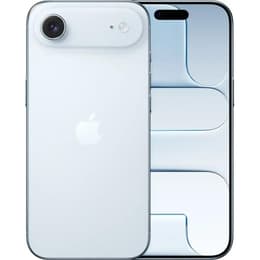
- Camera system: The Pixel 7 features a dual-lens rear camera setup optimized by computational photography software, while the iPhone Air employs a single high-resolution main camera system integrated into a streamlined chassis bump.
- Video and low-light performance: Both devices capture detailed 4K video footage and maintain clarity in dim environments through advanced image stabilization and sensor processing.
- Audio output: The Pixel 7 incorporates balanced stereo speakers for media playback, whereas the iPhone Air relies on a simplified single-speaker configuration alongside clear microphone arrays for calls.
Main camera
50 megapixels
48 megapixels
Front camera
10.8 megapixels
18 megapixels
Miscellaneous
Physical dimensions and connectivity standards shape how each device fits into travel, professional, and student routines.
- Build and dimensions: The iPhone Air stands out with its exceptionally thin profile and lightweight titanium-infused frame, whereas the Pixel 7 features a slightly thicker, contoured glass-and-aluminum build with a signature camera bar.
- Connectivity: Both models support 5G cellular networks, modern Wi-Fi standards, and Bluetooth pairing for reliable wireless accessory integration.
- Biometrics and ports: The Pixel 7 offers both an under-display optical fingerprint sensor and facial recognition, whereas the iPhone Air relies exclusively on advanced facial recognition alongside a universal USB-C charging port.
Weight
197 g
165 g
Screen size (in)
6.3
6.5
Mobile network
5G
5G
SIM card
Physical SIM + eSIM
eSIM
Carrier compatibility
Unlocked
Unlocked
What the community thinks
Users prioritizing a lightweight, ultra-thin physical profile and seamless integration into the Apple ecosystem often lean toward the iPhone Air. Conversely, users who prefer a traditional form factor, dual-camera versatility, and the Android operating environment frequently find the Google Pixel 7 well-suited to their daily routines. Both devices present distinct advantages depending on personal platform preferences and handling requirements.
For consumers seeking a quality-assured refurbished option, exploring eco-friendly alternatives on Back Market enables buyers to make sustainable choices without compromising on performance or reliability.