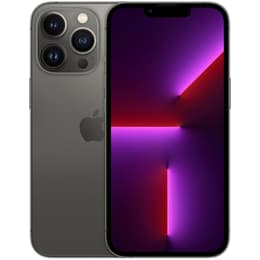

Galaxy S10+ Vs iPhone 13 Pro

Galaxy S10+
Galaxy S10+
Starting at

Refurbished price:£115.32

Versus £330.00 new

See options
iPhone 13 Pro
iPhone 13 Pro
Starting at

Refurbished price:£232.00

Versus £949.00 new

See options

Ratings

The Samsung Galaxy S10 Plus, released in March 2019, and the iPhone 13 Pro, launched in September 2021, represent different generations of flagship smartphones. While both devices offer premium experiences, the iPhone 13 Pro benefits from a more recent release, bringing advancements in processing power, camera capabilities, and display technology. The Galaxy S10 Plus runs on the Android operating system with Samsung's One UI, offering a customizable experience, whereas the iPhone 13 Pro operates on Apple's iOS, known for its integrated ecosystem and consistent user interface.

Scores

Durability

When considering the practical lifespan of these devices, several factors come into play, including their release timelines, software support, and repairability.

  • Release Timeline and Age: The Galaxy S10 Plus was released in March 2019, making it an older device compared to the iPhone 13 Pro, which launched in September 2021. This age difference directly impacts the remaining period of official software support and overall hardware longevity.
  • OS Support Duration: The iPhone 13 Pro is expected to receive major iOS updates until at least 2027, with security updates potentially extending until 2031. The Galaxy S10 Plus, having been released earlier, has received its last major Android update (Android 12) and will continue to receive security updates for a more limited period. Users prioritizing the latest software features and prolonged security patches will find the iPhone 13 Pro offers a longer support window.
  • Repairability: iFixit awarded the Galaxy S10 Plus a repairability score of 3 out of 10, indicating it is challenging to repair due to factors like strong adhesive and an internal structure that requires extensive disassembly for basic repairs. The iPhone 13 Pro received a score of 5 out of 10, with display and battery replacements being prioritized in its design, though some repairs are complicated by software limitations and multiple screw types.

Year of Release

2019

2021

Compatible with latest Update

No

Yes

OS

Android

iOS

Foldable

No

No

Performance

The performance of a smartphone is crucial for daily operations, from launching applications to handling demanding tasks. Both devices offer capable performance for their respective generations.

  • Storage Options: The Galaxy S10 Plus was available with internal storage options up to 1TB, alongside 128GB and 512GB variants, and included a microSD card slot for expandable storage. The iPhone 13 Pro offers internal storage configurations of 128GB, 256GB, 512GB, and a 1TB option, but does not support expandable storage.
  • Battery Behavior: The Galaxy S10 Plus features a 4100 mAh battery, which in real-world tests, could last a full day of intense use for many users, with some reports indicating over 12 hours of usage. The iPhone 13 Pro, with a 3095 mAh battery, demonstrated impressive endurance in tests, often lasting over 8 hours of screen-on time in simulated real-world usage, benefiting from its efficient hardware and adaptive refresh rate display.
  • System Responsiveness: The iPhone 13 Pro, with its more advanced internal components, delivers a highly responsive user experience, handling demanding applications and multitasking smoothly. The Galaxy S10 Plus, while still capable for everyday tasks, may exhibit slower loading times and less fluid performance in graphically intensive applications compared to the newer iPhone.

Memory (GB)

8 GB

6 GB

Screen quality

The display is a primary interface for smartphone interaction, and both models offer high-quality viewing experiences with distinct characteristics.

  • Display Technology: The Galaxy S10 Plus features a 6.4-inch Dynamic AMOLED display, known for its vibrant colors, deep blacks, and high contrast. The iPhone 13 Pro comes with a 6.1-inch Super Retina XDR OLED display, also offering excellent color accuracy and contrast.
  • Resolution and Clarity: The S10 Plus has a resolution of 3040 x 1440 pixels at 522 ppi, providing a very sharp image. The iPhone 13 Pro has a resolution of 2532 x 1170 pixels at 460 ppi, delivering crisp visuals.
  • Brightness and Refresh Rate: The iPhone 13 Pro's display can reach a typical brightness of 1000 nits and a peak HDR brightness of 1200 nits, ensuring clear visibility even in bright outdoor environments. It also features ProMotion technology, offering an adaptive refresh rate that can dynamically adjust from 10Hz to 120Hz for smoother scrolling and more responsive interactions. The Galaxy S10 Plus has a standard 60Hz refresh rate and a lower peak brightness compared to the iPhone 13 Pro.

Resolution

1440 x 3040

1170 x 2532

Screen type

Dynamic AMOLED

Super Retina XDR OLED

Audiovisual

Both smartphones offer advanced camera systems designed to capture high-quality photos and videos, though with different strengths and features.

  • Camera System Capabilities: The Galaxy S10 Plus features a triple rear camera setup, including a 12MP wide-angle lens with variable aperture, a 12MP telephoto lens with 2x optical zoom, and a 16MP ultra-wide lens. It also has a dual front camera system. The iPhone 13 Pro boasts a Pro 12MP camera system with Telephoto, Wide, and Ultra Wide cameras, offering 3x optical zoom in, 2x optical zoom out, and a 6x optical zoom range.
  • Low-Light and Everyday Photography: The iPhone 13 Pro offers significant improvements in low-light performance across all its cameras, with a larger sensor on the wide camera and Night mode available on all lenses. The Galaxy S10 Plus also includes a Night mode, which enhances brightness and detail in low-light images, particularly for the ultra-wide lens after software updates.
  • Video Recording Quality: The iPhone 13 Pro introduced features like Cinematic mode for depth-of-field transitions and Apple ProRes video recording for higher color fidelity and lower compression. It supports 4K video recording at various frame rates, including 60fps, with improved low-light video capabilities. The Galaxy S10 Plus can record 4K video at 60fps and offers super slow-motion video, with its front camera also capable of 4K recording.

Main camera

12 megapixels

12 megapixels

Front camera

10 megapixels

12 megapixels

Miscellaneous

Beyond core performance and display, several practical elements contribute to the overall user experience of these devices.

  • Connectivity Options: The Galaxy S10 Plus supports Wi-Fi 802.11 a/b/g/n/ac/ax (Wi-Fi 6), dual-band, and Bluetooth. The iPhone 13 Pro also supports Wi-Fi 6 and 5G connectivity, offering faster wireless data speeds where available.
  • Port Types and Sensors: The Galaxy S10 Plus includes a 3.5mm headphone jack and a USB-C port for charging and data transfer. It features an ultrasonic in-screen fingerprint sensor for biometric authentication. The iPhone 13 Pro uses a Lightning port and relies on Face ID for secure facial recognition.
  • Weight and Dimensions: The Galaxy S10 Plus measures 157.6 x 74.1 x 7.8 mm and weighs 175g (or 198g for ceramic models). The iPhone 13 Pro is slightly more compact at 146.7 x 71.5 x 7.65 mm and weighs 204g. The S10 Plus is lighter despite its larger screen size.

Weight

175 g

203 g

Screen size (in)

6.4

6.1

Mobile network

4G

5G

SIM card

Dual Physical SIM

Physical SIM + eSIM

Carrier compatibility

Unlocked

Unlocked

The Samsung Galaxy S10 Plus and iPhone 13 Pro cater to users with varying priorities. Users often praise the Galaxy S10 Plus for its expansive, vibrant display, the inclusion of a headphone jack, and expandable storage, which offers flexibility for media enthusiasts. Some users, however, noted that its battery life, while solid, was not always exceptional for heavy usage, and its software update cycle has concluded. The iPhone 13 Pro is frequently lauded for its powerful performance, advanced camera system with features like Cinematic Mode, and the smooth, adaptive refresh rate display. Common user feedback also highlights its robust software support longevity and strong ecosystem integration. Some users have expressed concerns about its repairability for certain components and the absence of a headphone jack or expandable storage.

Users prioritizing a larger display, traditional headphone jack, and the flexibility of expandable storage might find the Galaxy S10 Plus aligns well with their needs. Conversely, those who value a longer software support window, cutting-edge camera technology, superior processing power for demanding applications, and a highly fluid display experience will likely lean towards the iPhone 13 Pro. Both devices offer distinct advantages, and choosing between them depends on individual preferences for operating system, specific features, and long-term usage expectations. For those seeking a quality-assured refurbished option, both models are available, providing an eco-friendly alternative to new purchases.


See all articles

Our recent comparisons