
Google Pixel 8 Vs Motorola Moto G14

Google Pixel 8
Google Pixel 8
Starting at

Refurbished price:£185.99

Versus £699.99 new

See options
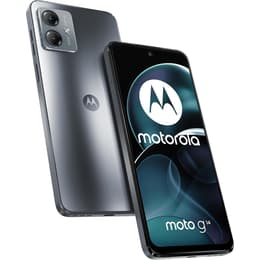
Motorola Moto G14
Motorola Moto G14
Starting at

Refurbished price:£91.24

Versus £139.99 new

See options

Ratings

The Google Pixel 8, released in October 2023, and the Motorola Moto G14, launched in August 2023, are both smartphones running on the Android operating system. While both devices offer a modern smartphone experience, they cater to different user expectations, primarily differing in their processing power, display technology, and camera capabilities.

Scores

Durability

When considering the longevity of these devices, several factors come into play, including their release timelines, software support, and physical durability features.

  • Software Support: The Google Pixel 8 stands out with a commitment to seven years of OS updates, security updates, and feature drops, offering an extended period of software relevance. In contrast, the Motorola Moto G14 typically receives one major OS update and three years of security updates, meaning its software support will conclude sooner.
  • Physical Durability: The Pixel 8 features Corning Gorilla Glass Victus 2 on the front and back, along with an IP68 rating for dust and water resistance, indicating a higher level of protection against environmental elements. The Moto G14 uses Panda Glass for its front display and has a water-repellent design with an IP52 rating, offering basic splash resistance rather than full submersion protection.
  • Expected Lifespan: Users prioritizing long-term software updates and robust physical protection may find the Pixel 8 to offer a more extended practical lifespan. The Moto G14, while durable for everyday use, is designed for a shorter update cycle and less demanding environments.

Year of Release

2023

2023

Compatible with latest Update

Yes

Yes

OS

Android

Android

Foldable

No

No

Performance

The performance of a smartphone is crucial for daily tasks, from app usage to multitasking and gaming. These two devices offer distinct experiences in this regard.

  • Processing Power: The Google Pixel 8 is equipped with a current-generation processor designed for efficient handling of demanding applications, complex AI features, and smooth multitasking. The Motorola Moto G14 features a processor that provides adequate performance for everyday tasks and general app usage, though it may exhibit slower launch times for applications and less responsiveness in more intensive scenarios.
  • Multitasking and Storage: The Pixel 8 typically comes with 8GB of RAM, facilitating seamless switching between multiple applications and handling heavier workloads. The Moto G14 usually offers 4GB of RAM, which is sufficient for basic multitasking but might show limitations when running numerous apps simultaneously. Both devices offer 128GB of internal storage, with the Moto G14 also supporting expandable storage via a microSD card, a feature not present on the Pixel 8.
  • Overall Responsiveness: Users of the Pixel 8 can expect a highly responsive system, capable of managing graphically intensive games and advanced computational tasks with ease. The Moto G14 delivers a generally acceptable performance for its segment, suitable for users with less demanding usage patterns.

Memory (GB)

8 GB

4 GB

Screen quality

The display is a primary interface for any smartphone, and the quality of the screen significantly impacts the user experience for media consumption, browsing, and daily interactions.

  • Display Technology and Clarity: The Google Pixel 8 features a 6.2-inch Actua OLED display, offering deep blacks, vibrant colors, and a resolution of 1080 x 2400 pixels, resulting in sharp and clear visuals. The Motorola Moto G14 comes with a 6.5-inch IPS LCD screen, also with a 1080 x 2400 pixel resolution, providing a respectable viewing experience with good clarity, though its color reproduction and contrast may not match an OLED panel.
  • Brightness and Refresh Rate: The Pixel 8's display can reach a peak brightness of up to 2000 nits, ensuring excellent visibility even in bright outdoor conditions. It also boasts a variable refresh rate of 60-120Hz, contributing to smoother scrolling and a more fluid user interface. The Moto G14 has a standard 60Hz refresh rate, which is adequate for most users but offers less fluidity compared to higher refresh rate displays. Its brightness levels are suitable for indoor and typical outdoor use.
  • Viewing Experience: The Pixel 8's OLED technology and higher peak brightness make it well-suited for users who prioritize a premium visual experience, especially for HDR content and outdoor viewing. The Moto G14 provides a solid Full HD+ viewing experience for general media consumption.

Resolution

1080 x 2400

1080 x 2400

Screen type

OLED

IPS LCD

Audiovisual

For many users, the camera system is a key differentiator, influencing how they capture and share moments. Both devices offer capable camera setups, but with varying levels of sophistication.

  • Rear Camera System: The Google Pixel 8 features a dual-camera system with a 50MP main sensor and a 12MP ultrawide lens, known for its computational photography capabilities that enhance image quality, particularly in challenging lighting. The Motorola Moto G14 also includes a 50MP main camera, accompanied by a 2MP macro lens. While capable of capturing detailed images in good lighting, its overall performance, especially in low-light conditions, is more aligned with its segment.
  • Photography Performance: The Pixel 8 excels in producing bright, clean, and detailed photos with accurate colors and impressive dynamic range, even in low-light scenarios, thanks to its advanced processing. The Moto G14 delivers generally acceptable photos in well-lit environments, with its 50MP sensor utilizing pixel binning for better light capture, but it may struggle with sharpness and dynamic range in less ideal conditions.
  • Video Recording and Front Camera: The Pixel 8 supports 4K video recording at various frame rates, offering high-quality video capture. Its 10.5MP front camera also provides clear selfies and supports 4K video. The Moto G14 records video at 1080p at 30fps for both its rear and 8MP front cameras, suitable for casual video capture and video calls.

Main camera

50 megapixels

50 megapixels

Front camera

10.5 megapixels

8 megapixels

Miscellaneous

Beyond the core components, various other features contribute to the overall user experience, including connectivity, physical design, and additional functionalities.

  • Connectivity and Ports: The Google Pixel 8 supports 5G networks and features Wi-Fi 7 and Bluetooth 5.3, offering advanced and future-proof wireless connectivity. It uses a USB-C 3.2 port for charging and data transfer. The Motorola Moto G14 supports 4G LTE networks, Wi-Fi 5, and Bluetooth 5.0. It includes a USB-C 2.0 port and retains a 3.5mm headphone jack, which is a practical inclusion for many users.
  • Biometrics and Design: The Pixel 8 incorporates an optical in-screen fingerprint sensor and secure face unlock for biometric authentication. It features an aluminum frame with Gorilla Glass Victus 2 on the front and back, contributing to a premium feel. The Moto G14 has a side-mounted fingerprint reader and also offers face unlock. Its construction involves a plastic frame and back with a Panda Glass front, making it lightweight.
  • Dimensions and Handling: The Pixel 8 is slightly more compact and weighs 187g, designed for comfortable one-handed use. The Moto G14 is a bit larger with a 6.5-inch display and weighs 177g, offering a substantial screen size while remaining relatively light.

Weight

187 g

177 g

Screen size (in)

6.2

6.5

Mobile network

5G

4G

SIM card

Physical SIM + eSIM

Dual Physical SIM

Carrier compatibility

Unlocked

Unlocked

The Google Pixel 8 and Motorola Moto G14 cater to different user needs, as reflected in user feedback and their respective feature sets. Users often praise the Pixel 8 for its exceptional camera capabilities, particularly its computational photography features that deliver impressive results in various conditions. Its long-term software support and vibrant OLED display are also frequently highlighted as significant advantages. Some users, however, have noted that while its processor is powerful, its connectivity in certain areas could be inconsistent, and the in-screen fingerprint sensor can sometimes be slower than physical alternatives.

The Motorola Moto G14 is generally well-regarded for offering a solid overall experience for everyday use, with its large battery capacity often cited as a strong point for extended usage. Its inclusion of a 3.5mm headphone jack and expandable storage are also appreciated by users who value these practical features. Criticisms sometimes point to its more modest performance for demanding tasks and its camera's limitations in challenging lighting conditions compared to higher-end devices.

Users prioritizing advanced camera performance, a premium display, and extended software longevity may find the Google Pixel 8 to be a more suitable choice. Conversely, individuals seeking a device with reliable battery life, essential features like a headphone jack, and a focus on core smartphone functionalities for general use might lean towards the Motorola Moto G14. Both devices offer distinct advantages, and considering a quality-assured refurbished option for either model can be an eco-friendly alternative for making an informed purchasing decision.


See all articles

Our recent comparisons