Google Pixel 6 Vs iPhone 16

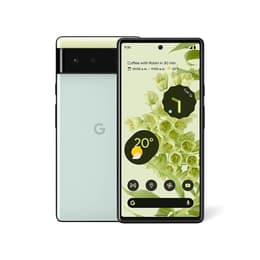
Google Pixel 6
Google Pixel 6
Starting at

Refurbished price:£101.00

Versus £649.99 new

See options
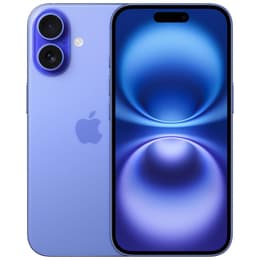
iPhone 16
iPhone 16
Starting at

Refurbished price:£475.00

Versus £699.00 new

See options

Ratings

The Google Pixel 6, released in October 2021, and the iPhone 16, launched in September 2024, represent distinct approaches to smartphone design and functionality from their respective manufacturers. While the Pixel 6 operates on Google's Android platform, the iPhone 16 runs on Apple's iOS, offering different user experiences. Key differentiators between these two devices include their core processing power, camera systems, and display technologies, reflecting advancements over their respective release timelines.

Scores

Durability

When considering the long-term usability of these devices, their release dates and software support policies are significant factors.

  • Release Timeline: The Google Pixel 6 was introduced in October 2021, making it an older device compared to the iPhone 16, which was released in September 2024. This age difference inherently impacts their remaining software support and expected practical lifespan.
  • OS Support Duration: Google has committed to providing five years of OS and security updates for the Pixel 6 from its launch date, extending its support to include Android 16 and Android 17. The iPhone 16, launching with iOS 18, benefits from Apple's typically longer software support cycle, often spanning 5-7 years for major iOS updates, ensuring it will receive updates for a longer period into the future.
  • Physical Durability: Both devices feature an IP68 rating for water and dust resistance, indicating a similar level of protection against environmental elements. The Pixel 6 uses Gorilla Glass Victus on its front and back, while the iPhone 16 incorporates Ceramic Shield on its front display, which Apple states offers enhanced toughness.

Year of Release

2021

2024

Compatible with latest Update

Yes

Yes

Foldable

No

No

Performance

The performance of a smartphone is largely determined by its internal components and how efficiently they handle various tasks, from everyday browsing to demanding applications.

  • Processing Capabilities: The Google Pixel 6 is powered by Google's first-generation Tensor processor, designed to optimize AI and machine learning tasks directly on the device. The iPhone 16 features Apple's A18 processor, which provides substantial performance improvements for general usage, complex applications, and graphics-intensive gaming.
  • Multitasking and Responsiveness: Both devices come with 8GB of RAM, which is sufficient for smooth multitasking and app switching. However, the iPhone 16's newer processor generally translates to faster app loading times and a more responsive overall user experience, particularly with newer, more demanding software.
  • Battery Behavior: The Pixel 6 is equipped with a 4614 mAh battery, supporting 30W wired and 23W wireless charging. The iPhone 16 has a 3561 mAh battery, with improvements in efficiency from its processor and faster 25W MagSafe wireless charging. Real-world battery life can vary significantly based on usage patterns and software optimization.

Memory (GB)

8 GB

8 GB

Screen quality

The display is a primary interface for smartphone interaction, and both devices offer distinct visual experiences.

  • Display Technology and Clarity: The Google Pixel 6 features a 6.4-inch OLED display with a Full HD+ resolution of 1080x2400 pixels, resulting in a pixel density of 411 ppi. The iPhone 16 comes with a 6.1-inch Super Retina XDR OLED display, offering a resolution of 2556 x 1179 pixels and approximately 460 ppi. Both provide vibrant colors and deep blacks characteristic of OLED technology.
  • Refresh Rate and Smoothness: The Pixel 6 offers a 90Hz refresh rate, providing a smoother scrolling experience than standard 60Hz displays. The standard iPhone 16 models maintain a 60Hz refresh rate, which is adequate for most users but less fluid than higher refresh rate screens.
  • Brightness and Viewing Experience: The iPhone 16's Super Retina XDR display is known for its high brightness levels, making it suitable for outdoor visibility and HDR content. The Pixel 6's OLED display also offers good brightness, though the iPhone 16 generally provides a brighter peak output.

Resolution

1080 x 2400

1179 x 2556

Screen type

AMOLED

Super Retina XDR OLED

Audiovisual

Both the Google Pixel 6 and iPhone 16 are designed to deliver strong photographic capabilities, though they approach imaging with different hardware and software philosophies.

  • Rear Camera Systems: The Pixel 6 features a dual-camera setup with a 50MP wide main sensor (f/1.9 with OIS) and a 12MP ultrawide sensor (f/2.2). The iPhone 16 also has a dual-camera system, including a 48MP wide main sensor (f/1.6) and a 12MP ultrawide sensor (f/2.2). The iPhone 16's cameras are vertically stacked, enabling spatial video recording.
  • Photography Performance: The Pixel 6 is recognized for its computational photography, excelling in areas like HDR and low-light performance through software processing. The iPhone 16, with its newer hardware and improved ultrawide lens aperture, is expected to offer enhanced low-light performance and macro photography capabilities on its standard models.
  • Video Recording and Front Camera: Both devices offer high-quality video recording. The Pixel 6 has an 8MP front camera (f/2.0), while the iPhone 16 features a 12MP front camera (f/1.9). The iPhone 16 also introduces a dedicated Capture button across all models for easier photo and video capture.

Main camera

50 megapixels

48 megapixels

Front camera

8 megapixels

12 megapixels

Miscellaneous

Beyond core specifications, several practical features contribute to the overall user experience and device utility.

  • Connectivity and Ports: Both smartphones support 5G connectivity for fast mobile data. The Pixel 6 supports Wi-Fi 6E and Bluetooth 5.2, featuring a USB-C port. The standard iPhone 16 models also support Wi-Fi 6E and Bluetooth 5.3, and have transitioned to a USB-C port, though with USB 2.0 speeds.
  • Biometric Security and Interaction: The Pixel 6 uses an in-display optical fingerprint sensor for biometric authentication. The iPhone 16 relies on Face ID for secure facial recognition and incorporates the Dynamic Island for interactive notifications and alerts. All iPhone 16 models also feature an Action button, offering customizable shortcuts.
  • Design and Handling: The Pixel 6 measures 158.6 x 74.8 x 8.9 mm and weighs 207g. The iPhone 16 is slightly more compact and lighter at 147.6 × 71.6 × 7.8 mm and 170g. Both devices feature premium build materials, with the Pixel 6 having a glass back and the iPhone 16 an aluminum frame with a frosted glass back.

Weight

207 g

170 g

Screen size (in)

6.4

6.1

Mobile network

5G

5G

SIM card

Physical SIM + eSIM

Physical SIM + eSIM

Carrier compatibility

Unlocked

Unlocked

User feedback for the Google Pixel 6 often praises its camera capabilities, particularly its computational photography features, which deliver consistent and high-quality images. Some users have noted mixed reactions regarding its battery life and the performance of its in-display fingerprint sensor. The iPhone 16, being a more recent release, has garnered attention for its updated processor, enhanced camera features like spatial video recording, and the inclusion of the Action button across all models. Initial user impressions highlight its improved battery efficiency and the continued refinement of the iOS ecosystem.

Users prioritizing advanced computational photography and a pure Android experience with timely updates may find the Google Pixel 6 well-suited to their needs. Its unique Tensor chip offers a distinct approach to on-device AI. Conversely, individuals seeking a device with a longer software support window, a more powerful and efficient processor for demanding tasks, and a robust ecosystem of apps and services might lean towards the iPhone 16. Its camera advancements and the integration of features like the Action button cater to users looking for a refined and versatile smartphone experience. For those considering either device, exploring quality-assured refurbished options can provide an eco-friendly alternative, extending the life cycle of these electronics and offering a sustainable choice.


See all articles

Our recent comparisons