Galaxy Tab S9 (11.0", 2023) Vs Galaxy Tab S9 Ultra (14.6", 2023)

Galaxy Tab S9 (11.0", 2023)
Starting at

Refurbished price:£370.00

Versus £1,060.32 new

See options
Galaxy Tab S9 Ultra (14.6", 2023)
Starting at

Refurbished price:£493.00

Versus £1,364.76 new

See options

Ratings

The Samsung Galaxy Tab S9 and the Galaxy Tab S9 Ultra, both released in August 2023, represent Samsung's premium Android tablet offerings. While they share a common foundation in their operating system and core processing capabilities, they cater to different user needs primarily through their distinct physical sizes and display characteristics. The Tab S9 offers a more compact experience, whereas the Tab S9 Ultra provides an expansive display for immersive viewing and demanding tasks.

Scores

Durability

Both the Galaxy Tab S9 and Tab S9 Ultra were launched with Android 13 and are part of Samsung's commitment to long-term software support.

  • Release Timeline: Both tablets were released on August 11, 2023, ensuring they are current models with identical starting points for software longevity.
  • OS Support Duration: Samsung has pledged four major Android OS updates for the Galaxy Tab S9 series, meaning they are expected to receive updates up to Android 17.
  • Security Updates: Users can anticipate five years of security updates for both devices, providing extended protection against vulnerabilities.
  • Practical Lifespan: Given the robust software support and high-performance hardware, both tablets are designed for a practical lifespan of several years, maintaining functionality and compatibility with new applications.

Year of Release

2023

2023

Compatible with latest Update

Yes

Yes

OS

Android

Android

Performance

Both the Galaxy Tab S9 and Tab S9 Ultra are equipped with the same high-performance processor, designed to handle demanding applications and multitasking efficiently.

  • Processor Capabilities: Both tablets feature a current-generation processor, optimized for Galaxy devices, ensuring smooth operation across various tasks. This allows for responsive app loading, fluid navigation, and consistent performance even with intensive applications or gaming.
  • Storage Options: The Galaxy Tab S9 is available with 128GB or 256GB of internal storage, while the Tab S9 Ultra offers more extensive options, including 256GB, 512GB, and 1TB configurations. Both models support expandable storage via a microSD card, allowing users to increase their storage capacity.
  • Battery Behavior: The Tab S9 houses an 8400mAh battery, providing sufficient power for a full day of typical use, with some users reporting around 8 hours of screen-on time for lighter tasks. The Tab S9 Ultra, with its larger 11200mAh battery, offers extended usage, often lasting 9-12 hours of mixed use or up to 10-11 hours of screen-on time for media consumption.
  • RAM Implications: The Tab S9 typically comes with 8GB or 12GB of RAM, while the Tab S9 Ultra starts at 12GB and goes up to 16GB. This difference in RAM capacity means the Ultra model can manage a greater number of open applications and more intensive multitasking scenarios without experiencing slowdowns.

Memory (GB)

8 GB

12 GB

Processor

Qualcomm SM8550-AC Snapdragon 8 Gen 2

Qualcomm SM8550-AC Snapdragon 8 Gen 2

Screen quality

Both tablets offer high-quality displays, but their size and pixel density create distinct viewing experiences.

  • Display Technology: Both the Galaxy Tab S9 and Tab S9 Ultra feature Dynamic AMOLED 2X displays, providing deep blacks, vibrant colors, and excellent contrast.
  • Resolution and Clarity: The Tab S9 has an 11-inch display with a resolution of 2560 x 1600 pixels, resulting in a pixel density of approximately 274 ppi. The Tab S9 Ultra boasts a larger 14.6-inch display with a resolution of 2960 x 1848 pixels, yielding a pixel density of around 239 ppi. While the Ultra has a larger screen, the standard S9 offers a slightly higher pixel density, which can translate to marginally sharper text and images at typical viewing distances.
  • Brightness Levels: Both displays offer good brightness for indoor use, with the Tab S9 Ultra capable of reaching peak brightness levels around 930 nits, improving visibility in brighter environments.
  • Refresh Rate and Smoothness: Both models feature a 120Hz refresh rate, which contributes to smooth scrolling, fluid animations, and a responsive touch experience. The adaptive refresh rate can also adjust down to 60Hz or lower to conserve battery life when static content is displayed.
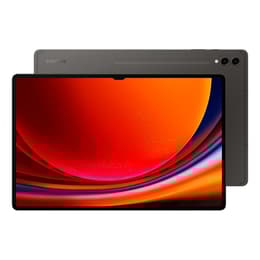
  • Screen Size and Viewing Experience: The 11-inch display of the Tab S9 offers a portable and comfortable viewing experience for general use, media consumption, and light productivity. The 14.6-inch display of the Tab S9 Ultra provides a significantly more expansive canvas, ideal for immersive media viewing, detailed creative work, and extensive multitasking with multiple windows open simultaneously.

Resolution

1600 x 2560

1848 x 2960

Screen type

Dynamic AMOLED 2X

Dynamic AMOLED 2X

Pixel density

280ppp

240ppp

Audiovisual

Tablet cameras are generally designed for utility rather than advanced photography, and both Tab S9 models reflect this, with the Ultra offering a more comprehensive setup.

  • Camera System Capabilities: The Galaxy Tab S9 features a single 13MP rear camera and a 12MP ultrawide front camera. The Galaxy Tab S9 Ultra comes with a dual rear camera setup, including a 13MP main lens and an 8MP ultrawide lens, alongside dual front cameras, both 12MP (wide and ultrawide).
  • Photography Performance: Both tablets deliver serviceable photos in good lighting conditions, suitable for document scanning, casual snapshots, and video calls. The Tab S9 Ultra's additional ultrawide rear camera provides more versatility for capturing broader scenes.
  • Video Recording Quality: Both the main rear cameras can record video at up to 4K resolution at 30fps. The front cameras also support 4K video recording, making them well-suited for high-quality video conferencing.
  • Microphone and Speaker Quality: Both models are equipped with quad stereo speakers tuned by AKG, providing a rich audio experience for media consumption and video calls. The microphones on both tablets are designed to capture clear audio for communication.

Miscellaneous

Beyond core performance, several practical features differentiate the user experience of these two tablets.

  • Connectivity Options: Both tablets support modern connectivity standards, including Wi-Fi 6 (802.11ax) and Bluetooth 5.3. Optional 5G connectivity is available for both models, providing mobile internet access.
  • Port Types: Both the Tab S9 and Tab S9 Ultra feature a USB Type-C 3.2 port, which supports fast data transfer and DisplayPort for external monitor output. Neither model includes a 3.5mm headphone jack.
  • Useful Sensors: Both tablets incorporate an in-display fingerprint sensor for secure and convenient unlocking. They also include a range of other sensors such as accelerometers, ambient light sensors, and gyroscopes for various functionalities.
  • Weight and Dimensions: The Galaxy Tab S9 is more compact, measuring 254.3 x 165.8 x 5.9 mm and weighing approximately 498 grams (Wi-Fi model). The Tab S9 Ultra is significantly larger and heavier, with dimensions of 326.4 x 208.6 x 5.5 mm and a weight of about 732 grams (Wi-Fi model). The Ultra's size can make it less convenient for handheld use but offers a larger workspace.
  • Build Materials and Durability: Both tablets feature an aluminum frame and back, contributing to a premium feel. Crucially, both models are IP68-rated for dust and water resistance, a notable durability feature for tablets.

Weight

129 g

129 g

Screen size (in)

11.0

14.6

Network

Wi-Fi

Wi-Fi + 5G

Carrier compatibility

Unlocked

Unlocked

Connector

USB Type-C

USB Type-C

User feedback for both the Galaxy Tab S9 and Tab S9 Ultra generally highlights their strong performance and impressive displays. For the Tab S9, common praise points include its vibrant AMOLED screen, capable processor, and the inclusion of the S Pen, making it a well-rounded and portable Android tablet. Users appreciate its balance of size and power for everyday tasks and media consumption. Some criticisms occasionally mention its battery life, which, while good, may not match its predecessor due to the more demanding AMOLED display.

The Galaxy Tab S9 Ultra is frequently lauded for its expansive 14.6-inch AMOLED display, which provides an immersive experience for entertainment and productivity. Its powerful performance and robust multitasking capabilities are also highly regarded, with many users finding it suitable for replacing a laptop for certain workflows. However, its considerable size and weight are often noted as potential drawbacks, making it less comfortable for extended handheld use and more suited to being propped up or used with a keyboard.

Users prioritizing portability and a more traditional tablet experience for media, browsing, and light productivity will find the Galaxy Tab S9 well-suited to their needs. Its compact form factor makes it easier to carry and use in various settings. Conversely, users who require a large screen for immersive entertainment, detailed creative work, or extensive multitasking with multiple applications will likely lean toward the Galaxy Tab S9 Ultra. Its vast display and higher maximum RAM configurations cater to those who need a more desktop-like experience from their tablet.

For those considering either model, exploring quality-assured refurbished options can provide an eco-friendly alternative to new devices, offering the same premium features with a reduced environmental impact.


See all articles

Our recent comparisons