
Galaxy S9 Vs Google Pixel 6

Galaxy S9
Galaxy S9
Starting at

Refurbished price:£77.00

Versus £449.00 new

See options
Google Pixel 6
Google Pixel 6
Starting at

Refurbished price:£101.00

Versus £649.99 new

See options

Ratings

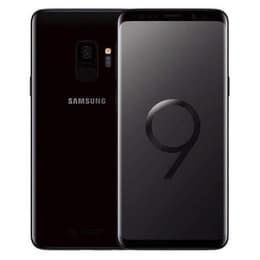
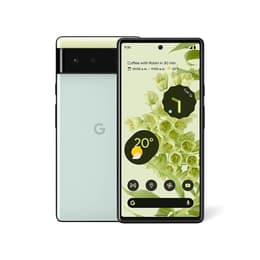
The Samsung Galaxy S9, released in March 2018, and the Google Pixel 6, launched in October 2021, represent different generations of Android smartphones. While both devices offer a premium experience, they diverge significantly in their core strengths and target users. The Pixel 6 introduces a more modern processing architecture and advanced camera capabilities, alongside a longer software support commitment, whereas the Galaxy S9, an older model, provides a more compact design and traditional features like a headphone jack.

Scores

Durability

When considering the practical lifespan of these devices, their release timelines and software support policies are key differentiators.

  • Software Longevity: The Galaxy S9, released in March 2018, received its last major Android update to Android 10 in late 2020, with security updates concluding in March 2022. In contrast, the Google Pixel 6, launched in October 2021, is guaranteed to receive OS updates until October 2026 and security updates until October 2027, offering a significantly longer period of official support.
  • Physical Durability: Both devices carry an IP68 rating for water and dust resistance, indicating protection against immersion. The Pixel 6 features more advanced Gorilla Glass Victus on the front and Gorilla Glass 6 on the back, offering enhanced scratch and drop resistance compared to the Galaxy S9's Gorilla Glass 5.
  • Repairability: The Galaxy S9 received an iFixit repairability score of 4 out of 10, primarily due to the extensive use of glue and glass construction, making battery and display replacements challenging. While the Pixel 6 Pro (a variant of the Pixel 6) scored 5.5 out of 10, general Pixel repairability is often noted as being more straightforward than some competitors, though the USB-C port can present difficulties.

Year of Release

2018

2021

Compatible with latest Update

No

Yes

OS

Android

Android

Foldable

No

No

Performance

The performance of a smartphone is influenced by its internal components and how efficiently they handle daily tasks and demanding applications.

  • Processing Power: The Google Pixel 6 features a custom-designed processor, which is optimized for artificial intelligence and machine learning tasks, contributing to smooth system responsiveness and efficient handling of demanding applications and multitasking. The Galaxy S9, while powerful at its 2018 release, relies on an older generation processor.
  • Multitasking and Storage: The Pixel 6 comes with 8GB of RAM, providing ample capacity for running multiple applications simultaneously without significant slowdowns. It offers internal storage options of 128GB or 256GB, though it lacks expandable storage. The Galaxy S9 has 4GB of RAM and offers 64GB, 128GB, or 256GB internal storage, with the added flexibility of microSD card expansion.
  • Battery Behavior: The Pixel 6 is equipped with a larger battery capacity, which generally translates to a full day of use for many users, even with moderate to heavy activity. Some users have noted that the device can become warm during intensive tasks. The Galaxy S9's battery, while capable of fast charging, was often reported by users to struggle through a full day of heavy use, sometimes requiring a charge by mid-afternoon.

Memory (GB)

4 GB

8 GB

Screen quality

The visual experience on a smartphone is largely defined by its display technology, resolution, and responsiveness.

  • Display Technology and Clarity: Both devices utilize AMOLED display technology, known for producing deep blacks and vibrant colors. The Galaxy S9 features a 5.8-inch Super AMOLED display with a higher resolution of 2960x1440 pixels, resulting in a very sharp image. The Pixel 6 has a larger 6.4-inch AMOLED display with a resolution of 2400x1080 pixels.
  • Refresh Rate: The Pixel 6 offers a 90Hz refresh rate, which provides a smoother scrolling experience and more fluid animations compared to the Galaxy S9's standard 60Hz refresh rate.
  • Brightness and Viewing Experience: Both displays offer good brightness levels suitable for outdoor visibility. While the Galaxy S9's higher pixel density provides a slightly crisper image, the Pixel 6's larger screen and higher refresh rate contribute to a more modern and expansive viewing experience for media consumption and general navigation.

Resolution

1440 x 2960

1080 x 2400

Screen type

Super AMOLED

AMOLED

Audiovisual

The camera systems on both smartphones offer distinct approaches to photography and video recording.

  • Rear Camera System: The Galaxy S9 features a single 12-megapixel rear camera with a unique variable aperture (f/1.5-f/2.4) and optical image stabilization, which was innovative at its release for adapting to different lighting conditions. The Google Pixel 6 boasts a dual-camera setup, including a 50-megapixel main sensor with optical image stabilization and a 12-megapixel ultrawide lens.
  • Photography Performance: The Pixel 6 is recognized for its advanced computational photography, consistently producing sharp, clear, and color-accurate photos across various lighting scenarios, including strong low-light performance. The Galaxy S9 was praised for its low-light capabilities at the time of its launch, thanks to its variable aperture.
  • Video and Audio: The Galaxy S9 supports super slow-motion video recording at 960 frames per second. The Pixel 6's custom processor enhances video recording by applying photo algorithms to individual video frames, potentially improving overall video quality. For audio, the Galaxy S9 includes stereo speakers tuned by AKG with Dolby Atmos compatibility, providing a rich sound experience.

Main camera

12 megapixels

50 megapixels

Front camera

8 megapixels

8 megapixels

Miscellaneous

Beyond the core specifications, several practical elements contribute to the overall user experience of these smartphones.

  • Connectivity and Ports: The Google Pixel 6 supports modern connectivity standards, including 5G and Wi-Fi 6E, offering faster wireless speeds where available. It features a USB-C port for charging and data transfer but omits a traditional 3.5mm headphone jack. The Galaxy S9 includes a USB-C port and retains the 3.5mm headphone jack, a feature many users still value.
  • Biometric Security: The Pixel 6 incorporates an under-display optical fingerprint sensor for unlocking and authentication. The Galaxy S9 offers a rear-mounted fingerprint sensor, alongside an iris scanner and face recognition for biometric security.
  • Design and Handling: The Galaxy S9 is a more compact device, weighing 163 grams. The Pixel 6 is larger and heavier at 207 grams, which can impact one-handed use for some individuals. Both devices feature premium build materials, with glass backs and metal frames.

Weight

163 g

207 g

Screen size (in)

5.8

6.4

Mobile network

4G

5G

SIM card

Physical SIM

Physical SIM + eSIM

Carrier compatibility

Unlocked

Unlocked

User feedback for the Samsung Galaxy S9 often highlights its excellent display, capable camera for its time, and the convenience of a headphone jack. Common criticisms included its battery life, which many users found insufficient for heavy daily use, and the relatively shorter period of software support compared to newer devices.

The Google Pixel 6 generally receives praise for its advanced camera system, which excels in various conditions due to its computational photography strengths, and its clean, user-friendly Android experience. Users also appreciate its extended software update commitment. Some frequent observations include the device running warm during intensive tasks and mixed opinions on the performance of its under-display fingerprint sensor.

Users prioritizing a compact form factor, the presence of a headphone jack, and a still-capable display might find the Galaxy S9 suitable, especially if their usage patterns do not demand the latest software features or extensive battery life. Conversely, individuals who value cutting-edge camera performance, a modern Android experience with long-term software support, and robust processing power for demanding applications will likely prefer the Google Pixel 6. For those seeking an eco-friendly alternative, both models are available as quality-assured refurbished options, providing a sustainable choice for consumers.

See all articles

Our recent comparisons