Compare models

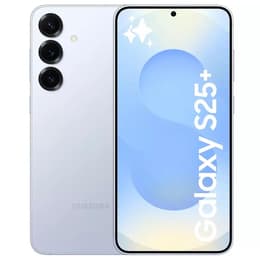
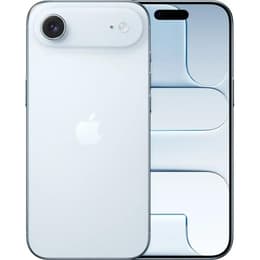
Galaxy S25+ Vs iPhone Air

  • 1-year minimum warranty
  • Free delivery on all items
  • Free 30-day returns
Galaxy S25+
Starting at

Refurbished price:£513.00

Versus £999.00 new

See options
iPhone Air
Starting at

Refurbished price:£604.00

Versus £1,099.00 new

See options

Differences at a glance

The Samsung Galaxy S25+ (2025) and the Apple iPhone Air (2025) represent distinct approaches to high-end smartphone design, combining flagship capability with unique form-factor philosophies. While the Galaxy S25+ delivers a large-screen Android experience focused on balance and productivity, the iPhone Air introduces an ultra-slim profile running iOS to target portability without sacrificing core computing power. Both devices cater to users seeking modern performance, yet they differ significantly in physical construction, operating system ecosystems, and hardware layouts.

Available Models

Colour

Storage

Scores

Durability

Both smartphones launched in 2025, offering modern build standards designed to withstand years of daily use. Long-term usability depends on software support timelines and physical durability features.

  • Software longevity: The Galaxy S25+ receives extended operating system updates and security patches for multiple years, matching industry standards for flagship Android devices. The iPhone Air benefits from Apple's long-standing software support cycle, ensuring regular updates for many years under iOS.
  • Build and durability: The Galaxy S25+ utilizes a sturdy aluminum frame combined with durable glass and an IP68 dust and water resistance rating. The iPhone Air employs a titanium frame paired with reinforced glass protection, also achieving an IP68 water resistance classification.
  • Repairability: Both manufacturers provide structured repair programs and component availability, helping extend the practical lifespan of each device through professional service options.

Year of Release

2025

2025

OS

Android

iOS

Foldable

No

No

Performance

Powered by current-generation flagship silicon, both devices deliver smooth navigation, rapid application loading, and reliable multitasking capabilities enabled by generous RAM capacities.

  • Daily responsiveness: Demanding applications, complex multitasking, and high-end mobile games run smoothly on both models, translating to consistent system fluidity during heavy workloads.
  • Storage capacity: Both smartphones are available in multiple storage configurations starting at generous baseline tiers, accommodating large media libraries and offline files without frequent cleanup.
  • Battery behaviour: The Galaxy S25+ houses a larger battery capable of supporting a full day of mixed usage under typical conditions. The iPhone Air prioritizes an ultra-thin physical profile, resulting in a more compact battery capacity that may require mindful power management or supplementary charging during intensive usage days.

Screen quality

Display technology on both devices emphasizes clarity, deep contrast ratios, and high peak brightness levels suited for outdoor viewing under direct sunlight.

  • Display panels: The Galaxy S25+ features a large AMOLED panel with high resolution, while the iPhone Air incorporates an expansive OLED screen featuring precise color reproduction.
  • Refresh rate and fluidity: Both models support adaptive high refresh rate technology up to 120Hz, ensuring smooth scrolling through web pages, documents, and user interface menus.
  • Viewing experience: Screen sizes on both devices exceed 6.5 inches, offering immersive visual real estate for media consumption, reading, and productivity tasks.

Resolution

1440x3120

2736x1260

Audiovisual

Imaging hardware reflects different design priorities, with one model favoring multi-lens versatility and the other emphasizing a streamlined, minimalist layout.

  • Rear camera systems: The Galaxy S25+ equips a versatile multi-lens array including a main wide sensor, an ultra-wide lens, and a dedicated telephoto lens for optical zoom. The iPhone Air features a single high-resolution main camera system integrated into its slim profile, capturing detailed everyday photos.
  • Video and audio: Both devices offer high-resolution video recording capabilities with advanced stabilization features. Microphone clarity for voice calls and media audio output perform reliably across both units, though speaker configurations differ due to physical depth constraints.
  • Low-light performance: Image processing software on both models helps preserve details and manage noise in dimly lit environments, producing balanced shots without manual intervention.

Miscellaneous

Physical dimensions and connectivity standards shape how each device fits into daily routines, travel gear, and accessories.

  • Connectivity standards: Both smartphones support fast 5G cellular networks, modern Wi-Fi protocols, and Bluetooth for accessory pairing.
  • Ports and biometrics: The Galaxy S25+ utilizes a USB-C port and features an ultrasonic in-screen fingerprint sensor alongside facial recognition. The iPhone Air utilizes a USB-C connection and relies on facial recognition security.
  • Handling and ergonomics: The Galaxy S25+ offers a traditional flagship weight and feel, whereas the iPhone Air stands out for its exceptionally thin profile and light weight, reducing pocket bulk significantly.

Weight

190 g

165 g

Screen size (in)

6.7

6.5

Mobile network

5G

5G

SIM card

Physical SIM + eSIM

eSIM

Carrier compatibility

Unlocked

Unlocked

Connector

USB-C

USB-C

What the community thinks

When evaluating the Galaxy S25+ against the iPhone Air, user preferences largely center on hardware versatility versus minimalist physical design. Users prioritizing multi-lens camera flexibility, a dedicated telephoto zoom, and larger battery capacity frequently gravitate toward the Galaxy S25+. Conversely, users who value an exceptionally thin and lightweight build, ecosystem integration, and streamlined daily handling often prefer the iPhone Air, provided they are comfortable with a single-lens camera setup.

Reviewers and community discussions frequently praise the Galaxy S25+ for its balanced feature set and dependable battery life, while noting that its physical footprint is standard for a large-screen device. For the iPhone Air, public feedback highlights the remarkable engineering behind its ultra-slim chassis, though users note that battery endurance is more modest due to the physical space constraints. For those seeking a quality-assured refurbished option, exploring sustainable choices on platforms like Back Market offers an eco-friendly alternative to acquire these devices with verified performance standards.

Ultimately, selecting the right device depends on whether multi-camera versatility or ultra-slim portability aligns more closely with your daily routine.