Galaxy S25+ Vs iPhone 16e

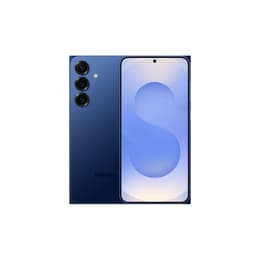
Galaxy S25+
Galaxy S25+
Starting at

Refurbished price:£550.00

Versus £958.39 new

See options
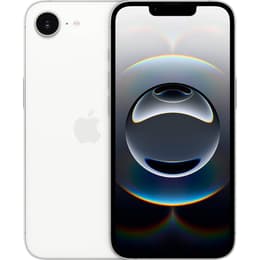
iPhone 16e
iPhone 16e
Starting at

Refurbished price:£359.00

Versus £599.00 new

See options

Ratings

The Samsung Galaxy S25 Plus, released in early 2025, and the Apple iPhone 16E, launched in early 2025, represent two distinct approaches to the modern smartphone experience. While both devices offer advanced capabilities, they cater to different user preferences through their respective operating systems, Android and iOS. The Galaxy S25 Plus typically emphasizes a feature-rich, customizable experience, whereas the iPhone 16E focuses on seamless integration within Apple's ecosystem and user-friendly simplicity.

Scores

Durability

When considering the long-term usability of these devices, both offer substantial software support, though with different timelines and physical characteristics.

  • Software Updates: The Galaxy S25 Plus is expected to receive major Android OS updates for up to seven years, alongside security patches, ensuring a long period of modern features and protection. The iPhone 16E typically receives major iOS updates for five to six years from its release, with security updates often extending beyond that.
  • Build Quality: Both phones feature robust designs. The Galaxy S25 Plus incorporates Gorilla Glass Victus 2 on its front and back, along with flat metal edges, contributing to its physical longevity. The iPhone 16E features a Ceramic Shield front cover and an aluminum frame, designed for durability and resistance to drops and scratches. Both devices carry an IP68 rating for dust and water resistance.
  • Practical Lifespan: Users can expect both devices to perform optimally for many years. The Galaxy S25 Plus potentially offers a slightly longer period of major OS feature updates, while the iPhone 16E benefits from Apple's reputation for sustained performance on older hardware. User reports suggest both phones hold up well to daily wear and tear.

Year of Release

2025

2025

OS

Android

iOS

Foldable

No

No

Performance

Both the Galaxy S25 Plus and the iPhone 16E deliver exceptional performance, capable of handling demanding applications and multitasking with ease, though their underlying architectures differ.

  • Everyday Responsiveness: The Galaxy S25 Plus, powered by its current-generation processor, offers a fluid experience for daily tasks, from browsing to running multiple apps simultaneously. The iPhone 16E, with its A-series chip, provides similarly smooth performance for everyday use and supports Apple Intelligence features.
  • Demanding Applications: For intensive tasks like high-fidelity mobile gaming or video editing, both devices maintain high frame rates and efficient processing. The Galaxy S25 Plus's processor ensures a significant leap in performance, resulting in smoother animations. The iPhone 16E's chip, while having a slightly less powerful graphics component than some other models, still handles graphically demanding titles effectively.
  • Storage and Multitasking: Both models are available with ample internal storage options, including 128GB, 256GB, and 512GB, to suit various needs. The Galaxy S25 Plus features 12GB of RAM, which can benefit heavy multitasking, while the iPhone 16E's 8GB of RAM is optimized by iOS for a consistently smooth experience.

Memory (GB)

12 GB

8 GB

Screen quality

The display is a key interaction point, and both phones offer high-quality visual experiences, albeit with some distinctions in technology and specifications.

  • Display Technology: The Galaxy S25 Plus features a 6.7-inch Dynamic LTPO AMOLED 2X display, known for its vibrant colors, deep blacks, and high contrast. The iPhone 16E utilizes a 6.1-inch Super Retina XDR OLED panel, delivering excellent color accuracy and brightness.
  • Resolution and Clarity: The Galaxy S25 Plus boasts a QHD+ resolution of 3120x1440 pixels, providing incredibly sharp text and detailed images with a pixel density of approximately 513 ppi. The iPhone 16E's display offers a resolution of 2532x1170 pixels at 460 ppi, ensuring clear and crisp content for typical viewing distances.
  • Brightness and Refresh Rate: The Galaxy S25 Plus generally achieves a higher peak brightness of 2600 nits, which is beneficial for outdoor visibility, and features an adaptive refresh rate ranging from 1Hz to 120Hz for smoother scrolling and animations. The iPhone 16E's display offers a typical brightness of 800 nits and a peak HDR brightness of 1200 nits, providing strong visibility in various conditions, but it has a fixed 60Hz refresh rate.

Resolution

1440x3120

2532x1170

Audiovisual

The camera systems on both devices offer distinct capabilities for capturing photos and videos, catering to different photographic needs.

  • Camera System Capabilities: The Galaxy S25 Plus features a versatile triple-camera setup on the rear, including a 50MP wide-angle main lens, a 12MP ultra-wide lens, and a 10MP telephoto lens with 3x optical zoom. The iPhone 16E has a single 48MP Fusion main camera on the rear, which uses a digital crop to achieve a 2x optical-quality zoom. It does not include a dedicated ultra-wide or telephoto lens.
  • Photography Performance: The Galaxy S25 Plus delivers sharp and vibrant photos, with software enhancements like the Pro Visual Engine improving image quality and post-production tools. Its telephoto lens allows for detailed zoomed-in shots, and it includes features like Night mode and Portrait mode. The iPhone 16E's 48MP main camera, supported by Photonic Engine and Smart HDR 5, captures high-resolution photos with good detail and color. Its Portrait mode is optimized for human faces.
  • Video Recording and Audio: Both devices are capable of recording high-quality video. The Galaxy S25 Plus supports 8K video recording at 30fps and 4K at 60fps, along with various modes like Slow Motion and Hyperlapse. The iPhone 16E records 4K video at up to 60fps and includes features like Cinematic video stabilization. For audio, both offer stereo sound recording, with the iPhone 16E also featuring Spatial Audio and wind noise reduction.

Miscellaneous

Beyond core performance, several practical elements differentiate the user experience of these two smartphones.

  • Connectivity Options: Both devices support 5G connectivity for fast mobile data speeds. The Galaxy S25 Plus features Wi-Fi 7, offering advanced wireless networking capabilities, while the iPhone 16E supports Wi-Fi 6. Both include Bluetooth 5.3 and NFC.
  • Port Types and Sensors: Both the Galaxy S25 Plus and iPhone 16E have adopted the USB-C port for charging and data transfer. The iPhone 16E replaces the traditional mute switch with a customizable Action Button, providing quick access to various functions. For biometric security, the Galaxy S25 Plus uses an in-display fingerprint sensor, while the iPhone 16E relies on Face ID for facial recognition.
  • Weight and Dimensions: The Galaxy S25 Plus is the larger and slightly heavier device, weighing 190 grams with dimensions of 6.23 x 2.98 x 0.28 inches. The iPhone 16E is more compact and lighter at 167 grams, with dimensions of 5.78 x 2.81 x 0.31 inches, making it potentially easier for one-handed use.

Weight

190 g

167 g

Screen size (in)

6.7

6.1

Mobile network

5G

5G

SIM card

Dual Physical SIM

eSIM

Carrier compatibility

Unlocked

Unlocked

User feedback for the Samsung Galaxy S25 Plus often highlights its vibrant display, robust performance for demanding tasks, and the extensive software support provided by Samsung. Common praise points include its long-lasting battery life and the versatility of its triple-camera system. Some users have noted that while the camera hardware is similar to its predecessor, software improvements enhance the overall photography experience.

For the iPhone 16E, users frequently commend its exceptional battery life, often reporting it lasts a full day or even longer with heavy use. Its compact size and the smooth, integrated iOS experience are also highly valued. Criticisms sometimes point to the 60Hz refresh rate of its display and the limitations of its single rear camera system compared to multi-lens setups on other devices.

Users prioritizing a larger, high-resolution display with an adaptive refresh rate, a versatile multi-lens camera system, and extensive customization options within the Android ecosystem may find the Galaxy S25 Plus well-suited to their needs. Conversely, users who value a more compact device, industry-leading battery endurance for its size, and the streamlined, secure experience of iOS, particularly with Apple's ecosystem integration, may lean toward the iPhone 16E. Both devices offer a quality-assured refurbished option, providing an eco-friendly alternative for those seeking advanced technology.


See all articles

Our recent comparisons