

Galaxy S25 Vs OnePlus 10 Pro

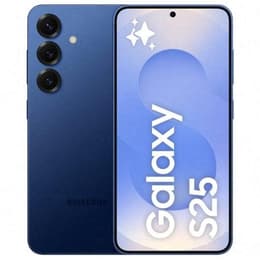
Galaxy S25
Galaxy S25
Starting at

Refurbished price:£435.00

Versus £766.13 new

See options
OnePlus 10 Pro
OnePlus 10 Pro
Starting at

Refurbished price:£391.00

Versus £769.39 new

See options

Ratings

The Samsung Galaxy S25, released in early 2025, and the OnePlus 10 Pro, launched in early 2022, represent different generations within the competitive smartphone market. While both devices offer a premium Android experience, the Galaxy S25 introduces advancements in processing power, extended software support, and refined camera capabilities. The OnePlus 10 Pro, an earlier flagship, focuses on a robust display and efficient battery management for its time.

Scores

Durability

The practical lifespan of a smartphone is significantly influenced by its release timeline and the duration of software support it receives.

  • Release Timeline: The Samsung Galaxy S25 was released in February 2025, making it a more recent device. The OnePlus 10 Pro, launched in January 2022, is an older model. This age difference directly impacts their remaining support cycles.
  • Software Longevity: Samsung has committed to providing seven years of operating system upgrades and security updates for the Galaxy S25, ensuring it will receive support up to Android 22. In contrast, the OnePlus 10 Pro typically receives three major Android updates and four years of security patches from its release date. This means the Galaxy S25 offers a substantially longer period of official software support, which can be a key factor for users planning to keep their device for many years.
  • Physical Durability: Both devices feature robust builds. The Galaxy S25 utilizes Gorilla Glass Victus 2 for both its front and back panels, along with an aluminum frame, and carries an IP68 rating for dust and water resistance. The OnePlus 10 Pro also features a glass back and an aluminum frame, with IP68 dust and water resistance, though this rating was sometimes carrier-dependent in certain regions.

Year of Release

2025

2022

OS

Android

Android

Foldable

No

No

Performance

Performance is a critical aspect for daily smartphone use, affecting everything from app responsiveness to demanding tasks like gaming and video editing.

  • Processing Power: The Samsung Galaxy S25 is equipped with a current-generation processor, designed to handle intensive applications and multitasking with efficiency. This results in smoother app loading, more fluid transitions, and enhanced performance in graphically demanding games. The OnePlus 10 Pro features a previous-generation processor, which, while capable for its time, may show limitations when running the most resource-intensive applications or managing numerous tasks simultaneously compared to the newer hardware.
  • System Responsiveness and Multitasking: The Galaxy S25 typically comes with 12GB of RAM and utilizes UFS 4.0 storage, contributing to faster data access and improved multitasking capabilities. The OnePlus 10 Pro offers 8GB or 12GB of RAM and UFS 3.1 storage. While both configurations allow for competent multitasking, the newer storage standard and potentially higher base RAM in the S25 contribute to a more responsive overall system, especially when switching between many open applications.
  • Battery Behavior: The Galaxy S25 houses a 4000 mAh battery, and with its efficient processor and software optimizations, it is designed to provide a full day of mixed usage. The OnePlus 10 Pro features a larger 5000 mAh battery. Users have reported that the OnePlus 10 Pro can comfortably last a full day of heavy use and potentially up to two days with moderate usage, partly due to its larger capacity and LTPO display technology which helps manage refresh rates dynamically.

Memory (GB)

12 GB

8 GB

Screen quality

The display is the primary interface for smartphone interaction, and differences in technology and specifications can significantly impact the viewing experience.

  • Display Technology and Clarity: The Samsung Galaxy S25 features a 6.2-inch Dynamic LTPO AMOLED 2X display with a resolution of 2340x1080 pixels, offering vibrant colors and deep blacks. The OnePlus 10 Pro sports a larger 6.7-inch Fluid AMOLED LTPO 2.0 display with a higher resolution of 3216x1440 pixels, providing a very sharp and detailed viewing experience. Both utilize LTPO technology for adaptive refresh rates.
  • Brightness and Outdoor Visibility: The Galaxy S25 boasts a peak brightness of up to 2600 nits, which ensures excellent visibility even in bright outdoor conditions. The OnePlus 10 Pro also offers a bright display, though its peak brightness is typically lower than that of the S25. This difference means the S25 may offer a more comfortable viewing experience under direct sunlight.
  • Refresh Rate and Smoothness: Both devices feature an adaptive 120Hz refresh rate, which allows the screen to adjust its refresh rate dynamically based on the content being displayed. This provides smooth scrolling and fluid animations while also conserving battery life when a high refresh rate is not necessary. The larger screen size of the OnePlus 10 Pro offers a more expansive canvas for media consumption and gaming.

Resolution

1080x2340

1440 x 3216

Screen type

Dynamic LTPO AMOLED 2X

LTPO2 Fluid AMOLED

Audiovisual

Camera systems are a key differentiator, with both devices offering versatile setups for capturing photos and videos.

  • Rear Camera System: The Samsung Galaxy S25 features a triple rear camera setup, including a 50MP main sensor with optical image stabilization (OIS), a 12MP ultrawide lens with a 120-degree field of view, and a 10MP telephoto lens capable of 3x optical zoom with OIS. The OnePlus 10 Pro also has a triple rear camera system, co-developed with Hasselblad, comprising a 48MP main sensor with OIS, a 50MP ultrawide lens with a wide 150-degree field of view, and an 8MP telephoto lens offering 3.3x optical zoom with OIS.
  • Photography Performance: The Galaxy S25 benefits from a newer generation of image processing and AI enhancements, which contribute to improved detail, color accuracy, and low-light performance. Its AI tools can assist with generative editing and noise reduction in nighttime videos. The OnePlus 10 Pro, with its Hasselblad partnership, emphasizes natural color calibration and offers features like a Master Style for filters and a Pro mode for 12-bit RAW capture, appealing to users who prefer more control over their photography.
  • Video Recording and Front Camera: Both devices are capable of recording video at up to 8K resolution, with the S25 supporting 8K at 30fps and the 10 Pro at 24fps. The Galaxy S25 has a 12MP front-facing camera, while the OnePlus 10 Pro features a higher-resolution 32MP front camera, which may appeal to users who prioritize detailed selfies and video calls.

Miscellaneous

Beyond core performance and display, several practical elements contribute to the overall user experience and device utility.

  • Connectivity Standards: The Samsung Galaxy S25 supports newer connectivity standards, including Wi-Fi 7 and Bluetooth 5.4, offering faster wireless speeds and improved efficiency compared to the OnePlus 10 Pro's Wi-Fi 6 and Bluetooth 5.2. Both devices support 5G connectivity, though the OnePlus 10 Pro's 5G support in North America was primarily for Sub-6 networks, with limited mmWave compatibility.
  • Ports and Biometrics: Both smartphones feature a USB Type-C port for charging and data transfer. The Galaxy S25 uses USB Type-C 3.2, which offers faster data transfer speeds than the OnePlus 10 Pro's USB Type-C 3.1. For security, the Galaxy S25 employs an ultrasonic in-screen fingerprint sensor, while the OnePlus 10 Pro uses an optical in-display fingerprint sensor. Neither device includes a traditional 3.5mm headphone jack.
  • Design and Handling: The Galaxy S25 has dimensions of 146.9 x 70.5 x 7.2 mm and weighs 162g, making it a more compact and lighter device. The OnePlus 10 Pro is larger and heavier at 163 x 73.9 x 8.9 mm and 200.5g. The S25's smaller form factor may be preferred by users seeking a device that is easier to handle with one hand, while the 10 Pro offers a more expansive screen.

Weight

162 g

201 g

Screen size (in)

6.2

6.7

Mobile network

5G

5G

SIM card

Physical SIM + eSIM

Physical SIM

Carrier compatibility

Unlocked

Unlocked

Choosing between the Samsung Galaxy S25 and the OnePlus 10 Pro involves weighing the benefits of a newer, more future-proof device against a still-capable, slightly older model. The Galaxy S25, released in 2025, stands out with its significantly longer software support, offering seven years of updates, and its more advanced processor, which provides enhanced performance for demanding applications and a smoother overall user experience. Its camera system benefits from the latest AI processing, leading to refined image quality and intelligent editing features. The S25 also incorporates newer connectivity standards like Wi-Fi 7 and Bluetooth 5.4, and its more compact design might appeal to users who prefer a smaller, lighter device.

The OnePlus 10 Pro, from 2022, remains a strong contender for users who prioritize a large, high-resolution display and a substantial battery capacity. Its 5000 mAh battery is known for providing extended usage times, often lasting a full day even with heavy use. The Hasselblad-tuned camera system offers a distinct photographic style and advanced controls for those who enjoy a more hands-on approach to mobile photography. While its software support window is shorter than the S25, it still provides a capable Android experience.

Users prioritizing long-term software support, cutting-edge performance, and the latest camera innovations, along with a more compact form factor, will find the Samsung Galaxy S25 well-suited to their needs. Conversely, individuals who value a larger, high-resolution display, exceptional battery endurance, and a camera system with a unique color science may lean toward the OnePlus 10 Pro. Both devices can be excellent choices, especially when considering quality-assured refurbished options, which provide an eco-friendly alternative for consumers seeking reliable technology. The decision ultimately depends on which set of features aligns best with individual usage patterns and priorities.

See all articles

Our recent comparisons