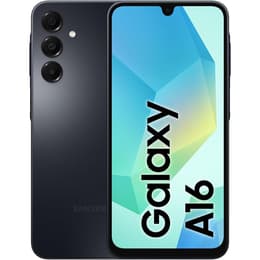
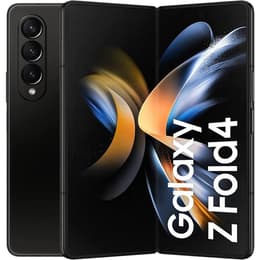
Galaxy A16 Vs Galaxy Z Fold4

Galaxy A16
Galaxy A16
Starting at

Refurbished price:£100.62

Versus £206.96 new

See options
Galaxy Z Fold4
Galaxy Z Fold4
Starting at

Refurbished price:£352.00

Versus £1,889.00 new

See options

Ratings

The Samsung Galaxy A16, released in late 2024, and the Samsung Galaxy Z Fold4, launched in mid-2022, represent distinct approaches to smartphone design and functionality within the Android ecosystem. While the Galaxy A16 offers a traditional smartphone experience with a focus on core features and extended software support, the Galaxy Z Fold4 provides a unique foldable form factor designed for enhanced productivity and immersive viewing. These differences cater to varying user priorities, from everyday reliability to advanced multitasking capabilities.

Scores

Durability

The practical lifespan of a smartphone is influenced by its physical durability and the duration of software support it receives.

  • Software Longevity: The Galaxy A16, being a newer device, benefits from Samsung's commitment to providing up to six generations of Android OS upgrades and six years of security updates, extending its software support until October 2030. The Galaxy Z Fold4, released earlier, was promised four Android OS upgrades and five years of security updates, with support expected to continue until 2027.
  • Physical Durability: The Galaxy A16 features an IP54 rating, indicating protection against dust and splashes. Its construction primarily uses plastic materials. In contrast, the Galaxy Z Fold4 boasts an IPX8 water resistance rating, allowing it to withstand submersion in water, though it lacks official dust resistance. It incorporates more premium materials like Gorilla Glass Victus+ for its cover screen and back panel, and an Armor Aluminum frame, alongside its unique Ultra-Thin Glass for the foldable inner display. The foldable design of the Z Fold4 introduces specific considerations regarding the hinge mechanism and the inner screen's resilience to repeated folding.
  • Expected Practical Lifespan: Users prioritizing the longest possible software updates and a robust, traditional build might find the A16 appealing for its extended support timeline. Those drawn to the innovative foldable design of the Z Fold4 should consider its premium build materials and water resistance, understanding that its software support window is shorter due to its earlier release.

Year of Release

2024

2022

Compatible with latest Update

Yes

Yes

OS

Android

Android

Foldable

No

Yes

Performance

The performance of these devices varies significantly, reflecting their different market segments and release timelines.

  • Processing Power: The Galaxy A16 is equipped with a mid-range octa-core processor, such as the MediaTek Helio G99 for the 4G variant or the Exynos 1330/MediaTek Dimensity 6300 for the 5G variant. This hardware is designed to handle everyday tasks, web browsing, and social media applications smoothly. The Galaxy Z Fold4, as a flagship device from its release year, features a high-performance processor, the Qualcomm Snapdragon 8+ Gen 1. This processor delivers robust performance for demanding applications, intensive multitasking, and graphic-heavy gaming.
  • Multitasking and Responsiveness: The Galaxy A16 typically comes with 4GB, 6GB, or 8GB of RAM, which is sufficient for moderate multitasking. Users may experience some slowdowns when running many applications simultaneously or engaging in graphically intensive activities. The Galaxy Z Fold4 offers a substantial 12GB of RAM, enabling seamless switching between numerous applications and maintaining smooth operation even under heavy loads.
  • Storage Capabilities: Both devices offer internal storage options, with the A16 available in 128GB or 256GB configurations, and the added benefit of expandable storage via a microSD card. The Z Fold4 comes with larger internal storage options of 256GB, 512GB, or 1TB, but it does not support expandable storage.

Memory (GB)

4 GB

12 GB

Screen quality

The display experience is a primary differentiator between these two Samsung smartphones, catering to distinct usage patterns.

  • Display Technology and Size: The Galaxy A16 features a single 6.7-inch Super AMOLED display, providing vibrant colors and deep blacks for a traditional viewing experience. The Galaxy Z Fold4 offers a dual-screen setup: a 6.2-inch Dynamic AMOLED 2X cover display for single-handed use and a larger, foldable 7.6-inch Dynamic AMOLED 2X main display for an expansive tablet-like experience.
  • Resolution and Clarity: The A16's display has a Full HD+ resolution (1080 x 2340 pixels), offering clear visuals for everyday content. The Z Fold4's main display boasts a higher QXGA+ resolution (2176 x 1812 pixels), providing exceptional sharpness and detail, particularly beneficial for reading and multimedia consumption on its larger canvas. The cover display also offers a high resolution for its size.
  • Refresh Rate and Brightness: The A16 features a 90Hz refresh rate, contributing to smoother scrolling and animations. Its peak brightness reaches 800 nits in High Brightness Mode (HBM). Both displays on the Z Fold4 offer an adaptive 120Hz refresh rate for fluid interactions and can reach a peak brightness of 1200 nits, ensuring good visibility even in bright outdoor conditions.

Resolution

1080 x 2340

1812 x 2176

Screen type

Super AMOLED

Foldable Dynamic AMOLED 2X

Audiovisual

The camera systems of the Galaxy A16 and Galaxy Z Fold4 are designed for different levels of photographic capability and versatility.

  • Rear Camera Configuration: The Galaxy A16 includes a triple rear camera setup with a 50MP main sensor, a 5MP ultrawide lens, and a 2MP macro lens. This configuration is suitable for capturing everyday moments. The Galaxy Z Fold4 features a more advanced triple camera system, comprising a 50MP main sensor with optical image stabilization (OIS), a 12MP ultrawide lens, and a 10MP telephoto lens with 3x optical zoom and OIS. This setup provides greater flexibility and image quality across various shooting scenarios.
  • Front Camera and Video Capabilities: For selfies and video calls, the A16 has a 13MP front camera. It supports video recording up to 1080p at 30 frames per second. The Z Fold4 offers a 10MP camera on its cover display and a 4MP under-display camera on the inner screen, which is primarily intended for video calls. Its video recording capabilities are more extensive, supporting up to 8K resolution at 24 frames per second.
  • Photography Performance: User feedback suggests the A16's camera performance is generally considered adequate for its segment, but not exceptional, particularly in challenging lighting. The Z Fold4's camera system, drawing from Samsung's flagship technology of its release year, delivers good image quality with better low-light performance and more detailed zoom capabilities, making it a more versatile tool for photography enthusiasts.

Main camera

50 megapixels

50 megapixels

Front camera

13 megapixels

4 megapixels

Miscellaneous

Beyond core specifications, several practical elements contribute to the overall user experience of these devices.

  • Connectivity and Ports: Both devices support modern connectivity standards. The Galaxy A16 offers 4G LTE and a 5G variant, Wi-Fi 802.11ac, and Bluetooth 5.3. It uses a USB Type-C 2.0 port. The Galaxy Z Fold4 supports 5G, Wi-Fi 6E for faster wireless speeds, and Bluetooth 5.2. It features a more advanced USB Type-C 3.2 port. The Z Fold4 also includes Ultra-Wideband (UWB) technology for enhanced spatial awareness and device tracking.
  • Biometrics and Audio: The A16 incorporates a side-mounted fingerprint scanner for secure unlocking. It typically features a mono speaker for audio output. The Z Fold4 also has a side-mounted fingerprint scanner and offers stereo speakers, providing a more immersive audio experience for media consumption.
  • Physical Attributes and Additional Features: The Galaxy A16 has dimensions of 164.4 x 77.9 x 7.9 mm and weighs 200g, offering a comfortable grip for a traditional smartphone. The Galaxy Z Fold4, due to its foldable design, has different dimensions when folded (155.1 x 67.1 x 14.2-15.8 mm) and unfolded (155.1 x 130.1 x 6.3 mm), and is heavier at 263g. A notable feature of the Z Fold4 is its support for the S Pen (Fold Edition), enhancing its utility for note-taking and drawing on the larger inner display.

Weight

200 g

263 g

Screen size (in)

6.7

7.6

Mobile network

4G

5G

SIM card

Dual Physical SIM

Dual Physical SIM + eSIM

Carrier compatibility

Unlocked

Unlocked

Choosing between the Samsung Galaxy A16 and the Galaxy Z Fold4 involves weighing priorities between a modern, long-supported traditional smartphone and an innovative, feature-rich foldable device from a previous generation.

The Galaxy A16 is often praised by users for its exceptional battery life, frequently lasting two full days on a single charge, and its commitment to six years of software updates, which is a significant advantage for longevity. Its vibrant Super AMOLED display is also a common positive point. However, some users note that its performance can be modest for demanding applications and its camera capabilities are considered average.

Conversely, the Galaxy Z Fold4 receives acclaim for its unique foldable design, offering a large, immersive display for productivity and media consumption. Users appreciate its powerful performance, capable camera system, and premium build quality. The ability to multitask with multiple apps on the large inner screen is a key highlight. Criticisms sometimes revolve around its weight and the inherent considerations of a foldable screen, such as the visible crease and potential for smudges on the inner display.

Users prioritizing extended software longevity, a robust battery for multi-day use, and a familiar, durable form factor for everyday tasks may find the Galaxy A16 well-suited to their needs. It represents a practical and sustainable choice, especially when considering quality-assured refurbished options. On the other hand, individuals seeking a cutting-edge mobile experience with advanced multitasking, a versatile camera, and a premium, expansive display for both work and entertainment will likely lean towards the Galaxy Z Fold4, understanding its earlier release date means a shorter remaining software support window. Both devices, particularly when considering refurbished options, offer an eco-friendly alternative to purchasing new, allowing users to make informed choices that align with their usage habits and environmental consciousness.

See all articles

Our recent comparisons