
Galaxy A35 Vs iPhone 16 Plus

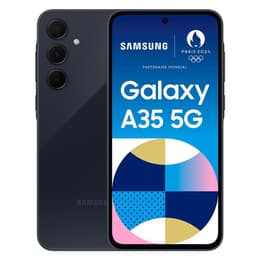
Galaxy A35
Galaxy A35
Starting at

Refurbished price:£119.00

Versus £367.31 new

See options
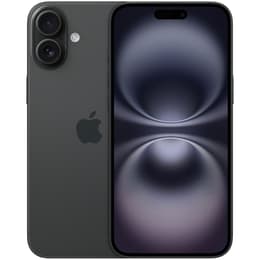
iPhone 16 Plus
iPhone 16 Plus
Starting at

Refurbished price:£503.46

Versus £799.00 new

See options

Ratings

The Samsung Galaxy A35 (2024) and the iPhone 16 Plus (2024) represent distinct offerings in the smartphone market, catering to different user ecosystems. While the Galaxy A35 operates on Android, providing a customizable experience, the iPhone 16 Plus runs on Apple's iOS, known for its integrated services and user-friendly interface. Key differentiators include their core processing power, display technologies, and camera capabilities, each designed to appeal to specific user preferences.

Scores

Durability

When considering the long-term usability of a device, software support and physical resilience are important factors. Both the Galaxy A35 and the iPhone 16 Plus offer robust designs and commitments to software longevity, though their approaches differ.

  • Software Support: The Samsung Galaxy A35 launched with Android 14 and is promised four years of operating system updates and five years of security patches, ensuring a sustained period of modern features and protection. The iPhone 16 Plus, running iOS 18, typically receives software updates for a longer duration, often extending to five or more years from its release, providing extended access to the latest iOS features and security enhancements.
  • Physical Durability: The Galaxy A35 features Gorilla Glass Victus+ on its front display and carries an IP67 rating for dust and water resistance, offering protection against immersion in shallow water. The iPhone 16 Plus incorporates Apple's Ceramic Shield front cover and boasts an IP68 rating, allowing for submersion in deeper water for longer periods. Durability tests indicate the iPhone 16 Plus shows faint scratches at level six on the Mohs hardness scale, with deeper grooves appearing at level seven, and it has demonstrated good structural integrity in bend tests.
  • Repairability: The Galaxy A35 has a repairability score of 8.4 out of 10, with its back plate being relatively easy to remove and most internal components accessible, though the screen and battery may require more effort due to adhesive. The iPhone 16 Plus is noted to be potentially easier to repair than its Pro counterparts, partly due to a new electrically de-bonding adhesive on the back.

Year of Release

2024

2024

Compatible with latest Update

Yes

Yes

Foldable

No

No

Performance

The performance of a smartphone is central to its daily operation, influencing everything from app responsiveness to multitasking efficiency. The Galaxy A35 and iPhone 16 Plus approach this with different hardware architectures.

  • Processing Power: The Samsung Galaxy A35 is equipped with an octa-core processor, which provides snappy performance for everyday tasks and general usage. Users generally find it capable for daily activities, though some may experience occasional lag when launching more demanding applications. The iPhone 16 Plus features a current-generation A-series chip, designed to deliver a significant boost in performance and efficiency. This allows for smoother handling of intensive applications, advanced gaming, and complex computational tasks.
  • Multitasking and Storage: The Galaxy A35 is available with 6GB or 8GB of RAM and offers 128GB or 256GB of internal storage, utilizing UFS 2.2 for data access. This configuration supports comfortable multitasking for most users. The iPhone 16 Plus comes with 8GB of RAM and storage options up to 512GB, which contributes to its ability to manage numerous applications simultaneously and support advanced features like Apple Intelligence.
  • System Responsiveness: While the Galaxy A35 offers a generally smooth experience, the iPhone 16 Plus is engineered for highly responsive interactions across the operating system and applications, benefiting from its optimized hardware and software integration. This can be particularly noticeable in demanding scenarios such as high-fidelity gaming or video editing.

Memory (GB)

6 GB

8 GB

Screen quality

The display is a primary interface for smartphone interaction, and both devices offer vibrant viewing experiences with distinct characteristics.

  • Display Technology and Clarity: The Samsung Galaxy A35 features a 6.6-inch Super AMOLED display, providing vibrant colors and deep blacks with a Full HD+ resolution. The iPhone 16 Plus comes with a 6.7-inch Super Retina XDR OLED display, known for its precise color accuracy and high contrast. Both displays offer sharp visuals for media consumption and daily use.
  • Brightness and Outdoor Visibility: The Galaxy A35's display can reach 1,000 nits in High Brightness Mode, enhanced by Vision Booster technology for clear outdoor visibility. The iPhone 16 Plus offers a peak brightness of 2,000 nits for outdoor use and 1,000 nits for typical indoor viewing, ensuring excellent readability in various lighting conditions.
  • Refresh Rate and Smoothness: The Galaxy A35 boasts a 120Hz refresh rate, contributing to smoother scrolling and more fluid animations. The iPhone 16 Plus maintains a 60Hz refresh rate, which provides a consistent visual experience, though it does not offer the same level of motion fluidity as higher refresh rate displays. The iPhone 16 Plus also features a Dynamic Island, integrating alerts and activities into a dynamic area at the top of the display.

Resolution

1080 x 2340

1290 x 2796

Screen type

Super AMOLED

Super Retina XDR OLED

Audiovisual

Camera capabilities are a significant consideration for many users, and both the Galaxy A35 and iPhone 16 Plus offer advanced systems for capturing photos and videos.

  • Rear Camera System: The Samsung Galaxy A35 is equipped with a triple-camera setup, including a 50-megapixel main sensor with optical image stabilization, an 8-megapixel ultrawide lens, and a 5-megapixel macro lens. Its main camera performs well in daylight conditions. The iPhone 16 Plus features a dual-camera system with a 48-megapixel main camera, which includes a 2x telephoto option, and a 12-megapixel ultrawide camera. The ultrawide lens on the iPhone 16 Plus includes autofocus, enabling macro photography.
  • Photography Performance: While the Galaxy A35 captures good daylight photos, its low-light performance can result in blurry and noisy images. The iPhone 16 Plus is designed for improved low-light performance and enhanced computational photography, aiming for detailed and natural-looking images across various conditions. The iPhone 16 Plus also supports Spatial Video capture, allowing for immersive video playback on compatible devices.
  • Video and Audio: Both devices can record video in 4K resolution at 30 frames per second with their main cameras. The iPhone 16 Plus also offers studio-grade microphones for improved audio quality in recordings and calls. The Galaxy A35 includes stereo speakers, providing loud audio output for media consumption.

Main camera

50 megapixels

48 megapixels

Front camera

13 megapixels

12 megapixels

Miscellaneous

Beyond core features, several practical elements contribute to the overall user experience and daily convenience of a smartphone.

  • Connectivity and Ports: Both devices support 5G connectivity for fast mobile data. The Samsung Galaxy A35 includes Wi-Fi 6 and Bluetooth 5.3, along with a USB-C port for charging and data transfer. The iPhone 16 Plus is expected to feature Wi-Fi 6E or Wi-Fi 7 and Bluetooth 5.4, also utilizing a USB-C port.
  • Biometric Security and Interaction: The Galaxy A35 incorporates an in-display fingerprint sensor for secure unlocking and authentication. The iPhone 16 Plus relies on Face ID for facial recognition security. The iPhone 16 Plus also introduces an Action button, which can be customized for various functions, and a new capacitive Capture button for enhanced camera control, including zoom gestures.
  • Design and Handling: The Galaxy A35 has dimensions of 161.7 x 78 x 8.2 mm and weighs 209g, featuring a flat side frame and a glass back. The iPhone 16 Plus, with its 6.7-inch display, is expected to have similar dimensions to its predecessor, offering a large screen experience. Both devices aim for a balance of aesthetics and ergonomic handling.

Weight

209 g

199 g

Screen size (in)

6.6

6.7

Mobile network

5G

5G

SIM card

Dual Physical SIM

Physical SIM + eSIM

Carrier compatibility

Unlocked

Unlocked

Connector

USB-C

USB-C (USB 2)

The Samsung Galaxy A35 and iPhone 16 Plus cater to different user priorities, each excelling in specific areas based on their design philosophy and operating system. Users frequently praise the Galaxy A35 for its vibrant Super AMOLED display, reliable all-day battery life, and capable main camera performance in good lighting conditions. Some common feedback points include occasional performance lags with demanding applications and the macro camera being less impactful for practical use.

The iPhone 16 Plus is often highlighted for its powerful processing capabilities, the integrated iOS ecosystem, and its advanced camera system, particularly its ability to capture Spatial Video and its improved low-light photography. The inclusion of the Action button and Capture button also receives positive attention for enhancing user interaction. A point of consideration for some users might be the 60Hz refresh rate, which, while consistent, does not offer the same fluidity as higher refresh rate displays found on some other devices.

Users prioritizing a highly customizable Android experience with a strong display and extended battery life for general use may find the Samsung Galaxy A35 well-suited to their needs. Conversely, individuals who value a powerful and seamlessly integrated iOS experience, advanced camera features including Spatial Video, and a long-term software support commitment will likely lean towards the iPhone 16 Plus. Both devices offer compelling features, and for those seeking a more sustainable choice, quality-assured refurbished options are available, providing an eco-friendly alternative to purchasing new.

See all articles

Our recent comparisons