
Galaxy A06 Vs Google Pixel 8

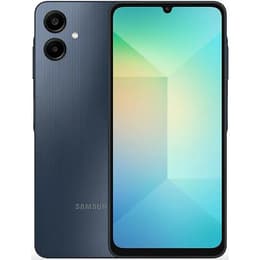
Galaxy A06
Galaxy A06
Starting at

Refurbished price:£70.00

Versus £158.08 new

See options
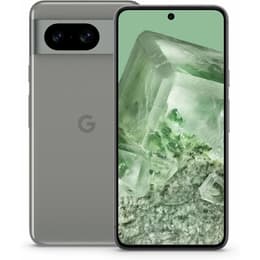
Google Pixel 8
Google Pixel 8
Starting at

Refurbished price:£185.99

Versus £699.99 new

See options

Ratings

The Samsung Galaxy A06 (2024) and the Google Pixel 8 (2023) are both smartphones designed for different segments of the market. While the Galaxy A06 focuses on essential features and accessibility, the Pixel 8 emphasizes advanced computational capabilities and a premium user experience. Both devices operate on the Android platform, but they offer distinct approaches to hardware and software integration, catering to varying user priorities.

Scores

Durability

When considering the long-term usability of these devices, their release timelines and software support policies are key differentiators.

  • Release and Software Support: The Google Pixel 8, released in October 2023, benefits from an extensive software commitment, offering up to seven years of operating system and security updates. This provides a prolonged period of access to the latest Android features and security enhancements. The Samsung Galaxy A06, with its LTE version released in August 2024 and a 5G variant in February 2025, has a more modest update policy. The LTE model is slated for two OS upgrades and four years of security updates, while the 5G model receives four OS upgrades and four years of security updates. [14, 22, 30]
  • Physical Durability: The Pixel 8 features Corning Gorilla Glass Victus protection on its display and an IP68 rating for dust and water resistance, indicating a higher level of protection against environmental elements. [4, 8] The Galaxy A06 includes Gorilla Glass for screen protection, but its specific IP rating for water and dust resistance is not as prominently featured in available specifications. [17]
  • Expected Lifespan: Users prioritizing extended software longevity and robust physical protection may find the Pixel 8 a more suitable choice for long-term use. The Galaxy A06, while offering adequate protection for its segment, is designed with a shorter software support window.

Year of Release

2024

2023

Compatible with latest Update

Yes

Yes

OS

Android

Android

Foldable

No

No

Performance

The performance of these smartphones varies significantly, reflecting their different design philosophies and target audiences.

  • Processing Power: The Google Pixel 8 is equipped with a processor designed for demanding applications, smooth multitasking, and advanced computational photography. This allows for responsive navigation, efficient handling of graphics-intensive games, and seamless execution of complex AI-driven features. [1, 2, 6] The Samsung Galaxy A06 utilizes a processor that capably handles everyday tasks such as web browsing, social media, and light gaming. [14, 7]
  • Multitasking and Storage: The Pixel 8 comes with 8GB of RAM, facilitating fluid transitions between multiple applications and supporting more intensive background processes. It offers internal storage options of 128GB or 256GB, without expandable storage. [1, 2, 6] The Galaxy A06 is available with 4GB or 6GB of RAM, which is sufficient for typical daily usage. It provides 64GB or 128GB of internal storage, with the added flexibility of microSD card expansion up to 1TB. [14, 17]
  • Battery Experience: The Galaxy A06 houses a larger 5000mAh battery, supporting 25W fast charging, which generally translates to extended usage times for average users. [14, 7, 17] The Pixel 8 has a 4575mAh battery with 27W wired and 18W wireless charging capabilities. User experiences with Pixel 8 battery life are varied, with some reporting average daily endurance and others achieving a full day of use depending on usage patterns and network conditions. [2, 4, 6, 8, 25, 26, 27]

Memory (GB)

4 GB

8 GB

Screen quality

The visual experience offered by these devices differs considerably due to their display technologies and specifications.

  • Display Technology and Clarity: The Google Pixel 8 features a 6.2-inch OLED display, providing deep blacks, vibrant colors, and excellent contrast. Its FHD+ resolution (1080x2400 pixels) results in sharp and detailed visuals, with a pixel density of 428 ppi. [1, 4, 8] In contrast, the Samsung Galaxy A06 has a larger 6.7-inch PLS LCD screen with an HD+ resolution (720x1600 pixels) and a pixel density of 262 ppi. This display offers a clear viewing experience for general content consumption. [14, 7, 17]
  • Brightness and Smoothness: The Pixel 8's display boasts a variable refresh rate of 60-120Hz, contributing to smoother scrolling and more fluid animations. It also achieves high brightness levels, with up to 1400 nits in High Brightness Mode (HBM) and a peak of 2000 nits, enhancing visibility in bright outdoor conditions. [1, 8, 9, 13, 15, 16] The Galaxy A06 features a standard 60Hz refresh rate, which is suitable for everyday interactions. [14, 7, 17]
  • Viewing Experience: Users prioritizing a more immersive and visually rich experience with superior color reproduction and smoother motion will find the Pixel 8's OLED display more appealing. For those who value a larger screen size for casual viewing and everyday tasks, the Galaxy A06 offers a spacious display.

Resolution

720 x 1600

1080 x 2400

Screen type

PLS LCD

OLED

Audiovisual

The camera systems of the Galaxy A06 and Pixel 8 are designed with different photographic capabilities and user expectations in mind.

  • Rear Camera System: The Google Pixel 8 features a dual-camera setup on the rear, including a 50MP wide-angle main camera with optical image stabilization (OIS) and a 12MP ultrawide camera with autofocus, enabling macro photography. This system is engineered for advanced computational photography, excelling in various lighting conditions and offering detailed, color-accurate images. [3, 4, 6, 8, 10, 21] The Samsung Galaxy A06 also has a dual rear camera system, comprising a 50MP primary camera and a 2MP secondary camera. This setup is capable of capturing clear everyday photos. [14, 7, 18]
  • Front Camera and Video: For selfies and video calls, the Pixel 8 includes a 10.5MP front-facing camera. It supports 4K video recording at 60 frames per second from both its front and rear cameras, and offers features like Dual Exposure for enhanced video quality. [3, 4, 6, 8, 10] The Galaxy A06 is equipped with an 8MP front camera and supports video recording suitable for casual use. [14, 7, 18]
  • Photography Focus: Users who prioritize advanced photographic capabilities, especially in challenging lighting, and desire high-quality video recording with computational enhancements, will find the Pixel 8's camera system more robust. The Galaxy A06 provides a straightforward camera experience for capturing daily moments.

Main camera

50 megapixels

50 megapixels

Front camera

8 megapixels

10.5 megapixels

Miscellaneous

Beyond the core specifications, several practical features contribute to the overall user experience of each device.

  • Connectivity and Ports: The Google Pixel 8 supports 5G connectivity and the latest Wi-Fi 7 standard, offering faster wireless speeds and improved network performance. It features a USB Type-C 3.2 Gen 2 port, which also supports external display output. [8, 13, 24, 31] The Samsung Galaxy A06 supports 4G LTE (with a 5G variant available) and standard Wi-Fi, along with Bluetooth 5.3 and a USB Type-C port for charging and data transfer. [14, 7, 18]
  • Biometric Security: The Pixel 8 incorporates an under-display optical fingerprint sensor and secure Face Unlock for convenient and robust biometric authentication. [1, 8, 9] The Galaxy A06 features a side-mounted fingerprint scanner for secure access. [5, 7]
  • Design and Handling: Both devices feature a glass front, with the Pixel 8 having a glass back and aluminum frame, contributing to a premium feel. [8] The Pixel 8 is slightly more compact and lighter at 150.5 x 70.8 x 8.9 mm and 187g. [1, 4, 6, 8] The Galaxy A06 measures 167.3 x 77.3 x 8.0 mm and weighs 189g (LTE) or 191g (5G), offering a larger form factor. [14, 7, 18]

Weight

189 g

187 g

Screen size (in)

6.7

6.2

Mobile network

4G

5G

SIM card

Dual Physical SIM

Physical SIM + eSIM

Carrier compatibility

Unlocked

Unlocked

The Samsung Galaxy A06 and Google Pixel 8 cater to distinct user needs, with each device offering a compelling set of features for its intended audience. The Pixel 8 is often praised for its advanced camera capabilities, smooth performance, and long-term software support, making it a strong contender for users who prioritize a premium Android experience with cutting-edge features. [22, 30] Some users, however, have noted mixed experiences with its battery life, depending on their usage patterns. [25, 26, 27]

The Galaxy A06, on the other hand, is recognized for its large display, substantial battery capacity, and expandable storage, providing a practical and accessible smartphone experience. It is well-suited for users seeking essential smartphone functionalities without the need for high-end performance or advanced photographic tools. Criticisms often revolve around its more basic display technology and a shorter software update commitment compared to higher-tier devices. [14, 17]

Users prioritizing a compact device with a superior display, advanced camera features, and extended software longevity will find the Google Pixel 8 aligns well with their requirements. Conversely, individuals who value a larger screen, long battery life, expandable storage, and a more budget-conscious approach to smartphone ownership may find the Samsung Galaxy A06 to be a more fitting choice. Both devices, whether new or as quality-assured refurbished options, offer a sustainable choice for consumers looking to make informed purchasing decisions.


See all articles

Our recent comparisons