
Galaxy S25 Vs iPhone 17

Galaxy S25
Galaxy S25
Starting at

Refurbished price:£435.00

Versus £766.13 new

See options
iPhone 17
iPhone 17
Starting at

Refurbished price:£689.00

Versus £799.00 new

See options

Ratings

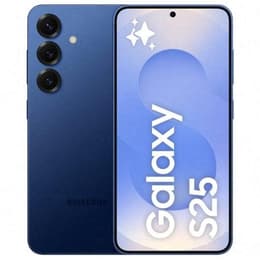
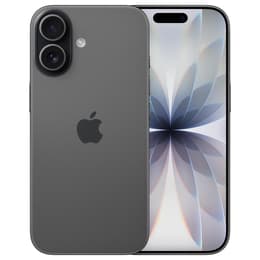
The Samsung Galaxy S25, released in early 2025, and the iPhone 17, launched in late 2025, represent the latest iterations of their respective flagship smartphone lines. While both devices offer premium experiences, they approach design, software, and hardware with distinct philosophies. The Galaxy S25 operates on Android 15 with Samsung's One UI 7.0, while the iPhone 17 runs on iOS 26.x.

Scores

Durability

When considering the longevity of a smartphone, both software support and physical durability play significant roles.

  • Software Support: The Samsung Galaxy S25 is scheduled to receive seven generations of Android OS upgrades and seven years of security updates, meaning it could run Android 22 by the end of its support period. The iPhone 17 is expected to receive iOS updates for approximately 5 to 7 years, with security updates often extending beyond that.
  • Physical Durability: The Galaxy S25 features Corning Gorilla Glass Victus 2 protection and an armor aluminum frame, maintaining an IP68 rating for dust and water resistance. The iPhone 17 incorporates Ceramic Shield 2 for enhanced scratch resistance and also carries an IP68 rating for water and dust protection.
  • Repairability: While specific repairability scores can vary, both manufacturers generally offer repair services and parts for several years post-release. User sentiment on Reddit suggests that some iPhone users aim for 5+ years of use, with battery replacements being a common consideration for extending lifespan.

Year of Release

2025

2025

OS

Android

iOS

Foldable

No

No

Performance

Both the Galaxy S25 and iPhone 17 deliver robust performance for a wide range of tasks, though their underlying architectures differ.

  • Processing Power: The Galaxy S25 is powered by the Snapdragon 8 Elite SoC, which is manufactured using a 3 nm process and features an octa-core CPU. This processor is designed to handle demanding applications and multitasking smoothly. The iPhone 17 utilizes the Apple A19 chip, which also provides strong and efficient performance.
  • Multitasking and Responsiveness: The Galaxy S25 comes with 12GB of RAM, which contributes to smooth multitasking and app handling. The iPhone 17 typically features 8GB of RAM. User reviews for the Galaxy S25 indicate it is a capable device for gaming and daily use, with no noticeable lag or heating during intensive tasks.
  • Storage Options: The Galaxy S25 starts with 128GB of storage, while the iPhone 17 starts at 256GB, offering more base storage.

Memory (GB)

12 GB

8 GB

Screen quality

The display experience on both the Galaxy S25 and iPhone 17 is designed to be immersive and visually engaging.

  • Display Technology and Resolution: The Galaxy S25 features a 6.2-inch Dynamic AMOLED 2X LTPO display with an FHD+ resolution (2340 x 1080 pixels) and a pixel density of 416 ppi. The iPhone 17 has a slightly larger 6.3-inch Super Retina XDR OLED display with a resolution of 2622 x 1206 pixels at 460 ppi.
  • Refresh Rate and Brightness: Both devices offer an adaptive refresh rate of 1Hz to 120Hz, contributing to smooth scrolling and responsiveness. The iPhone 17 boasts a peak brightness of 3,000 nits, while the Galaxy S25 reaches a peak brightness of 2,600 nits. The iPhone 17 also includes an anti-reflective coating.
  • Viewing Experience: Both displays provide crisp visuals with vibrant colors and high contrast ratios, suitable for media consumption and everyday use. The iPhone 17's display upgrades, including the larger size and ProMotion, aim to provide a more premium viewing experience.

Resolution

1080x2340

2622x1206

Screen type

Dynamic LTPO AMOLED 2X

Super Retina XDR

Audiovisual

Both the Galaxy S25 and iPhone 17 offer advanced camera systems designed for high-quality photography and videography.

  • Rear Camera System: The Galaxy S25 features a triple rear camera system, including a 50MP wide-angle main camera, a 12MP ultra-wide camera with a 120° field of view, and a 10MP telephoto camera with 3x optical zoom. The iPhone 17 has a 48MP Dual Fusion camera system, comprising a 48MP Fusion Main lens and a 48MP Fusion ultra-wide lens.
  • Photography Performance: The Galaxy S25's camera system focuses on optimization to enhance image quality, delivering crisp details and accurate color reproduction. User reviews suggest good daylight photography and noticeable improvements in night photography and focus modes. The iPhone 17's 48MP main camera is noted for rendering detail well, and the 48MP ultrawide offers flexibility.
  • Video Capabilities: The Galaxy S25 can record 8K video at 30 frames per second. The iPhone 17 supports 4K Dolby Vision video recording at various frame rates, including 24, 25, 30, or 60 fps, and features like Cinematic mode and Action mode.

Miscellaneous

Beyond core features, several practical elements differentiate the user experience of these two smartphones.

  • Connectivity and Ports: Both devices support 5G connectivity. The iPhone 17 is expected to feature USB-C for charging and data transfer, and supports Bluetooth 6. The Galaxy S25 uses USB-C and supports Bluetooth 5.4. The iPhone 17 is eSIM-only in some regions, while the Galaxy S25 typically includes a physical SIM tray.
  • Biometric Security: The iPhone 17 relies on Face ID for secure authentication. The Galaxy S25 typically features an in-display fingerprint sensor and face recognition.
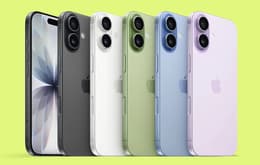
  • Design and Handling: The Galaxy S25 has a weight of 162 grams and a thickness of 7.2mm, making it a compact and comfortable device to hold. The iPhone 17 weighs 177 grams and measures 7.95mm thick. Both phones feature premium build materials, with the iPhone 17 using an aluminum design.

Weight

162 g

177 g

Screen size (in)

6.2

6.3

Mobile network

5G

5G

SIM card

Physical SIM + eSIM

Physical SIM + eSIM

Carrier compatibility

Unlocked

Unlocked

The Samsung Galaxy S25 and iPhone 17 both stand as strong contenders in the premium smartphone market, each with distinct strengths that cater to different user preferences. User feedback for the Galaxy S25 often praises its compact size, comfortable handling, and the extensive customization options offered by One UI. Its performance is generally considered robust for gaming and daily tasks, with users appreciating the seamless experience. Some common criticisms include average battery life for heavy users and camera performance that, while good, might not always match the vividness of some competitors in certain scenarios.

For the iPhone 17, users frequently highlight its strong and efficient performance, the significant display upgrades including the ProMotion refresh rate, and the capable camera system. The extended software support is also a consistent positive point for Apple devices. Some users, particularly those coming from Pro models, might note the absence of a dedicated telephoto lens on the base iPhone 17 as a difference in photographic flexibility. Battery life, while improved, is sometimes described as modest compared to some Android counterparts.

Users prioritizing extensive software longevity and a highly customizable Android experience, coupled with a compact design, may find the Galaxy S25 well-suited to their needs. Those who value a streamlined user experience, long-term iOS updates, and a strong focus on video capabilities and display quality might lean towards the iPhone 17. Both devices offer a premium experience, and for those considering a quality-assured refurbished option, both models are available, providing an eco-friendly alternative to purchasing new.
See all articles

Our recent comparisons