
Compare models

Google Pixel 6 Vs Motorola Moto G13

  • 1-year minimum warranty
  • Free delivery on all items
  • Free 30-day returns
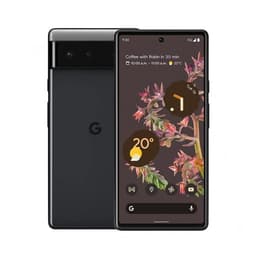
Google Pixel 6
Google Pixel 6
Starting at

Refurbished price:£102.00

Versus £999.00 new

See options
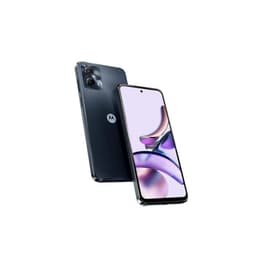
Motorola Moto G13
Motorola Moto G13
Starting at

Refurbished price:£99.00

Versus £166.76 new

See options

Differences at a glance

The Google Pixel 6, released in October 2021, and the Motorola Moto G13, launched in January 2023, represent distinct approaches to the smartphone market. The Pixel 6 is positioned as a device with advanced computational photography and a custom-designed processor, while the Moto G13 focuses on delivering essential smartphone features with a strong emphasis on battery longevity. Both devices operate on the Android platform, offering different user experiences tailored to their respective hardware capabilities.

Scores

Durability

When considering the long-term usability of these devices, their release timelines and software support policies are key differentiators.

  • Release Timeline: The Google Pixel 6 was released in October 2021, making it an older device compared to the Motorola Moto G13, which launched in January 2023. This age difference directly impacts their remaining software support.
  • OS Support Duration: The Pixel 6 was initially promised three years of OS updates and five years of security updates. However, Google later extended this, confirming the Pixel 6 series would receive a total of five years of OS and security updates from its launch date, meaning support will continue until October 2026. The Moto G13 launched with Android 13 and has received an update to Android 14. Motorola typically provides one major OS update and 2-3 years of security updates for its budget phones, and the Moto G13 has reached its end of life for further Android OS updates.
  • Repairability: The Pixel 6 has a moderate repairability score, with some praise for the ease of display removal, though battery replacement can be challenging. The Moto G13, with its plastic build, is generally considered easier to repair, particularly for components like the battery.

Year of Release

2021

2023

Compatible with latest Update

Yes

No

OS

Android

Android

Foldable

No

No

Performance

The performance capabilities of the Google Pixel 6 and Motorola Moto G13 cater to different user expectations, largely due to their internal hardware.

  • Processor Capabilities: The Pixel 6 features a custom-designed processor engineered for advanced AI and machine learning tasks, enabling smooth operation for demanding applications, complex photo processing, and efficient multitasking. The Moto G13 is equipped with an entry-level processor that handles everyday tasks like browsing, social media, and light applications adequately.
  • System Responsiveness: Users of the Pixel 6 generally report a responsive experience, with applications loading quickly and smooth transitions, even during intensive use. The Moto G13 provides a functional experience for basic navigation and app usage, though some users may notice occasional delays or less fluid performance with more demanding operations.
  • Battery Behavior: The Pixel 6, with its 4614 mAh battery, is reported to offer reliable all-day battery life for typical usage, though heavy use, such as extensive photography or gaming, may require more frequent charging. The Moto G13, featuring a larger 5000 mAh battery, is frequently praised for its extended battery life, often lasting one and a half to two days for average users.

Memory (GB)

8 GB

4 GB

Screen quality

The visual experience on both devices differs significantly, primarily due to their display technologies and resolutions.

  • Display Technology and Resolution: The Google Pixel 6 features a 6.4-inch OLED display with a Full HD+ resolution (1080 x 2400 pixels), offering deep blacks, vibrant colors, and sharp image clarity. The Motorola Moto G13 comes with a 6.5-inch IPS LCD screen with an HD+ resolution (720 x 1600 pixels), providing a larger viewing area but with less pixel density and color contrast compared to the Pixel 6.
  • Refresh Rate and Brightness: Both devices offer a 90Hz refresh rate, contributing to smoother scrolling and a more fluid visual experience than standard 60Hz displays. The Pixel 6's OLED panel generally achieves higher peak brightness, making it more comfortable for outdoor viewing. The Moto G13's LCD panel offers acceptable brightness levels for indoor use.
  • Viewing Experience: The Pixel 6's OLED display is well-suited for media consumption, offering excellent contrast and color accuracy. The Moto G13's larger LCD screen provides a spacious canvas for content, though the lower resolution means less sharpness for fine details.

Resolution

1080 x 2400

720 x 1600

Screen type

AMOLED

IPS LCD

Audiovisual

The camera systems on the Google Pixel 6 and Motorola Moto G13 are designed with different priorities, impacting their photographic and video capabilities.

  • Still Photography: The Pixel 6 features a 50MP main camera with optical image stabilization (OIS) and a 12MP ultrawide lens, known for producing detailed, color-accurate photos with excellent dynamic range, especially in various lighting conditions. The Moto G13 also has a 50MP main camera, accompanied by 2MP macro and depth sensors. It performs well in good lighting, capturing detailed images, but its performance in challenging light conditions is more limited.
  • Video Recording: The Pixel 6 supports 4K video recording at up to 60 frames per second, with good stabilization and overall quality, though some users note occasional issues with dynamic range in videos. The Moto G13 records video at 1080p resolution at 30 frames per second, suitable for casual recording but with less detail and stabilization compared to the Pixel 6.
  • Audio Experience: The Pixel 6 includes stereo speakers, providing a balanced audio output for media consumption. The Moto G13 also offers stereo speakers, which deliver acceptable sound quality, though some users report noise at higher volumes.

Main camera

50 megapixels

50 megapixels

Front camera

8 megapixels

8 megapixels

Miscellaneous

Beyond core features, several practical elements contribute to the overall user experience of these smartphones.

  • Connectivity and Ports: The Google Pixel 6 supports 5G connectivity and Wi-Fi 6E, offering faster wireless speeds and future-proofing. It features a USB-C port for charging and data transfer. The Motorola Moto G13 supports 4G LTE and Wi-Fi 5. It includes both a USB-C port and a 3.5mm headphone jack, a feature absent on the Pixel 6.
  • Biometric Security: The Pixel 6 incorporates an under-display optical fingerprint sensor for secure unlocking. The Moto G13 features a side-mounted fingerprint sensor, which some users find convenient, and also supports face unlock.
  • Build Materials and Handling: The Pixel 6 has a more premium build with Gorilla Glass Victus on the front and Gorilla Glass 6 on the back, encased in an aluminum frame, and boasts an IP68 rating for dust and water resistance. The Moto G13 features a plastic frame and back, contributing to its lighter weight, and has a water-repellent design with an IP52 rating, offering basic protection against splashes.

Weight

207 g

183 g

Screen size (in)

6.4

6.5

Mobile network

5G

4G

SIM card

Physical SIM + eSIM

Dual Physical SIM

Carrier compatibility

Unlocked

Unlocked

What the community thinks

The Google Pixel 6 and Motorola Moto G13 cater to different user needs and priorities. The Pixel 6 is often praised for its exceptional camera capabilities, robust performance for demanding tasks, and its commitment to extended software support. Users frequently highlight its ability to capture high-quality photos in various conditions and its smooth overall operation. Some common criticisms have included the performance of its in-display fingerprint sensor and occasional heating under heavy load.

Conversely, the Motorola Moto G13 receives commendation for its impressive battery life, often lasting well over a day, and its inclusion of a 3.5mm headphone jack. Users appreciate its practical design and its ability to handle everyday smartphone functions reliably. Criticisms sometimes point to its less powerful processor and the limitations of its camera in challenging lighting.

Users prioritizing advanced camera features, a more powerful processor for intensive applications, and longer software update support may find the Google Pixel 6 better suited to their needs. Its OLED display also offers a more vibrant visual experience. On the other hand, individuals who value extended battery life, a traditional headphone jack, and a device capable of handling essential tasks without a focus on high-end performance might lean towards the Motorola Moto G13. For those considering either device, exploring quality-assured refurbished options can provide an eco-friendly alternative to new purchases, extending the life cycle of these electronics.