
Google Pixel 6A Vs Google Pixel 8a

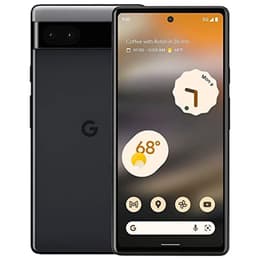
Google Pixel 6A
Google Pixel 6A
Starting at

Refurbished price:£107.00

Versus £459.00 new

See options
Google Pixel 8a
Google Pixel 8a
Starting at

Refurbished price:£216.00

Versus £467.97 new

See options

Ratings

The Google Pixel 6a, released in July 2022, and the Google Pixel 8a, launched in May 2024, represent two generations of Google's more accessible smartphone line. While both devices offer a streamlined Android experience, the Pixel 8a introduces notable advancements in processing power, display technology, and camera capabilities, alongside a significantly extended software support timeline.

Scores

Durability

The longevity of a smartphone is influenced by its physical resilience and the duration of its software support. Both the Pixel 6a and Pixel 8a are designed with practical lifespans in mind, though their support timelines differ.

  • Software Support: The Pixel 6a is set to receive security updates until July 2027 and OS updates until at least July 2025, with some sources indicating OS updates may extend to July 2027. In contrast, the Pixel 8a boasts an extensive commitment of seven years of OS updates, security updates, and Feature Drops, extending its support until May 2031.
  • Repairability: The Pixel 6a received a repairability score of 7 out of 10, with its battery being relatively easier to replace compared to some other Pixel models, though the charger port is soldered to the main board. The Pixel 8a has a similar repairability score of 7.5 out of 10, featuring an easily removable plastic back cover and a separately replaceable camera lens cover. However, its battery adhesive can be particularly stubborn, and the charging port is also soldered.
  • Physical Durability: Both devices feature a plastic back, an aluminum frame, and Corning Gorilla Glass 3 on the front, offering a similar level of protection against everyday wear and tear. Both also carry an IP67 rating for dust and water resistance.

Year of Release

2022

2024

Compatible with latest Update

Yes

Yes

OS

Android

Android

Foldable

No

No

Performance

Performance is a key differentiator, impacting how smoothly applications run and how responsive the device feels during daily use.

  • Processing Power: The Pixel 6a is equipped with the first-generation Google Tensor chip, which provides capable performance for general tasks and moderate multitasking. The Pixel 8a, however, features the more advanced Google Tensor G3 processor, offering a significant boost in speed and efficiency for demanding applications and complex operations.
  • Multitasking and Responsiveness: With 6GB of RAM, the Pixel 6a handles typical daily usage effectively, though some users have reported occasional slowdowns or overheating, particularly during extended calls or when using the hotspot. The Pixel 8a comes with 8GB of RAM, contributing to a smoother overall experience, faster app loading, and more seamless multitasking, even with graphically intensive applications.
  • Storage Options: The Pixel 6a is available with 128GB of internal storage. The Pixel 8a offers more flexibility with both 128GB and 256GB storage options, catering to users with larger storage needs.

Memory (GB)

6 GB

8 GB

Screen quality

The display is a primary interface for user interaction, and both Pixel models offer distinct viewing experiences.

  • Display Technology and Size: Both the Pixel 6a and Pixel 8a feature a 6.1-inch OLED display with a Full HD+ resolution (2400 x 1080 pixels), resulting in sharp and clear visuals.
  • Refresh Rate: A notable difference lies in the refresh rate. The Pixel 6a has a standard 60Hz refresh rate, which provides a consistent but less fluid scrolling experience. The Pixel 8a upgrades to an adaptive 120Hz refresh rate, delivering noticeably smoother animations and a more responsive feel when navigating the interface and scrolling through content.
  • Brightness: The Pixel 6a offers a peak brightness of approximately 800 nits. The Pixel 8a significantly improves upon this, reaching a peak brightness of up to 2000 nits, with typical high brightness mode (HBM) reaching around 1400 nits, making it much easier to view content clearly in bright outdoor conditions.

Resolution

1080 x 2400

1080 x 2400

Screen type

OLED

OLED

Audiovisual

Camera performance is a hallmark of the Pixel series, and both devices deliver capable photography, with the newer model offering enhancements.

  • Rear Camera System: The Pixel 6a features a dual-camera setup with a 12.2MP main sensor (with optical image stabilization) and a 12MP ultrawide lens. The Pixel 8a steps up with a 64MP main sensor (also with optical image stabilization) and a 13MP ultrawide lens, providing more detail and improved low-light performance.
  • Front Camera and Video: For selfies and video calls, the Pixel 6a includes an 8MP front camera. The Pixel 8a features a higher-resolution 13MP front camera. Both phones are capable of recording 4K video, with the Pixel 8a offering improved video quality and features.
  • Computational Photography and Audio: Both devices leverage Google's computational photography for features like Night Sight and Magic Eraser. The Pixel 8a introduces additional capabilities such as Magic Editor and Audio Magic Eraser, which can enhance photos and clean up audio in videos. The Pixel 6a's speakers are generally loud but may lack stereo separation, while the Pixel 8a's stereo speakers are also loud but can exhibit some harshness at maximum volume.

Main camera

12.2 megapixels

64 megapixels

Front camera

8 megapixels

13 megapixels

Miscellaneous

Beyond core features, several practical elements contribute to the overall user experience of these smartphones.

  • Connectivity: Both the Pixel 6a and Pixel 8a support 5G connectivity and Wi-Fi 6E for fast wireless internet. The Pixel 8a includes a slightly newer Bluetooth 5.3 standard compared to the Pixel 6a's Bluetooth 5.2, offering minor improvements in connection stability and efficiency.
  • Ports and Biometrics: Both devices utilize a USB-C port for charging and data transfer, with the Pixel 8a featuring the slightly faster USB-C 3.2 standard compared to the Pixel 6a's USB-C 3.1. Both phones rely on an under-display fingerprint sensor for secure unlocking. The Pixel 8a adds the convenience of Face Unlock. Neither device includes a traditional 3.5mm headphone jack.
  • Design and Build: The Pixel 6a measures 152.2 x 71.8 x 8.9 mm and weighs 178g. The Pixel 8a is very similar in dimensions at 152.1 x 72.7 x 8.9 mm but is slightly heavier at 188g. Both phones feature a plastic back and an aluminum frame, contributing to their durability.

Weight

250 g

188 g

Screen size (in)

6.1

6.1

Mobile network

5G

5G

SIM card

Physical SIM + eSIM

Physical SIM + eSIM

Carrier compatibility

Unlocked

Unlocked

The Google Pixel 6a and Pixel 8a cater to slightly different user priorities, reflecting the advancements made over two generations.

Users often praise the Pixel 6a for its capable camera performance, compact form factor, and reliable daily operation, especially considering its initial positioning. However, common criticisms include its 60Hz display, which some found less fluid, and occasional reports of the device running warm or having a less responsive fingerprint sensor.

The Pixel 8a, on the other hand, is frequently lauded for its vibrant 120Hz display, significantly improved performance thanks to its newer processor, and enhanced camera capabilities with advanced AI features. Its extended software support is also a major highlight for users seeking long-term device usability. Some users have noted the presence of larger bezels around the screen and a plastic build, though the overall feel is often described as premium.

Users prioritizing a device with extensive software longevity, a smoother visual experience, and robust performance for modern applications and advanced photography will find the Pixel 8a well-suited to their needs. This makes it a strong choice for professionals or students who rely on their device for many years. Conversely, those seeking a more compact and still capable smartphone for essential tasks and good photography, and who do not require the absolute latest in display smoothness or processing power, may find the Pixel 6a to be a practical option. Both models offer a quality Android experience, and for those considering an eco-friendly alternative, a quality-assured refurbished option of either device can provide excellent value and contribute to sustainable consumption.


See all articles

Our recent comparisons