Compare models

Galaxy S21 Ultra 5G Vs Galaxy Z Fold5

  • 1-year minimum warranty
  • Free delivery on all items
  • Free 30-day returns
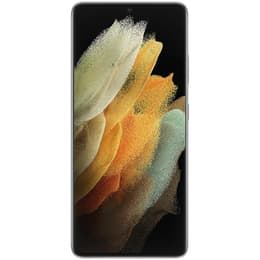
Galaxy S21 Ultra 5G
Galaxy S21 Ultra 5G
Starting at

Refurbished price:£180.00

Versus £1,316.00 new

See options
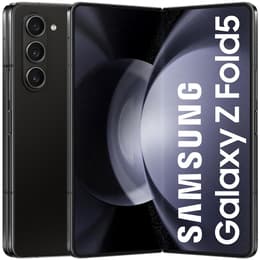
Galaxy Z Fold5
Galaxy Z Fold5
Starting at

Refurbished price:£395.00

Versus £1,627.21 new

See options

Differences at a glance

The Samsung Galaxy S21 Ultra 5G, released in January 2021, represents a traditional premium smartphone experience, offering a large, high-quality display and a versatile camera system. In contrast, the Samsung Galaxy Z Fold5, launched in August 2023, introduces a foldable design, transforming from a compact smartphone into a larger tablet-like device. These two Android-based devices cater to different user preferences, primarily distinguished by their form factor and the unique functionalities that arise from it.

Scores

Durability

When considering the longevity of these devices, several factors come into play, including their release timelines, software support, and physical durability.

  • Release Timeline and Software Support: The Galaxy S21 Ultra 5G, released in January 2021, launched with Android 11 and is expected to receive four major Android OS upgrades, bringing it up to Android 15, along with five years of security updates. The Galaxy Z Fold5, released in August 2023 with Android 13, also follows Samsung's policy of four major OS upgrades and five years of security updates, meaning it will receive updates up to Android 17. This gives the Z Fold5 a longer software support window due to its more recent release.
  • Physical Durability: The S21 Ultra 5G features an IP68 rating for dust and water resistance and Gorilla Glass Victus protection. However, iFixit gave it a repairability score of 3 out of 10, noting the extensive use of glue and a non-modular display cable. The Galaxy Z Fold5 boasts an IPX8 water resistance rating, but lacks an official dust resistance rating, a common characteristic of foldable devices. Its cover screen is protected by Gorilla Glass Victus 2, and it features a redesigned hinge that allows it to fold completely flat. User reports indicate that the folding screen can be a point of concern for long-term durability, with some experiencing screen failure along the crease after about a year.
  • Expected Practical Lifespan: While both devices offer robust software support for several years, the traditional slab design of the S21 Ultra 5G may offer a more predictable physical lifespan compared to the Z Fold5's folding mechanism, which introduces additional moving parts and a flexible display.

Year of Release

2021

2023

Compatible with latest Update

Yes

Yes

OS

Android

Android

Foldable

No

Yes

Performance

The performance of a smartphone is largely determined by its internal components, impacting everything from app responsiveness to multitasking capabilities and gaming.

  • Processor Capabilities: The Galaxy S21 Ultra 5G is powered by a processor from an earlier generation (Snapdragon 888 or Exynos 2100, depending on region). The Galaxy Z Fold5 features a more recent and optimized processor, the Snapdragon 8 Gen 2 for Galaxy. This newer processor in the Z Fold5 generally translates to faster app loading times, smoother transitions, and more efficient handling of demanding applications and games.
  • Multitasking and Responsiveness: Both devices come with 12GB of RAM, with some S21 Ultra 5G configurations offering up to 16GB. The Z Fold5's larger internal display, combined with its more powerful processor, provides a more fluid and capable experience for extensive multitasking, such as running multiple apps side-by-side or using Samsung DeX for a desktop-like environment. Users of the Z Fold5 often report a superfast experience with no lag, comparable to other premium devices.
  • Storage Options: Both models offer various internal storage configurations, with the S21 Ultra 5G available in 128GB, 256GB, and 512GB, and the Z Fold5 offering 256GB, 512GB, and 1TB options. Neither device supports expandable storage via microSD cards.

Memory (GB)

12 GB

12 GB

Screen quality

The display is a primary interaction point, and both devices offer distinct visual experiences due to their form factors and display technologies.

  • Display Technology and Resolution: The Galaxy S21 Ultra 5G features a single 6.8-inch Dynamic AMOLED 2X display with a resolution of 3200x1440 pixels, resulting in a high pixel density. The Galaxy Z Fold5 offers two displays: a 6.2-inch Dynamic AMOLED 2X cover screen (2316x904 pixels) and a 7.6-inch Foldable Dynamic AMOLED 2X main internal screen (2176x1812 pixels). The main screen of the Fold5 has a lower pixel density than the S21 Ultra's display when considering the overall screen area.
  • Brightness and Refresh Rate: Both devices feature adaptive 120Hz refresh rates for smooth scrolling and responsiveness, adjusting dynamically to conserve power. The Z Fold5's main display offers a higher peak brightness of 1750 nits, making it more readable in bright outdoor conditions compared to the S21 Ultra 5G.
  • Viewing Experience: The S21 Ultra 5G provides a consistent, expansive viewing area. The Z Fold5 offers versatility, with the smaller cover screen for quick interactions and the larger internal screen for immersive content consumption, web browsing, and productivity. The crease on the Z Fold5's main display is still present but is reported to be less noticeable than on previous foldable generations.

Resolution

1440 x 3200

1812 x 2176

Screen type

Dynamic AMOLED 2X

Foldable Dynamic AMOLED 2X

Audiovisual

Both the Galaxy S21 Ultra 5G and the Galaxy Z Fold5 offer advanced camera systems, though with different strengths and configurations.

  • Rear Camera Systems: The S21 Ultra 5G boasts a quad-camera setup, including a 108MP main sensor, a 12MP ultrawide, a 10MP telephoto with 3x optical zoom, and a 10MP periscope telephoto with 10x optical zoom. This configuration provides extensive zoom capabilities. The Z Fold5 features a triple-camera system with a 50MP main sensor, a 12MP ultrawide, and a 10MP telephoto lens offering 3x optical zoom. While the Fold5's camera hardware is similar to other premium Samsung devices, the S21 Ultra 5G offers greater optical zoom range.
  • Photography Performance: The S21 Ultra 5G is known for its detailed images and versatile zoom. The Z Fold5's camera system delivers good color reproduction and detail in well-lit conditions, with natural-looking HDR. Low-light performance on the Fold5 is generally good, though some users note it can be grainier than expected for a premium device. Both devices offer 8K video recording capabilities.
  • Front-Facing Cameras: The S21 Ultra 5G has a single 40MP front camera. The Z Fold5 has two front-facing cameras: a 10MP camera on the cover screen and a 4MP under-display camera on the main folding screen, which is primarily intended for video calls. For high-quality selfies, users of the Z Fold5 are often advised to use the main rear cameras with the device unfolded.

Main camera

108 megapixels

50 megapixels

Front camera

40 megapixels

4 megapixels

Miscellaneous

Beyond the core features, several practical elements differentiate these two Samsung flagships.

  • Connectivity and Ports: Both devices support 5G connectivity, Wi-Fi 6E, and Bluetooth 5.2. They both utilize a USB-C port for charging and data transfer, and neither includes a 3.5mm headphone jack.
  • Biometric Security and Sensors: The S21 Ultra 5G features an in-display ultrasonic fingerprint sensor. The Z Fold5 incorporates a side-mounted fingerprint sensor. Both offer face recognition for unlocking.
  • Physical Design and Handling: The S21 Ultra 5G is a traditional slab smartphone, weighing around 227-229 grams and measuring 8.9mm thick. The Z Fold5, while heavier at 253 grams, offers a unique folding design. When folded, it is thicker (13.4mm) but narrower, making one-handed use of the cover screen comfortable. Unfolded, it becomes a thin (6.1mm) tablet-like device.
  • S Pen Support: The S21 Ultra 5G was the first S series phone to support the S Pen, though it requires a separate purchase and case for storage. The Z Fold5 also supports an external S Pen, with a redesigned, slimmer case available.

Weight

227 g

253 g

Screen size (in)

6.8

Not included

Mobile network

5G

5G

SIM card

Physical SIM + eSIM

Dual Physical SIM + eSIM

Carrier compatibility

Unlocked

Unlocked

What the community thinks

The Samsung Galaxy S21 Ultra 5G and Galaxy Z Fold5 cater to distinct user needs, primarily defined by their form factor and the experiences they enable. The S21 Ultra 5G is praised for its robust battery life, high-resolution display, and comprehensive camera system with extensive zoom capabilities. Users appreciate its consistent performance and premium build. Some criticisms for the S21 Ultra 5G include its repairability challenges due to the use of glue and non-modular components.

The Galaxy Z Fold5 is lauded for its innovative folding design, offering the versatility of a compact smartphone and a larger tablet-like screen for enhanced productivity and media consumption. Its improved hinge and powerful processor contribute to a smooth user experience. However, common concerns for foldable devices, including the Z Fold5, revolve around the long-term durability of the folding screen and the absence of a dust resistance rating.

Users prioritizing a traditional, durable smartphone with a powerful camera and long battery life may find the Galaxy S21 Ultra 5G well-suited to their needs. Those who value a versatile device that can transform from a phone to a small tablet for multitasking, immersive viewing, and unique productivity features will likely lean towards the Galaxy Z Fold5. Both devices offer a premium Android experience, and for those considering a quality-assured refurbished option, both models present an eco-friendly alternative to purchasing new.