
Galaxy S23 FE Vs iPhone 16e

Galaxy S23 FE
Galaxy S23 FE
Starting at

Refurbished price:£162.00

Versus £605.75 new

See options
iPhone 16e
iPhone 16e
Starting at

Refurbished price:£359.00

Versus £599.00 new

See options

Ratings

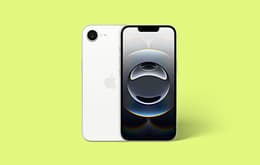
The Samsung Galaxy S23 FE, released in October 2023, and the hypothetical iPhone 16E, which was presented as an entry-level model in February 2025, represent distinct approaches to smartphone design and functionality. While the Galaxy S23 FE operates on the Android ecosystem, the iPhone 16E runs on Apple's iOS. Key differences between these two devices include their display technology, camera systems, and biometric security methods.

It is important to note that information regarding the iPhone 16E is based on published hypothetical specifications and simulated product announcements, as it was presented as a model released in early 2025 and subsequently discontinued in early 2026 in favor of a successor.

Scores

Durability

The longevity of a smartphone is influenced by its release timeline, software support, and physical durability.

  • Release Timeline: The Galaxy S23 FE was released in October 2023, making it a more established device on the market. The iPhone 16E, hypothetically introduced in February 2025, had a short lifespan as a new product, being discontinued in March 2026.
  • Software Support: Samsung typically provides 4 years of major OS updates and 5 years of security updates for the Galaxy S23 FE. As of early 2026, the S23 FE is expected to receive Android 17 later this year. The iPhone 16E, running iOS, would have benefited from Apple's extended software support, typically spanning 6-7 years from its release.
  • Physical Durability: Both devices feature robust construction. The Galaxy S23 FE incorporates Gorilla Glass 5 on both its front and back, complemented by an aluminum frame, and carries an IP68 rating for dust and water resistance. The iPhone 16E, according to its hypothetical specifications, features a Ceramic Shield front, a glass back, and an aluminum frame, also with an IP68 rating.

Year of Release

2023

2025

OS

Android

iOS

Foldable

No

No

Performance

Performance in daily use, from app handling to multitasking, is driven by the internal processing capabilities and memory configuration of each device.

  • Processing Power: The Galaxy S23 FE is equipped with a processor that handles demanding applications and multitasking effectively, providing smooth operation for most users. The iPhone 16E, hypothetically powered by an A18 chip, is designed for fast and smooth performance, with a focus on power efficiency and advanced computational tasks, including those related to artificial intelligence.
  • Multitasking and Storage: The Galaxy S23 FE comes with 8GB of RAM, which supports efficient multitasking and app switching. It offers storage options of 128GB and 256GB. The iPhone 16E is also specified with 8GB of RAM, contributing to responsive performance across various applications, and provides storage choices of 128GB, 256GB, and 512GB.
  • Battery Behavior: The Galaxy S23 FE features a 4500 mAh battery, with real-world usage often providing a full day of power for moderate users, though heavy use or certain software updates can lead to faster depletion. The iPhone 16E, with a hypothetical 4005 mAh battery, is described as offering significant battery life, benefiting from the efficiency of its internal components.

Memory (GB)

8 GB

8 GB

Screen quality

The visual experience on a smartphone is largely determined by its display technology, resolution, and brightness capabilities.

  • Display Technology and Size: The Galaxy S23 FE features a 6.4-inch Dynamic AMOLED 2X display, known for its vibrant colors and deep blacks. The iPhone 16E, according to hypothetical specifications, has a 6.1-inch Super Retina XDR OLED display, also offering rich colors and high contrast.
  • Resolution and Clarity: Both devices offer sharp visuals. The Galaxy S23 FE has a resolution of 2340 x 1080 pixels, providing clear and detailed images. The iPhone 16E's display has a resolution of 2532 x 1170 pixels, ensuring crisp text and graphics.
  • Brightness and Smoothness: The Galaxy S23 FE's screen can reach a peak brightness of up to 1450 nits, making it suitable for outdoor viewing, and features a 120Hz refresh rate for smooth scrolling and animations. The iPhone 16E offers a typical brightness of 800 nits and a peak HDR brightness of 1200 nits, with a standard 60Hz refresh rate.

Resolution

1080 x 2340

2532x1170

Audiovisual

Camera performance is a significant factor for many users, encompassing the quality of photos and videos in various conditions, as well as audio capture.

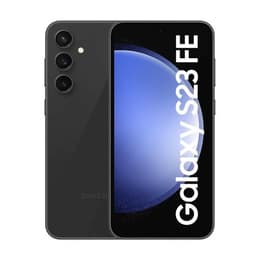
  • Rear Camera System: The Galaxy S23 FE is equipped with a versatile triple-camera setup, including a 50MP main sensor with optical image stabilization, a 12MP ultrawide lens, and an 8MP telephoto lens offering 3x optical zoom. The iPhone 16E, based on hypothetical specifications, features a 48MP main camera with optical image stabilization and an integrated 2x telephoto capability that utilizes the main sensor.
  • Photography Performance: The Galaxy S23 FE delivers good image quality in various lighting conditions, with its telephoto lens being a notable advantage for zoomed shots. The iPhone 16E's camera system is designed to capture high-quality photos and videos, with enhancements for low-light scenarios and features like spatial video recording.
  • Video and Audio: The Galaxy S23 FE can record video at up to 8K resolution at 24 frames per second with its rear cameras and 4K at 60 frames per second with its front camera. The iPhone 16E also offers advanced video recording capabilities, and both devices are expected to provide clear audio capture for calls and media.

Front camera

10 megapixels

TrueDepth 12MP

Miscellaneous

Beyond core performance, several practical features contribute to the overall user experience, including connectivity, physical design, and security.

  • Connectivity and Ports: The Galaxy S23 FE supports 5G, Wi-Fi 6E, and Bluetooth 5.3, and features a USB-C port for charging and data transfer. The iPhone 16E also supports 5G and Bluetooth 5.3, with Wi-Fi 6 (802.11ax) and a USB-C port.
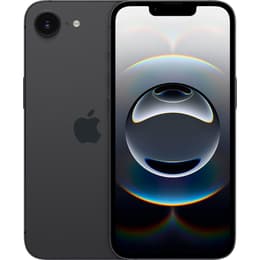
  • Biometrics and Special Features: The Galaxy S23 FE utilizes an in-display optical fingerprint sensor for secure unlocking. The iPhone 16E, according to its hypothetical design, incorporates Face ID for facial recognition and includes an Action Button, which can be customized for various functions.
  • Design and Handling: The Galaxy S23 FE measures 158 x 76.5 x 8.2 mm and weighs 209g, offering a solid feel in hand. The iPhone 16E is hypothetically more compact and lighter at 146.7 × 71.5 × 7.8 mm and 167g, with a design that blends elements of previous iPhone models.

Weight

209 g

167 g

Screen size (in)

6.4

6.1

Mobile network

5G

5G

SIM card

Dual Physical SIM

eSIM

Carrier compatibility

Unlocked

Unlocked

The Samsung Galaxy S23 FE and the hypothetical iPhone 16E cater to different user preferences within the smartphone market. The Galaxy S23 FE, a real product released in late 2023, is often praised for its vibrant AMOLED display with a high refresh rate, a versatile camera system that includes a dedicated telephoto lens, and its robust build quality. Users appreciate its performance for everyday tasks and gaming, and the flexibility of the Android operating system. Some common concerns noted by users include varying battery life experiences and the potential for performance differences depending on the regional processor variant.

The iPhone 16E, as a hypothetical model introduced in early 2025 and discontinued in early 2026, would have appealed to users seeking a more accessible entry into the Apple ecosystem with modern features. Its hypothetical strengths include the powerful A18 chip, a high-quality OLED display, and the integration of Apple's software features like Apple Intelligence. The inclusion of an Action Button and Face ID would have provided a familiar and secure user experience. However, its shorter hypothetical market availability and 60Hz display might have been considerations for some users.

Users who prioritize a larger, high-refresh-rate display and a dedicated optical zoom lens may find the Galaxy S23 FE well-suited to their needs. Conversely, those who value the iOS ecosystem, a compact design, and advanced processing capabilities for future-proof performance might have leaned towards the iPhone 16E, had it been a consistently available product. Both devices, whether real or hypothetical, offer compelling features, and considering a quality-assured refurbished option can be an eco-friendly alternative for either model.


See all articles

Our recent comparisons