
Galaxy S21 Ultra 5G Vs Google Pixel 8

Galaxy S21 Ultra 5G
Galaxy S21 Ultra 5G
Starting at

Refurbished price:£186.00

Versus £1,800.00 new

See options
Google Pixel 8
Google Pixel 8
Starting at

Refurbished price:£188.00

Versus £699.99 new

See options

Ratings

The Samsung Galaxy S21 Ultra 5G, released in January 2021, and the Google Pixel 8, launched in October 2023, are both high-end smartphones offering distinct user experiences. While the Galaxy S21 Ultra 5G emphasizes a comprehensive hardware suite with advanced zoom capabilities, the Pixel 8 focuses on a streamlined user interface and advanced computational intelligence. Both devices operate on the Android platform, but they offer different approaches to software integration and longevity.

Scores

Durability

The expected practical lifespan of a smartphone is significantly influenced by its release date and the manufacturer's commitment to software updates.

  • Release Timeline: The Galaxy S21 Ultra 5G was released in January 2021, making it an older device compared to the Google Pixel 8, which launched in October 2023.
  • OS Support Duration: The Galaxy S21 Ultra 5G received four major Android OS updates, concluding with Android 15 (One UI 7.0) in early 2025, and its security updates ended in January 2026. In contrast, the Google Pixel 8 is notable for its extended support, promising seven years of both OS and security updates from its release. This means the Pixel 8 will receive software support for a considerably longer period.
  • Repairability: Both devices are designed with modern smartphone construction, and their repairability scores are generally in line with their respective generations. Users considering a refurbished option for either model can benefit from devices that have undergone professional inspection and repair, ensuring quality and extending their usable life.

Year of Release

2021

2023

Compatible with latest Update

Yes

Yes

OS

Android

Android

Foldable

No

No

Performance

Performance in daily use is a key differentiator, with both devices offering robust capabilities for various tasks.

  • Processor Capabilities: The Galaxy S21 Ultra 5G, with its 5nm octa-core processor, handles demanding applications and multitasking smoothly, providing a responsive experience for users. The Google Pixel 8 features a newer generation processor designed by Google, which is optimized for artificial intelligence tasks and delivers efficient performance for everyday use, gaming, and advanced photo editing features.
  • Storage and RAM: The Galaxy S21 Ultra 5G offers configurations with up to 16GB of RAM and up to 512GB of internal storage, catering to users who require extensive storage and robust multitasking capabilities. The Pixel 8 comes with 8GB of RAM and storage options up to 256GB, which is sufficient for most users and typical application loads. Neither device includes a microSD card slot for expandable storage.
  • Battery Behavior: The Galaxy S21 Ultra 5G is equipped with a 5000mAh battery, which users often report lasts a full day even with heavy usage. The Pixel 8 has a 4575mAh battery, and Google states it can provide beyond 24-hour battery life, extending up to 72 hours with its Extreme Battery Saver mode.

Memory (GB)

12 GB

8 GB

Screen quality

The visual experience on both smartphones is delivered through high-quality displays, though with some notable differences.

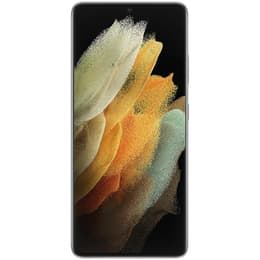
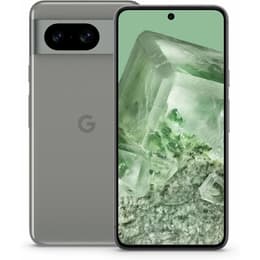
  • Display Technology and Resolution: The Galaxy S21 Ultra 5G features a 6.8-inch Edge QHD+ Dynamic AMOLED 2X display, offering a resolution of 3200x1440 pixels, resulting in sharp and detailed visuals. The Google Pixel 8 has a 6.2-inch FHD+ OLED display with a resolution of 2400x1080 pixels, providing clear images in a more compact form factor.
  • Brightness and Refresh Rate: The S21 Ultra 5G's display can reach a peak brightness of 1500 nits and features an adaptive refresh rate that ranges from 10Hz to 120Hz, allowing for smooth scrolling and power efficiency. The Pixel 8's display, branded as 'Actua Display', offers a peak brightness of 2000 nits and a 60-120Hz adaptive refresh rate, ensuring good visibility in bright conditions and fluid motion.
  • Viewing Experience: The larger, higher-resolution screen of the S21 Ultra 5G provides an expansive and immersive viewing experience, particularly for media consumption and detailed work. The Pixel 8's display, while smaller, offers excellent color accuracy and brightness, making it suitable for everyday tasks and outdoor use.

Resolution

1440 x 3200

1080 x 2400

Screen type

Dynamic AMOLED 2X

OLED

Audiovisual

Both devices offer advanced camera systems, but they approach photography with different strengths and capabilities.

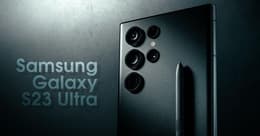
  • Rear Camera Systems: The Galaxy S21 Ultra 5G boasts a versatile quad-camera setup, including a 108MP main sensor, a 12MP ultra-wide lens, and two 10MP telephoto lenses providing 3x and 10x optical zoom, culminating in a 100x Space Zoom feature. This allows for significant flexibility in capturing subjects at various distances. The Google Pixel 8 features a dual-camera system with a 50MP main sensor and a 12MP ultra-wide lens, focusing on computational photography to enhance image quality.
  • Photography Performance: The S21 Ultra 5G excels in capturing highly detailed images, especially with its high-resolution main sensor and powerful zoom capabilities, making it suitable for diverse photographic scenarios. The Pixel 8 leverages its advanced processing to deliver consistent image quality across various conditions, with a strong emphasis on accurate color reproduction, dynamic range, and low-light performance through features like Night Sight.
  • Video Recording and Features: The Galaxy S21 Ultra 5G supports 8K video recording at 24 frames per second and 4K at 60 frames per second, along with professional video modes. The Pixel 8 records 4K video at up to 60 frames per second and includes AI-powered video enhancements such as Magic Editor and Audio Magic Eraser.

Main camera

108 megapixels

50 megapixels

Front camera

40 megapixels

10.5 megapixels

Miscellaneous

Beyond core features, several practical elements contribute to the overall user experience of these smartphones.

  • Connectivity and Ports: Both the Galaxy S21 Ultra 5G and the Google Pixel 8 support 5G connectivity for fast mobile data. The S21 Ultra 5G includes Wi-Fi 6E and Bluetooth 5.2, while the Pixel 8 features the newer Wi-Fi 7 and Bluetooth 5.3, offering potentially faster and more stable wireless connections. Both devices utilize a USB-C port for charging and data transfer, but neither includes a traditional 3.5mm headphone jack.
  • Biometric Security: The Galaxy S21 Ultra 5G uses an ultrasonic in-display fingerprint sensor for secure unlocking. The Pixel 8 offers both an in-display fingerprint sensor and face recognition for biometric authentication.
  • Design and Build: The Galaxy S21 Ultra 5G has dimensions of 165.1 x 75.6 x 8.9mm and weighs around 227-229g, featuring a premium build with a curved display. The Pixel 8 is more compact and lighter at 150.5 x 70.8 x 8.9mm and 187g, with a refined design. Both devices offer water and dust resistance.

Weight

227 g

187 g

Screen size (in)

6.8

6.2

Mobile network

5G

5G

SIM card

Dual Physical SIM + eSIM

Physical SIM + eSIM

Carrier compatibility

Unlocked

Unlocked

User feedback for the Samsung Galaxy S21 Ultra 5G often highlights its exceptional camera versatility, particularly the zoom capabilities, and its vibrant, high-resolution display. Some users have noted concerns regarding battery longevity for very heavy use and the absence of a microSD card slot. The Google Pixel 8 receives praise for its advanced computational photography, consistent image quality, and the promise of extended software support. Some discussions mention minor display inconsistencies related to refresh rate changes.

Users prioritizing a comprehensive camera system with extensive zoom and a large, high-resolution curved display may find the Galaxy S21 Ultra 5G well-suited to their needs. Its robust hardware is ideal for those who engage in detailed media consumption and photography. Conversely, users who value cutting-edge computational photography, a more compact design, and a significantly longer period of software updates will likely lean towards the Google Pixel 8. Its focus on artificial intelligence and a streamlined Android experience makes it a strong contender for those seeking a smart, long-lasting device. Both models represent excellent choices, and opting for a quality-assured refurbished version of either can provide a sustainable and practical way to enjoy these advanced smartphone features.
See all articles

Our recent comparisons