Compare models

Galaxy S21 FE 5G Vs iPhone Air

  • 1-year minimum warranty
  • Free delivery on all items
  • Free 30-day returns
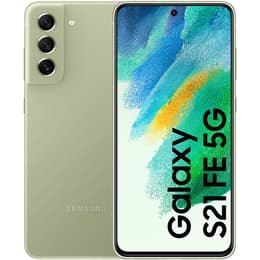
Galaxy S21 FE 5G
Starting at

Refurbished price:£142.00

Versus £699.00 new

See options
iPhone Air
Starting at

Refurbished price:£613.00

Versus £1,099.00 new

See options

Differences at a glance

The Samsung Galaxy S21 FE 5G (2022) and the Apple iPhone Air (2025) represent distinct approaches to smartphone engineering, balancing different priorities across hardware and software ecosystems. While the Samsung model serves as an accessible gateway to Android features, the Apple device introduces an ultra-slim profile running iOS. These two smartphones differ significantly in their release timelines, operating systems, and physical designs.

Available Models

Colour

Storage

Scores

Durability

Both devices offer differing software support trajectories and longevity expectations shaped by their respective release years.

  • Release timeline: The Galaxy S21 FE 5G launched in early 2022, whereas the iPhone Air arrived in late 2025, giving the Apple device a newer baseline for software updates.
  • Software support: The iPhone Air benefits from a longer remaining window of official OS upgrades, while the Galaxy S21 FE approaches the later stages of its support lifecycle.
  • Expected lifespan: Users seeking extended hardware durability and prolonged security patches will find the newer release timeline of the iPhone Air better suited for long-term daily use.

Year of Release

2022

2025

Compatible with latest Update

Yes

Yes

OS

Android

iOS

Foldable

No

No

Performance

System responsiveness and daily multitasking capabilities vary across these models due to differences in internal component generations and memory configurations.

  • App loading and multitasking: The iPhone Air handles demanding applications and intensive background tasks swiftly thanks to its current-generation processor and generous RAM allocation, whereas the Galaxy S21 FE manages everyday communication, web browsing, and moderate multitasking reliably with its mature hardware.
  • Battery behavior: The Galaxy S21 FE features a moderate battery capacity that handles standard daily routines, though heavy media consumption may require a midday top-up. The iPhone Air balances its ultra-thin chassis with optimized power management to sustain everyday usage patterns.
  • Storage options: Users can select from various storage configurations depending on personal media and file storage needs, with neither device offering expandable card slots.

Screen quality

Display characteristics differ notably in size, refresh rate, and peak illumination capabilities between the two handsets.

  • Display technology: Both smartphones utilize vibrant OLED panels that deliver deep contrast levels and rich colors, though the iPhone Air incorporates a slightly larger 6.5-inch screen compared to the 6.4-inch display on the Samsung model.
  • Refresh rate: The iPhone Air supports a fluid 120 Hz refresh rate for smooth scrolling and animations, matching the high refresh rate responsiveness found on the Galaxy S21 FE.
  • Outdoor visibility: High peak brightness levels on both displays ensure text and images remain legible under direct sunlight.

Resolution

1080 x 2340

2736x1260

Screen type

Dynamic AMOLED 2X

Super Retina XDR

Audiovisual

Imaging capabilities and media output reflect different design philosophies for capturing daily moments and recording video.

  • Camera systems: The Galaxy S21 FE provides a versatile multi-lens setup including a dedicated telephoto lens for optical zoom, while the iPhone Air streamlines its exterior with a single high-resolution 48 MP primary camera integrated into its slim profile.
  • Video and low-light: The iPhone Air delivers sharp low-light captures and steady video recording features, whereas the Samsung model offers reliable everyday photography across multiple focal lengths.
  • Audio output: Speaker clarity supports casual media viewing and hands-free calls effectively on both devices.

Main camera

12 megapixels

48 megapixels

Front camera

32 megapixels

18 megapixels

Miscellaneous

Physical handling, connectivity standards, and build materials influence everyday ergonomics and usability.

  • Build and dimensions: The iPhone Air stands out with a remarkably thin 5.6 mm titanium frame and a lightweight 165g body, while the Galaxy S21 FE utilizes a contoured plastic rear panel designed for a lightweight, durable everyday feel.
  • Connectivity: Both models support modern 5G networks, high-speed Wi-Fi standards, and Bluetooth pairing for wireless accessories.
  • Ports and security: The iPhone Air relies entirely on a USB-C port and advanced facial recognition, whereas the Galaxy S21 FE includes an optical under-display fingerprint sensor alongside its USB-C connection.

Weight

177 g

165 g

Screen size (in)

6.4

6.5

Mobile network

5G

5G

SIM card

Dual Physical SIM

eSIM

Carrier compatibility

Unlocked

Unlocked

Connector

USB-C + Jack 3.5mm

USB-C

What the community thinks

Deciding between the Samsung Galaxy S21 FE 5G and the Apple iPhone Air depends heavily on individual operating system preferences and hardware priorities. Users who prefer the Android ecosystem, appreciate a multi-lens camera array with optical zoom capabilities, and look for familiar ergonomics will find the Galaxy S21 FE well-suited to their daily routines. Conversely, users prioritizing a breakthrough lightweight form factor, extended software longevity, and the iOS environment may lean toward the iPhone Air.

Community discussions frequently praise the Galaxy S21 FE for offering a balanced feature set at a practical standing, though some users note that battery endurance can decline under heavy gaming loads. For the iPhone Air, discussions often highlight its impressive slim profile and fluid display performance, balanced against observations regarding its single-lens rear camera setup and minimalist port capabilities. For those considering an eco-friendly alternative, exploring a quality-assured refurbished option provides a sustainable choice that aligns consumer technology needs with environmental responsibility.