
Galaxy S10+ Vs Galaxy S20 5G

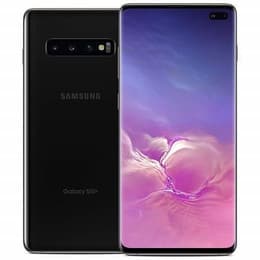
Galaxy S10+
Galaxy S10+
Starting at

Refurbished price:£115.32

Versus £330.00 new

See options
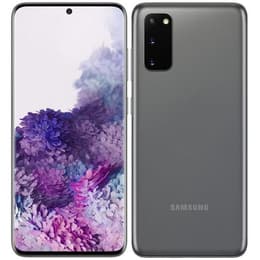
Galaxy S20 5G
Galaxy S20 5G
Starting at

Refurbished price:£132.00

Versus £899.00 new

See options

Ratings

The Samsung Galaxy S10 Plus, released in March 2019, and the Samsung Galaxy S20 5G, launched in March 2020, represent successive generations of Samsung's flagship smartphone line. While both devices offer a premium Android experience with Samsung's One UI, the Galaxy S20 5G introduces key advancements in display technology, camera capabilities, and network connectivity. These differences cater to varying user priorities, from screen smoothness to future-proof network access.

Scores

Durability

When considering the long-term usability of these devices, their release timelines and software support are important factors.

  • Release Timeline: The Galaxy S10 Plus was released in March 2019, making it a year older than the Galaxy S20 5G, which launched in March 2020. This age difference directly impacts their software longevity.
  • OS Support Duration: The Galaxy S10 Plus received major Android updates up to Android 12, with security patches concluding around March 2023. The Galaxy S20 5G, benefiting from Samsung's extended support policy, received updates up to Android 13, with security updates officially ending around March 2025, though some models received a final patch in July 2025. This means the S20 5G offers a longer period of official software and security support.
  • Repairability: The Galaxy S10 Plus received a low repairability score of 3 out of 10 from iFixit, largely due to the extensive use of adhesive and a soldered charging port. In contrast, the standard Galaxy S20 (which includes the S20 5G model) generally received a more favorable repairability score of 7 out of 10, with components like the battery and screen being more accessible, despite some adhesive use. This suggests the Galaxy S20 5G may be more straightforward to repair if needed.

Year of Release

2019

2020

Compatible with latest Update

No

No

OS

Android

Android

Foldable

No

No

Performance

Both smartphones were equipped with high-end processors for their respective release years, delivering robust performance for daily tasks and demanding applications.

  • Everyday Responsiveness: The Galaxy S10 Plus, with its processor, handles typical smartphone usage, including app launching, web browsing, and social media, with smooth performance. The Galaxy S20 5G, featuring a newer generation processor, offers a noticeable boost in speed and efficiency, resulting in quicker app loading times and a more fluid overall user experience, especially with more intensive applications.
  • Multitasking and Gaming: Both devices come with ample RAM options, typically 8GB or 12GB, allowing for effective multitasking. The Galaxy S20 5G's newer processor and faster RAM (LPDDR5) contribute to a more seamless experience when switching between multiple demanding applications or engaging in graphically intensive mobile gaming.
  • Storage Options: Both models offer various internal storage configurations, starting from 128GB, and include a microSD card slot for expandable storage, providing flexibility for users with large media libraries or numerous applications.

Memory (GB)

8 GB

12 GB

Screen quality

The display is a highlight for both devices, offering vibrant visuals, though the Galaxy S20 5G introduces a significant enhancement in refresh rate.

  • Display Technology and Resolution: The Galaxy S10 Plus features a 6.4-inch Dynamic AMOLED display with a resolution of 1440 x 3040 pixels, providing sharp images and rich colors. The Galaxy S20 5G has a slightly smaller 6.2-inch Dynamic AMOLED 2X display, but with a higher resolution of 1440 x 3200 pixels, resulting in a slightly higher pixel density for even finer detail. Both displays support HDR10+ for enhanced contrast and color depth.
  • Refresh Rate: A key differentiator is the refresh rate. The Galaxy S10 Plus operates at a standard 60Hz, providing a smooth viewing experience. The Galaxy S20 5G elevates this with a 120Hz refresh rate option (at FHD+ resolution), which makes scrolling, animations, and gaming appear significantly smoother and more fluid.
  • Brightness and Outdoor Visibility: Both phones offer excellent brightness levels, ensuring good visibility even in bright outdoor conditions. The Dynamic AMOLED technology on both devices delivers deep blacks and vibrant colors, contributing to an immersive viewing experience.

Resolution

1440 x 3040

1440 x 3200

Screen type

Dynamic AMOLED

Dynamic AMOLED 2X

Audiovisual

Both smartphones feature versatile camera systems designed to capture a wide range of photos and videos, with the Galaxy S20 5G offering advancements in sensor technology and video recording.

  • Rear Camera System: The Galaxy S10 Plus is equipped with a triple-camera setup, including a 12MP wide-angle lens, a 12MP telephoto lens with 2x optical zoom, and a 16MP ultrawide lens. The Galaxy S20 5G also features a triple-camera array, but with a different configuration: a 12MP wide-angle lens, a 64MP telephoto lens offering 3x hybrid optical zoom, and a 12MP ultrawide lens. The S20 5G's higher resolution telephoto sensor allows for greater detail when zooming.
  • Photography Performance: In good lighting, both phones produce high-quality images with good detail and color reproduction. The Galaxy S20 5G generally offers improved low-light performance and enhanced detail capture due to its newer sensors and processing capabilities.
  • Video Recording and Audio: The Galaxy S10 Plus supports video recording up to 4K at 60fps. The Galaxy S20 5G takes a significant step forward by introducing 8K video recording at 24fps, alongside improved 4K recording options. Both devices feature stereo speakers tuned by AKG, providing a rich audio experience for media consumption.

Main camera

12 megapixels

12 megapixels

Front camera

10 megapixels

10 megapixels

Miscellaneous

Beyond core specifications, several practical elements contribute to the overall user experience and differentiate these two devices.

  • Connectivity: The Galaxy S10 Plus supports 4G LTE networks and Wi-Fi 6. The Galaxy S20 5G's primary advantage is its 5G connectivity, offering faster download and upload speeds where 5G networks are available, alongside Wi-Fi 6 support.
  • Ports and Biometrics: The Galaxy S10 Plus includes a 3.5mm headphone jack, a feature absent on the Galaxy S20 5G. Both phones feature an in-display ultrasonic fingerprint sensor for secure unlocking. The S10 Plus also uniquely includes a heart rate and SpO2 sensor.
  • Design and Build: The Galaxy S10 Plus measures 157.6 x 74.1 x 7.8 mm and weighs around 175g (or 198g for ceramic models). The Galaxy S20 5G is slightly more compact and lighter at 151.7 x 69.1 x 7.9 mm and 163g. Both devices feature an IP68 rating for dust and water resistance and utilize Gorilla Glass 6 on the front for durability, with the S20 5G also featuring Gorilla Glass 6 on the back, compared to Gorilla Glass 5 or ceramic on the S10 Plus.

Weight

175 g

163 g

Screen size (in)

6.4

6.2

Mobile network

4G

5G

SIM card

Dual Physical SIM

Dual Physical SIM

Carrier compatibility

Unlocked

Unlocked

User feedback for the Galaxy S10 Plus often praises its vibrant display, solid battery life for its time, and the inclusion of a headphone jack and expandable storage. Some common criticisms included its camera performance not always matching competitors in certain scenarios and its relatively slow charging speeds. For the Galaxy S20 5G, users frequently highlight the smooth 120Hz display, the improved camera system with 8K video, and the inclusion of 5G connectivity as major positives. However, some users noted that the battery life, especially with the 120Hz refresh rate enabled, could be shorter than expected.

Users prioritizing a slightly larger screen, the convenience of a traditional headphone jack, and a device that has reached the end of its official software support cycle may find the Galaxy S10 Plus suitable. It remains a capable device for everyday tasks and media consumption. Conversely, users who value a smoother display experience, enhanced camera capabilities with 8K video, and future-proof 5G connectivity will likely lean towards the Galaxy S20 5G. Its extended software support also offers a longer period of security updates. Both devices offer a quality experience, and choosing a quality-assured refurbished option for either model can be a sustainable choice for consumers.

See all articles

Our recent comparisons