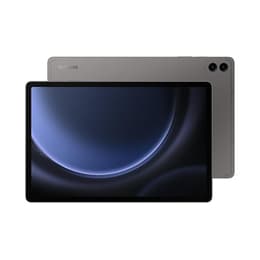
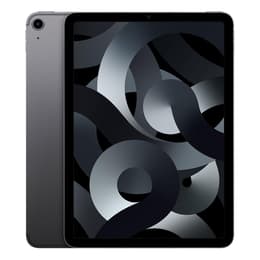

Galaxy Tab S9 FE+ (12.4", 2023) Vs iPad Air 5 (2022, M1 series)

Galaxy Tab S9 FE+ (12.4", 2023)
Starting at

Refurbished price:£338.00

Versus £502.51 new

See options
iPad Air 5 (2022, M1 series)
Starting at

Refurbished price:£275.00

Versus £669.00 new

See options

Ratings

The Samsung Galaxy Tab S9 FE+ (released in 2023) and the Apple iPad Air (2022 M1 Series) are both prominent tablet computers designed to cater to a range of user needs. While the Galaxy Tab S9 FE+ operates on Android with Samsung's One UI, the iPad Air runs on Apple's iPadOS, offering distinct ecosystem experiences. The primary differentiators between these two devices lie in their display technology, processing power, and overall software approach.

Scores

Durability

When considering the long-term usability of a tablet, factors like release timeline, software support, and physical resilience are important.

  • Release Timeline: The Galaxy Tab S9 FE+ was released in October 2023, making it a more recent device compared to the iPad Air (2022 M1 Series), which launched in March 2022. This difference in release dates can influence the duration of future software support.
  • Software Longevity: Samsung typically provides around four years of Android OS upgrades for its tablets, while Apple generally offers about five years of major iPadOS updates. This suggests the iPad Air may receive software updates for a slightly longer period, potentially extending its functional lifespan.
  • Durability Features: The Galaxy Tab S9 FE+ boasts an IP68 rating for dust and water resistance, a feature not commonly found in tablets, offering enhanced protection against environmental elements. The iPad Air does not carry an official IP rating.

Year of Release

2023

2022

Compatible with latest Update

Yes

Yes

OS

Android

iPadOS

Performance

The performance of a tablet dictates its responsiveness and capability to handle various applications, from everyday browsing to more demanding tasks.

  • Processing Power: The iPad Air (2022 M1 Series) is equipped with a powerful processor that delivers exceptional performance, making it highly capable for intensive applications like video editing, graphic design, and advanced gaming. Users often report smooth operation even with demanding software. In contrast, the Galaxy Tab S9 FE+ features a mid-range processor that handles daily activities and light gaming effectively, but some users have noted occasional stutters or slower app loading when multitasking or running graphically intensive applications.
  • Multitasking and Responsiveness: Both tablets offer sufficient RAM for general multitasking. The iPad Air's optimized software and powerful processor contribute to a consistently fluid user experience, even with multiple applications open. The Galaxy Tab S9 FE+, while capable, may require users to close background apps for optimal responsiveness during heavy usage.
  • Storage Options: The Galaxy Tab S9 FE+ offers storage options of 128GB or 256GB and includes a microSD card slot for expandable storage up to 1TB, providing flexibility for users with large media libraries or extensive document needs. The iPad Air comes with either 64GB or 256GB of internal storage, which is not expandable. Users who anticipate needing significant storage space might find the 64GB base model of the iPad Air restrictive.

Memory (GB)

8 GB

8 GB

Screen quality

The display is a central component of any tablet, influencing everything from media consumption to productivity tasks.

  • Display Technology and Size: The Galaxy Tab S9 FE+ features a larger 12.4-inch TFT LCD display, offering ample screen real estate for productivity and entertainment. The iPad Air (2022 M1 Series) has a 10.9-inch Liquid Retina IPS LCD. While both are LCD panels, the iPad Air's display is noted for its color accuracy and True Tone technology, which adjusts color and intensity based on ambient light.
  • Resolution and Clarity: The Galaxy Tab S9 FE+ offers a resolution of 2560 x 1600 pixels, providing a sharp viewing experience on its larger screen. The iPad Air has a resolution of 2360 x 1640 pixels. Both resolutions contribute to clear text and detailed images for typical viewing distances.
  • Refresh Rate and Brightness: The Galaxy Tab S9 FE+ features a 90Hz refresh rate, which provides smoother scrolling and animations compared to the iPad Air's standard 60Hz refresh rate. The Galaxy Tab S9 FE+ can reach up to 790 nits of brightness, while the iPad Air offers 500 nits. The higher brightness of the Galaxy Tab S9 FE+ can be beneficial for outdoor visibility.

Resolution

1600 x 2560

2360 x 1640

Screen type

IPS LCD

Liquid Retina display

Pixel density

250ppp

264ppp

Audiovisual

While tablets are not typically primary photography devices, their cameras are essential for video calls, document scanning, and occasional photo capture.

  • Rear Camera System: The Galaxy Tab S9 FE+ includes a dual rear camera setup with an 8MP main lens and an 8MP ultrawide lens. The iPad Air (2022 M1 Series) features a single 12MP wide rear camera. For general photography, both perform adequately in good lighting conditions, but neither is designed to replace a dedicated smartphone camera.
  • Front Camera and Video Calls: Both tablets excel in front-facing camera capabilities, crucial for video conferencing. The Galaxy Tab S9 FE+ has a 12MP ultrawide front camera, capable of 4K video recording. The iPad Air also features a 12MP ultrawide front camera with Apple's Center Stage feature, which automatically keeps the user in the frame during video calls.
  • Audio Experience: The Galaxy Tab S9 FE+ is equipped with stereo speakers that support Dolby Atmos, providing a decent audio experience for media consumption. The iPad Air also offers stereo speakers. Both provide clear sound for video playback and calls, though neither delivers deep bass.

Miscellaneous

Beyond core specifications, several practical features contribute to the overall user experience and versatility of a tablet.

  • Connectivity Standards: Both devices support Wi-Fi 6 for fast wireless internet. The iPad Air (2022 M1 Series) features Bluetooth 5.0, while the Galaxy Tab S9 FE+ includes the slightly newer Bluetooth 5.3, potentially offering minor improvements in wireless accessory connectivity.
  • Portability and Build: The Galaxy Tab S9 FE+ is larger and heavier, measuring 285.4 x 185.4 x 6.5 mm and weighing 627g. The iPad Air is more compact and lighter at 247.6 x 178.5 x 6.1 mm and 461g, making it easier to handle for extended periods or transport. Both tablets feature a premium aluminum build.
  • Stylus and Accessories: The Galaxy Tab S9 FE+ comes with an S Pen included in the box, which is passive and does not require charging. The iPad Air supports the second-generation Apple Pencil, which is sold separately. Both offer precise input for note-taking and creative tasks. The iPad Air's USB-C port is a faster USB 3.2 Gen 2, supporting external displays up to 6K, whereas the Galaxy Tab S9 FE+ uses a USB 2.0 port with slower data transfer speeds and no external monitor support.

Weight

920 g

461 g

Screen size (in)

12.4

10.9

Network

Wi-Fi

Wi-Fi

Carrier compatibility

Without SIM Port

Without SIM Port

User sentiment for the Samsung Galaxy Tab S9 FE+ often highlights its appealing design, robust build quality, and impressive battery life as key strengths. The inclusion of the S Pen and its IP68 water and dust resistance are frequently praised, making it a practical choice for various environments. However, some users express concerns about its performance, particularly when handling demanding applications or extensive multitasking, noting occasional sluggishness compared to higher-end tablets. The LCD display, while vibrant, is sometimes mentioned as a trade-off compared to OLED panels found in more premium devices.

The iPad Air (2022 M1 Series) consistently receives acclaim for its exceptional processing power, which enables smooth performance across a wide range of tasks, from creative work to gaming. Its refined design and the quality of its Liquid Retina display are also frequently lauded. Common criticisms, however, revolve around the base model's 64GB storage, which many users find insufficient, and some reports of battery drain under heavy use. The cost of accessories like the Apple Pencil is also a consideration for many.

Users prioritizing a larger screen, an included stylus, and robust environmental protection (IP68 rating) may find the Galaxy Tab S9 FE+ well-suited to their needs, especially if their primary use involves media consumption, note-taking, and moderate productivity. For those who require top-tier performance for intensive applications, a vast ecosystem of tablet-optimized apps, and are comfortable with a slightly smaller screen and potentially purchasing a stylus separately, the iPad Air (2022 M1 Series) presents a compelling option. Both devices offer a quality-assured refurbished option, providing an eco-friendly alternative for consumers.

See all articles

Our recent comparisons