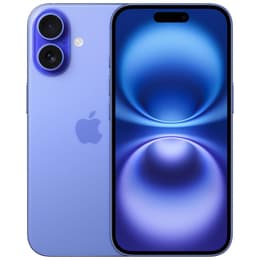

Galaxy A26 Vs iPhone 16

Galaxy A26
Galaxy A26
Starting at

Refurbished price:£153.00

Versus £419.55 new

See options
iPhone 16
iPhone 16
Starting at

Refurbished price:£475.00

Versus £699.00 new

See options

Ratings

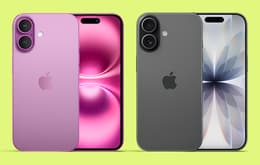
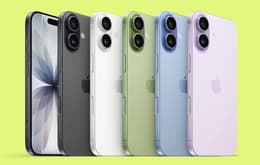
The Samsung Galaxy A26, released in March 2025, and the Apple iPhone 16, launched in September 2024, represent distinct philosophies in the smartphone market. The Galaxy A26 operates on the Android platform, offering a feature-rich experience within a mid-range device. In contrast, the iPhone 16 runs on Apple's iOS, providing a premium ecosystem focused on integrated performance and user experience. These differences in operating system and core design approach are central to understanding their respective appeals.

Scores

Durability

When evaluating the long-term usability of these devices, several factors contribute to their expected practical lifespan.

  • Software Support: The iPhone 16, as a flagship Apple device, is anticipated to receive iOS updates for approximately 6 to 7 years from its release. The Galaxy A26 is notable for its commitment to software longevity, with Samsung promising 6 major Android version updates and 6 years of security patches. This extended support for the A26 is a significant advantage for Android users seeking prolonged software relevance. [5, 9]
  • Build Quality: The iPhone 16 features a Ceramic Shield front and an aluminum frame, contributing to its robust feel and IP68 water and dust resistance, allowing submersion up to 6 meters for 30 minutes. The Galaxy A26 utilizes Corning Gorilla Glass Victus+ on both the front and back, paired with a plastic frame, and offers IP67 water and dust resistance, protecting against submersion up to 1 meter for 30 minutes. [5, 6, 7, 9]
  • Repairability: Both devices are designed with some level of repairability in mind. Generally, parts for Apple devices can be more specialized, while components for Samsung's A-series are often more widely available, potentially influencing the ease and cost of repairs over time.

Year of Release

2024

2024

Compatible with latest Update

Yes

Yes

Foldable

No

No

Performance

Performance is a key area where these two smartphones offer different experiences, impacting how they handle daily tasks and demanding applications.

  • Processing Power: The iPhone 16 is equipped with a current-generation Apple processor, delivering smooth and responsive performance for a wide range of applications, from everyday browsing to graphically intensive games. The Galaxy A26 is powered by an Exynos 1380 processor, which provides capable performance for daily use and general multitasking, though it may show some limitations with the most demanding applications or prolonged heavy gaming. [3, 10]
  • Multitasking and Responsiveness: The iPhone 16 features 8GB of RAM, contributing to fluid app switching and efficient background process management. The Galaxy A26 is available with either 6GB or 8GB of RAM, which supports comfortable multitasking for most users, though the 6GB variant might experience slight delays with numerous apps open simultaneously. [2, 3, 7]
  • Storage Options: The iPhone 16 offers internal storage options of 128GB, 256GB, and 512GB. The Galaxy A26 comes with 128GB or 256GB of internal storage and includes the flexibility of expandable storage via a microSD card, a feature not present on the iPhone 16. [2, 3, 7, 10]

Memory (GB)

8 GB

8 GB

Screen quality

The visual experience on both devices is designed to be engaging, though with distinct characteristics in display technology and features.

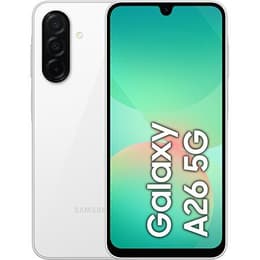
  • Display Technology and Size: The iPhone 16 features a 6.1-inch Super Retina XDR OLED display, known for its deep blacks and vibrant colors. The Galaxy A26 offers a larger 6.7-inch Super AMOLED display, also providing rich colors and strong contrast, which can be beneficial for media consumption. [1, 6, 7, 9]
  • Refresh Rate and Smoothness: A notable difference lies in the refresh rate. The Galaxy A26 boasts a 120Hz refresh rate, contributing to smoother scrolling and a more fluid visual experience, particularly noticeable in fast-paced content and general navigation. The iPhone 16 maintains a standard 60Hz refresh rate. [9, 15]
  • Brightness and Clarity: Both displays offer sharp resolutions, ensuring text and images appear crisp. The iPhone 16 typically provides higher peak brightness, making it easier to view content clearly in direct sunlight or brightly lit environments, with an outdoor peak brightness of 2000 nits. [8]

Resolution

1080 x 2340

1179 x 2556

Audiovisual

The camera systems on the Galaxy A26 and iPhone 16 offer different approaches to photography and videography.

  • Rear Camera System: The iPhone 16 features a dual-camera setup, including a 48MP main camera with optical image stabilization (OIS) and a 12MP ultrawide lens. The Galaxy A26 comes with a triple-camera system, comprising a 50MP main sensor with OIS, an 8MP ultrawide, and a 2MP macro lens, offering more versatility for close-up shots. [1, 6, 7, 9, 10]
  • Photography Performance: The iPhone 16's main camera is recognized for its ability to capture detailed images with good dynamic range, and its low-light performance is generally strong. The Galaxy A26's 50MP main camera delivers decent performance in well-lit conditions, though its low-light capabilities and detail retention in some scenarios may not match the iPhone 16. [10, 15]
  • Video Recording: The iPhone 16 supports 4K video recording at up to 60 frames per second on both its front and rear cameras, providing high-quality video capture. The Galaxy A26 offers 4K video recording at 30 frames per second on its rear camera, with 1080p on the front. [6, 15]

Front camera

13 megapixels

12 megapixels

Miscellaneous

Beyond core specifications, several practical elements contribute to the overall user experience of these devices.

  • Connectivity: Both smartphones support 5G connectivity for fast mobile data. The iPhone 16 also includes Wi-Fi 7 and Bluetooth 5.3, while the Galaxy A26 supports current Wi-Fi standards and Bluetooth. [7]
  • Ports and Biometrics: Both devices feature a USB-C port for charging and data transfer. The iPhone 16 relies on Face ID for secure authentication. The Galaxy A26 incorporates a fingerprint scanner integrated into its power button for biometric security. [7, 10, 15]
  • Design and Handling: The iPhone 16 has a compact design with dimensions of 147.6 x 71.6 x 7.8 mm and a weight of 170g. The Galaxy A26 is larger and slightly thinner at 7.7mm, with a 6.7-inch display, which may appeal to users who prefer a larger screen for media consumption. [7, 9] The iPhone 16 also features a customizable Action button, offering quick access to various functions. [8]

Weight

197 g

170 g

Screen size (in)

6.5

6.1

Mobile network

5G

5G

SIM card

Dual Physical SIM

Physical SIM + eSIM

Carrier compatibility

Unlocked

Unlocked

Connector

USB-C

USB-C (USB 2)

The Samsung Galaxy A26 and iPhone 16 cater to different user preferences, each excelling in specific areas. Users often praise the iPhone 16 for its consistent performance, long-term software support, and high-quality camera system, particularly for video recording. Common feedback also highlights its robust build and the seamless integration within the Apple ecosystem. Some users, however, might note its 60Hz display as a point of comparison against other devices in its category. [1, 5, 7, 8, 15]

The Galaxy A26 receives positive remarks for its large, vibrant 120Hz AMOLED display, extended software update policy, and substantial battery capacity, making it a strong contender for users who prioritize screen fluidity and endurance. Its expandable storage is also a frequently appreciated feature. Some users might find its processor performance, while capable for most tasks, less potent than flagship alternatives, and its camera performance in challenging conditions may not match the iPhone 16. [9, 10, 15]

Users prioritizing a highly optimized software experience, strong video capabilities, and a compact, premium build may find the iPhone 16 well-suited to their needs. Conversely, users who value a larger, smoother display, longer battery life, expandable storage, and an extensive software update commitment within the Android ecosystem may lean toward the Galaxy A26. Both devices offer compelling features, and choosing between them often comes down to individual priorities and ecosystem preference. For those looking for an eco-friendly alternative, both models are available as quality-assured refurbished options, providing a sustainable choice for consumers.
See all articles

Our recent comparisons