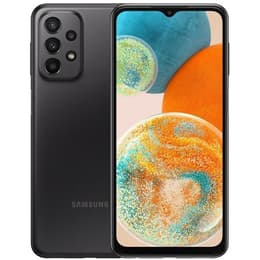

Galaxy A15 Vs Galaxy A23 5G

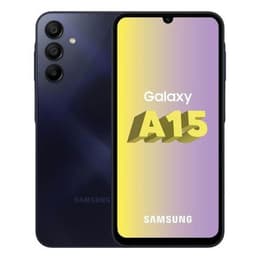
Galaxy A15
Galaxy A15
Starting at

Refurbished price:£88.00

Versus £169.00 new

See options
Galaxy A23 5G
Galaxy A23 5G
Starting at

Refurbished price:£100.00

Versus £300.00 new

See options

Ratings

The Samsung Galaxy A15 and the Samsung Galaxy A23 5G are both smartphones designed to offer essential features for everyday use. Released in late 2023, the Galaxy A15 is a more recent addition to Samsung's A-series, while the Galaxy A23 5G was introduced in mid-2022. Both devices operate on the Android platform, providing access to a wide ecosystem of applications and services. Key differences between them include their display technology, refresh rates, and the extent of their promised software support.

Scores

Durability

When considering the practical lifespan of these devices, their release timelines and software support policies are important factors.

  • Release Timeline: The Galaxy A15 was released in December 2023, making it a newer device compared to the Galaxy A23 5G, which launched in August 2022. This difference in release date impacts their respective software support cycles.
  • Software Longevity: The Galaxy A15 is slated to receive four major Android OS upgrades and five years of security updates, extending its support until approximately 2029. In contrast, the Galaxy A23 5G is expected to receive two major OS upgrades and four years of security updates from its launch. This means the Galaxy A15 offers a significantly longer period of guaranteed software updates.
  • Durability Features: The Galaxy A23 5G features Corning Gorilla Glass 5 for screen protection, offering a degree of resistance against scratches and drops. The Galaxy A15 does not specify Gorilla Glass protection. Neither device carries an official IP rating for water and dust resistance.

Year of Release

2023

2022

Compatible with latest Update

Yes

Yes

OS

Android

Android

Foldable

No

No

Performance

The performance of a smartphone is crucial for daily tasks, from app usage to multitasking. Both devices are equipped to handle common activities, but they differ in their underlying hardware and real-world responsiveness.

  • System Responsiveness: The Galaxy A15, powered by a more recent processor, generally offers a smoother experience for everyday navigation and app loading. User feedback indicates that while capable, the Galaxy A15 can sometimes exhibit slight delays with basic tasks. The Galaxy A23 5G, with its processor, provides competent performance, though some users have noted occasional sluggishness, particularly with models featuring lower RAM configurations.
  • Multitasking and Storage: Both phones come with various RAM options, typically ranging from 4GB to 8GB, which influences how many applications can run simultaneously without slowdowns. They also offer expandable storage via microSD cards, allowing users to increase their storage capacity for photos, videos, and apps.
  • Battery Behavior: Both the Galaxy A15 and Galaxy A23 5G are equipped with a 5000 mAh battery, supporting 25W fast charging. Users generally report that both devices offer long battery life, often lasting a full day or more with moderate use. The Galaxy A15 has been noted for its excellent battery life, even during gaming and camera usage.

Memory (GB)

4 GB

4 GB

Screen quality

The display is a primary interface for smartphone interaction, and these two models offer distinct viewing experiences.

  • Display Technology and Clarity: The Galaxy A15 features a 6.5-inch Super AMOLED display, known for its deep blacks, vibrant colors, and good contrast. The Galaxy A23 5G, on the other hand, uses a 6.6-inch PLS LCD panel. While PLS LCDs offer good viewing angles and color accuracy, they typically do not match the contrast levels of AMOLED screens. Both displays offer Full HD+ resolution, ensuring sharp visuals for text and images.
  • Refresh Rate and Smoothness: The Galaxy A15 has a 90Hz refresh rate, providing smoother scrolling and a more fluid visual experience compared to standard 60Hz displays. The Galaxy A23 5G steps this up with a 120Hz refresh rate, which can result in even smoother motion, particularly noticeable in fast-paced content or gaming.
  • Brightness and Outdoor Visibility: The Galaxy A15's Super AMOLED display can reach up to 800 nits in High Brightness Mode, enhancing visibility in direct sunlight. The Galaxy A23 5G's LCD display offers adequate brightness, with some reviews noting it's sufficient but not exceptional in very bright conditions.

Resolution

1080 x 2340

1080 x 2408

Screen type

Super AMOLED

PLS LCD

Audiovisual

Both smartphones are equipped with multi-lens camera systems designed for various photography scenarios, though with some differences in their capabilities.

  • Rear Camera Systems: The Galaxy A15 features a triple rear camera setup, including a 50 MP main sensor, a 5 MP ultrawide lens, and a 2 MP macro lens. The Galaxy A23 5G comes with a quad-camera array, also featuring a 50 MP main sensor, a 5 MP ultrawide lens, a 2 MP macro lens, and an additional 2 MP depth sensor. A notable advantage for the Galaxy A23 5G is the inclusion of Optical Image Stabilization (OIS) on its main 50 MP camera, which helps in reducing blur from handshakes, especially in lower light conditions.
  • Photography Performance: Both devices capture detailed photos in good lighting conditions with their main sensors. The Galaxy A23 5G's OIS can lead to clearer shots, particularly in challenging environments. The ultrawide cameras on both are suitable for wider scenes, while the macro lenses are for close-up shots. Low-light performance is generally acceptable for their class, though images may show some graininess.
  • Front Camera and Video: The Galaxy A15 is equipped with a 13 MP front-facing camera, offering higher resolution selfies compared to the Galaxy A23 5G's 8 MP front camera. Both phones support 1080p video recording at 30 frames per second from both front and rear cameras.

Main camera

50 megapixels

50 megapixels

Front camera

13 megapixels

8 megapixels

Miscellaneous

Beyond core specifications, several practical elements contribute to the overall user experience of these smartphones.

  • Connectivity and Ports: Both the Galaxy A15 and Galaxy A23 5G support 5G connectivity, ensuring access to faster mobile data networks. They both include a USB Type-C 2.0 port for charging and data transfer, and notably, retain a 3.5mm headphone jack, which is convenient for wired audio accessories. The Galaxy A15 features Bluetooth 5.3, a slightly newer standard than the Galaxy A23 5G's Bluetooth 5.1.
  • Biometric Security: For secure unlocking, both devices incorporate a side-mounted fingerprint sensor, integrated into the power button. This placement offers a quick and intuitive way to access the phone.
  • Physical Design and Handling: The Galaxy A15 measures 160.1 x 76.8 x 8.4 mm and weighs 200 grams. The Galaxy A23 5G is slightly larger and thicker at 167.2 x 76.4 x 9.0 mm, weighing 197 grams. Both phones feature a plastic back and frame, contributing to a comfortable grip. The Galaxy A15 has a mono speaker, while the Galaxy A23 5G also features a single bottom-firing speaker.

Weight

200 g

197 g

Screen size (in)

6.5

6.6

Mobile network

4G

5G

SIM card

Dual Physical SIM

Dual Physical SIM

Carrier compatibility

Unlocked

Unlocked

The Samsung Galaxy A15 and Galaxy A23 5G each present a compelling set of features for users seeking a capable smartphone. User feedback for the Galaxy A15 often highlights its vibrant Super AMOLED display and extended software support as significant advantages. Its battery life is consistently praised, making it a reliable choice for users who need their device to last through a busy day. Some users, however, have noted that its performance can feel less snappy compared to higher-end devices, occasionally exhibiting minor delays in app loading or navigation.

The Galaxy A23 5G is frequently commended for its smooth 120Hz display and the inclusion of Optical Image Stabilization (OIS) on its main camera, which contributes to clearer photos. Its robust battery life is also a common point of praise. Criticisms sometimes point to its PLS LCD display not being as vibrant as AMOLED alternatives, and some users with the base RAM configuration have reported a less fluid overall experience. The lack of an ambient light sensor on the A23 5G has also been mentioned as a minor inconvenience for automatic brightness adjustment.

Users prioritizing a more modern display technology with vibrant colors and longer software support may find the Galaxy A15 well-suited to their needs. Its extended update policy ensures the device remains current for a longer period. Conversely, users who value a higher refresh rate for smoother visuals and the added stability of OIS in their photography might lean towards the Galaxy A23 5G. Both devices offer a solid foundation for daily smartphone use, and choosing between them often comes down to these specific preferences. For those looking for an eco-friendly alternative, quality-assured refurbished options for both models are available, providing a sustainable choice.


See all articles

Our recent comparisons