
Compare models

Galaxy A15 5G Vs iPhone Air

  • 1-year minimum warranty
  • Free delivery on all items
  • Free 30-day returns
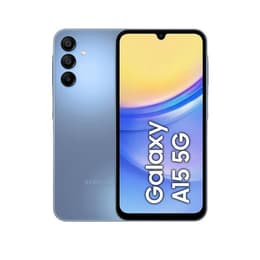
Galaxy A15 5G
Starting at

Refurbished price:£113.00

Versus £212.30 new

See options
iPhone Air
Starting at

Refurbished price:£613.00

Versus £1,099.00 new

See options

Differences at a glance

The Samsung Galaxy A15 5G (2023) and the Apple iPhone Air (2025) represent entirely different approaches to modern mobile technology, balancing accessibility against ultra-slim engineering. While the Samsung Galaxy A15 5G functions as an everyday Android device designed for practical utility, the iPhone Air introduces a lightweight iOS experience centered around a remarkably thin profile. Both smartphones cater to distinct user expectations across software ecosystems and physical designs.

Available Models

Colour

Storage

Scores

Durability

Long-term usability differs significantly between these two models based on their release timelines, software schedules, and structural durability.

  • Software Support: The iPhone Air benefits from Apple's extensive software lifecycle, while the Galaxy A15 5G provides a structured multi-year update path typical of everyday devices.
  • Build Materials: The iPhone Air utilizes a titanium frame and reinforced glass designed to withstand wear, whereas the Galaxy A15 5G relies on a durable plastic construction.
  • Expected Lifespan: Both devices offer reliable day-to-day longevity, though hardware stamina over several years favors the higher-tier internal architecture of the Apple device.

Year of Release

2023

2025

Compatible with latest Update

Yes

Yes

OS

Android

iOS

Foldable

No

No

Performance

System responsiveness and speed vary noticeably due to contrasting internal hardware capabilities and memory allocations.

  • Multitasking: The iPhone Air handles intensive applications and complex background tasks with ease, while the Galaxy A15 5G manages everyday apps, messaging, and web browsing smoothly.
  • Battery Behavior: The Galaxy A15 5G features a large capacity battery that easily spans a full day of mixed use, whereas the iPhone Air relies on power-efficient components to maintain daily endurance despite its slim battery footprint.
  • System Responsiveness: App loading and general navigation feel instantaneous on the Apple model, while the Samsung model provides dependable, steady performance for standard daily routines.

Screen quality

Viewing experiences differ through contrasting panel technologies, maximum brightness capabilities, and motion smoothness.

  • Display Technology: The Galaxy A15 5G features a vibrant Super AMOLED panel with deep contrast, while the iPhone Air incorporates a high-resolution Super Retina XDR OLED screen with advanced adaptive refresh rates.
  • Outdoor Visibility: The iPhone Air achieves high peak brightness levels for clear visibility under direct sunlight, while the Galaxy A15 5G remains legible during standard outdoor conditions.
  • Motion Smoothness: The iPhone Air supports a dynamic high refresh rate for fluid scrolling, whereas the Galaxy A15 5G operates at a fixed 90Hz refresh rate.

Resolution

1080 x 2340

2736x1260

Screen type

Super AMOLED

Super Retina XDR

Audiovisual

Optics and media playback capabilities cater to different photography habits and multimedia preferences.

  • Camera Systems: The Galaxy A15 5G utilizes a triple-lens rear setup including a primary, ultra-wide, and macro lens, whereas the iPhone Air employs a single high-resolution 48MP main camera with advanced computational photography.
  • Video and Low-Light: The iPhone Air delivers detailed 4K video recording and strong low-light performance, while the Galaxy A15 5G covers standard definition video and casual daytime snapshots.
  • Audio Output: Media consumption on the iPhone Air relies on a specialized speaker configuration, whereas the Galaxy A15 5G features a standard mono loudspeaker alongside a traditional headphone jack.

Main camera

50 megapixels

48 megapixels

Front camera

13 megapixels

18 megapixels

Miscellaneous

Physical handling and connectivity features shape the day-to-day ergonomics and connectivity of each smartphone.

  • Dimensions and Weight: The iPhone Air prioritizes an ultra-thin 5.6mm profile and lightweight titanium build, while the Galaxy A15 5G has a more traditional thickness and a slightly heavier 200g plastic chassis.
  • Connectivity: Both models support modern 5G networks, though the iPhone Air adopts advanced Wi-Fi standards and an eSIM-only framework in many regions.
  • Biometrics: The Galaxy A15 5G features a side-mounted fingerprint sensor, whereas the iPhone Air relies on facial recognition technology.

Weight

200 g

165 g

Screen size (in)

6.5

6.5

Mobile network

5G

5G

SIM card

Dual Physical SIM

eSIM

Carrier compatibility

Unlocked

Unlocked

What the community thinks

User feedback on the Galaxy A15 5G frequently highlights its dependable battery life and bright display as reliable everyday assets, though some users note limitations in heavy gaming and low-light photography. Conversely, owners of the iPhone Air praise its featherlight design and fluid performance, while noting that the single rear camera and premium tier positioning present specific compromises. Exploring a quality-assured refurbished option can make advanced devices like the iPhone Air more accessible through sustainable channels.

Users prioritizing long battery endurance, expandable storage, and a traditional headphone jack will find the Galaxy A15 5G well-suited to their needs. Meanwhile, users who value an ultra-slim form factor, high-end processing power, and the iOS ecosystem will lean toward the iPhone Air. Evaluating these core differences ensures a choice that aligns closely with personal daily workflows.