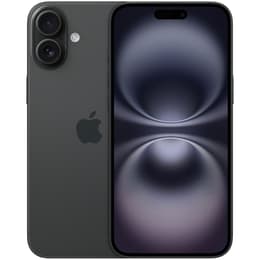

Galaxy S24 Vs iPhone 16 Plus

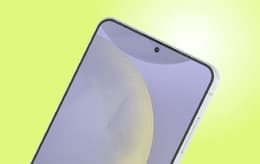
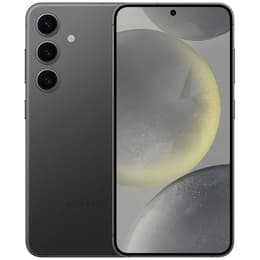
Galaxy S24
Galaxy S24
Starting at

Refurbished price:£273.00

Versus £817.67 new

See options
iPhone 16 Plus
iPhone 16 Plus
Starting at

Refurbished price:£503.46

Versus £799.00 new

See options

Ratings

The Samsung Galaxy S24, released in January 2024, and the Apple iPhone 16 Plus, launched in September 2024, represent two distinct approaches to the modern smartphone experience. While both offer premium features and robust performance, they cater to different user preferences through their respective operating systems and hardware philosophies. The Galaxy S24 runs on Android, offering extensive customization, while the iPhone 16 Plus operates on iOS, known for its streamlined user experience and tight ecosystem integration. Key differentiators include display technology, camera versatility, and overall design.

Scores

Durability

When considering the long-term usability of a smartphone, factors like software support and physical resilience are crucial. Both devices are built to last, but their release timelines and manufacturer commitments offer different longevity prospects.

  • Software Support: The Samsung Galaxy S24 benefits from an extended software commitment, offering seven years of operating system and security updates from its January 2024 release. The iPhone 16 Plus, released in September 2024, typically receives iOS updates for five to six years, providing a slightly shorter, though still substantial, period of guaranteed software longevity.
  • Physical Durability: Both phones feature robust construction designed to withstand daily use. The Galaxy S24 incorporates an Armor Aluminum frame and Gorilla Glass Victus 2 on both the front and back, alongside an IP68 rating for dust and water resistance. The iPhone 16 Plus utilizes Ceramic Shield on the front and an aluminum frame, also boasting an IP68 rating for water and dust protection.
  • Expected Lifespan: Users can expect both devices to perform reliably for several years. The Galaxy S24's longer software support commitment may appeal to those who keep their devices for an extended period, while the iPhone 16 Plus, being a newer model, starts with a more recent hardware foundation.

Year of Release

2024

2024

Compatible with latest Update

Yes

Yes

Foldable

No

No

Performance

Both the Galaxy S24 and iPhone 16 Plus deliver powerful performance suitable for demanding applications and multitasking, though they achieve this through different internal architectures.

  • Everyday Responsiveness: The Galaxy S24 handles daily tasks, app launches, and general navigation with fluidity, providing a consistently smooth experience. The iPhone 16 Plus, with its newer internal components, offers a similar level of responsiveness, ensuring applications and system interactions feel immediate and seamless.
  • Demanding Applications and Gaming: For graphically intensive games and complex applications, both devices perform admirably. The Galaxy S24 maintains stable performance even during extended gaming sessions, though some users have noted it can generate warmth under heavy load. The iPhone 16 Plus is also well-suited for high-performance tasks, with users reporting minimal heating and smooth gameplay.
  • Multitasking and Storage: Both phones come with 8GB of RAM, facilitating efficient multitasking and quick switching between applications. Storage options are comparable across both models, ranging from 128GB to 512GB, with the iPhone 16 Plus also offering a 1TB option, providing ample space for apps, media, and files.

Memory (GB)

8 GB

8 GB

Screen quality

The visual experience on both the Galaxy S24 and iPhone 16 Plus is vibrant and clear, though they differ in display technology and refresh rate, impacting how content appears and interacts with the user.

  • Display Technology and Clarity: The Galaxy S24 features a 6.2-inch Dynamic AMOLED 2X display with a Full HD+ resolution (1080 x 2340 pixels), delivering sharp text and vivid colors. The iPhone 16 Plus sports a larger 6.7-inch Super Retina XDR OLED display with a higher resolution of 2796 x 1290 pixels, offering excellent clarity and deep blacks.
  • Brightness and Outdoor Visibility: Both devices offer impressive brightness levels for comfortable viewing in various lighting conditions. The Galaxy S24 can reach a peak brightness of 2600 nits, making it highly visible even in direct sunlight. The iPhone 16 Plus achieves a peak outdoor brightness of 2000 nits and a typical maximum brightness of 1000 nits, ensuring good readability outdoors.
  • Refresh Rate and Smoothness: A notable difference lies in the refresh rate. The Galaxy S24 features an adaptive refresh rate that can scale from 1Hz to 120Hz, providing smooth scrolling and animations while conserving battery life. The iPhone 16 Plus maintains a standard 60Hz refresh rate, which some users might find less fluid compared to devices with higher refresh rates, particularly during fast-paced content or scrolling.

Resolution

1080 x 2340

1290 x 2796

Screen type

Dynamic LTPO AMOLED 2X

Super Retina XDR OLED

Audiovisual

Both smartphones offer capable camera systems designed to capture high-quality photos and videos, but they approach versatility and specific features differently.

  • Rear Camera Systems: The Samsung Galaxy S24 is equipped with a versatile triple-camera setup, including a 50MP main sensor, a 12MP ultrawide lens, and a 10MP telephoto lens with 3x optical zoom. This allows for a range of photographic styles, from wide landscapes to detailed zoomed-in shots. The iPhone 16 Plus features a dual-camera system with a 48MP main sensor that uses pixel binning to produce detailed 24MP photos by default, and a 12MP ultrawide lens. It lacks a dedicated telephoto lens, relying on digital zoom for closer subjects.
  • Photography Performance: The Galaxy S24 produces detailed images with good dynamic range, though colors can sometimes appear slightly oversaturated. Its 3x optical zoom provides clear magnification. The iPhone 16 Plus delivers sharp, noise-free photos with rich detail and natural colors, performing well in various lighting conditions. Both excel in everyday point-and-shoot scenarios.
  • Video Recording and Audio: The Galaxy S24 supports 4K video recording at 120 frames per second for slow-motion effects. The iPhone 16 Plus offers high-quality video recording, including Dolby Vision, Cinematic Mode, and Action Mode, with users praising its overall video output. Both devices provide good microphone quality for calls and recordings, and offer a satisfying media consumption experience through their speakers.

Main camera

50 megapixels

48 megapixels

Front camera

12 megapixels

12 megapixels

Miscellaneous

Beyond core performance, several practical features and design elements contribute to the overall user experience of these devices.

  • Connectivity and Ports: Both phones support 5G connectivity for fast mobile data. The Galaxy S24 features Wi-Fi 6E and Bluetooth 5.3, along with a USB-C 3.2 port for faster data transfer speeds. The iPhone 16 Plus steps up to Wi-Fi 7 and Bluetooth 5.4, but its USB-C port operates at USB 2.0 speeds.
  • Biometrics and User Interface: The Galaxy S24 incorporates an ultrasonic in-display fingerprint sensor for secure unlocking. The iPhone 16 Plus relies on Face ID for facial recognition. A notable addition to the iPhone 16 Plus is the Action Button, which can be customized for quick access to various functions, and a new Camera Control button for enhanced photography interaction.
  • Design and Handling: The Galaxy S24 is a more compact device, measuring 147 x 70.6 x 7.6 mm and weighing 167g, making it easier for one-handed use. The iPhone 16 Plus is larger at 160.9 x 77.8 x 7.8 mm and heavier at 199g, offering a more expansive screen experience but often requiring two hands for comfortable operation. Both devices feature premium build materials, with the Galaxy S24 using Armor Aluminum and the iPhone 16 Plus an aerospace-grade aluminum frame.

Weight

167 g

199 g

Screen size (in)

6.2

6.7

Mobile network

5G

5G

SIM card

Dual Physical SIM + eSIM

Physical SIM + eSIM

Carrier compatibility

Unlocked

Unlocked

Connector

USB-C

USB-C (USB 2)

User feedback for the Samsung Galaxy S24 often highlights its compact size, vibrant display, and the long-term software support as significant advantages. Many appreciate its capable camera system, especially the inclusion of a telephoto lens, and its overall smooth performance for daily tasks. Some users, however, have noted that the battery life, while generally good, might not always meet the expectations of heavy users, and the device can experience warmth during intensive use.

The iPhone 16 Plus receives considerable praise for its exceptional battery life, with many users reporting it comfortably lasts a full day or more, even with heavy usage. Its large display is also a frequent positive, offering an immersive viewing experience. A common point of criticism, however, is the 60Hz refresh rate of its display, which some users find less fluid compared to competing devices and even other iPhones. The absence of a dedicated telephoto lens is another frequently mentioned drawback for photography enthusiasts.

For users prioritizing a compact form factor, a high refresh rate display, and a versatile camera system with optical zoom, the Samsung Galaxy S24 presents a compelling option. Its extended software support also makes it a strong choice for those seeking long-term device longevity. Conversely, individuals who value a larger screen, industry-leading battery life, and the streamlined iOS ecosystem will find the iPhone 16 Plus well-suited to their needs. While it foregoes a high refresh rate and telephoto lens, its overall performance and endurance are significant draws. Both devices offer a quality-assured experience, and for those looking for a more sustainable choice, considering refurbished options for either model can provide an eco-friendly alternative.

See all articles

Our recent comparisons