
Galaxy A15 5G Vs iPhone 17

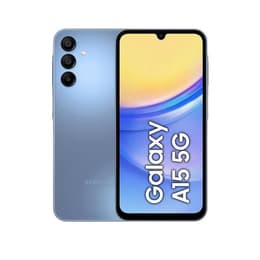
Galaxy A15 5G
Galaxy A15 5G
Starting at

Refurbished price:£99.00

Versus £212.30 new

See options
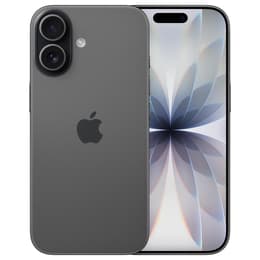
iPhone 17
iPhone 17
Starting at

Refurbished price:£688.00

Versus £799.00 new

See options

Ratings

The Samsung Galaxy A15 5G, released in late 2023 and early 2024, is an Android smartphone designed for everyday use, while the iPhone 17, launched in September 2025, represents Apple's latest generation of flagship iOS devices. These two smartphones cater to different user ecosystems and offer distinct experiences, primarily differing in their operating systems, overall performance capabilities, and camera systems.

Scores

Durability

The longevity of a smartphone is influenced by its initial release, software support, and physical resilience. Both devices offer substantial software support, contributing to their practical lifespan.

  • Release Timeline: The Galaxy A15 5G was introduced in late 2023 and early 2024, making it a more established device. The iPhone 17, as a September 2025 release, benefits from being a newer model in the market.
  • Software Longevity: Samsung commits to four years of operating system updates and five years of security updates for the Galaxy A15 5G, ensuring a reasonable period of software relevance. The iPhone 17, running on iOS, typically receives operating system updates for six to seven years from its release, offering a longer software support window.
  • Physical Durability: The Galaxy A15 5G features a plastic frame and back, with Dragontrail Pro glass protecting the display, but it does not carry an official IP rating for water and dust resistance. The iPhone 17 incorporates an aluminum frame, a frosted glass back, and Ceramic Shield 2 on the front, which Apple states offers enhanced scratch resistance. It also boasts an IP68 rating, indicating robust protection against dust and water immersion.

Year of Release

2023

2025

Compatible with latest Update

Yes

Yes

OS

Android

iOS

Foldable

No

No

Performance

Performance varies significantly between these two devices, reflecting their different design philosophies and target user experiences.

  • Everyday Responsiveness: The Galaxy A15 5G handles daily tasks like web browsing, email, and media playback competently. However, users may notice slight delays when opening applications or switching between multiple apps. The iPhone 17, with its advanced internal components, delivers a highly fluid and responsive experience across all applications, ensuring smooth multitasking and quick app launches.
  • Demanding Applications and Gaming: For graphically intensive games or demanding applications, the Galaxy A15 5G can run them, but often requires lower graphics settings to maintain smooth performance, and occasional slowdowns may occur. The iPhone 17 is engineered to manage the most intensive applications and high-fidelity games with ease, offering consistent performance and advanced graphical capabilities like hardware-accelerated ray tracing.
  • Storage and Multitasking: The Galaxy A15 5G offers various storage options and supports expandable storage via a microSD card, providing flexibility for users who need more space. The iPhone 17 comes with larger base storage configurations and ample internal memory, contributing to its efficient multitasking capabilities without the need for external storage expansion.

Memory (GB)

4 GB

8 GB

Screen quality

The visual experience on both smartphones is a key consideration, with notable differences in display technology and capabilities.

  • Display Technology and Clarity: The Galaxy A15 5G features a 6.5-inch Super AMOLED display, providing vibrant colors and deep blacks, with a resolution of 2340 x 1080 pixels. The iPhone 17 is equipped with a 6.3-inch Super Retina XDR OLED display, offering exceptional clarity with a resolution of 2622 x 1206 pixels and a high pixel density.
  • Brightness and Refresh Rate: The Galaxy A15 5G's display has a 90Hz refresh rate for smoother scrolling and can reach a peak brightness of 800 nits, which is generally sufficient for outdoor visibility. The iPhone 17 features ProMotion technology, enabling an adaptive refresh rate up to 120Hz for incredibly fluid visuals, and boasts a significantly higher peak outdoor brightness of 3000 nits, ensuring excellent readability even in direct sunlight.
  • Viewing Experience: While the Galaxy A15 5G offers a good viewing experience for its category, it has noticeable bezels and a U-shaped notch for the front camera. The iPhone 17 provides an immersive viewing experience with slimmer bezels and integrates the front camera and sensors within a Dynamic Island, which offers interactive notifications and activities.

Resolution

1080 x 2340

2622x1206

Screen type

Super AMOLED

Super Retina XDR

Audiovisual

The camera systems on these devices are designed for different levels of photographic capability and user expectations.

  • Rear Camera System: The Galaxy A15 5G includes a triple rear camera setup with a 50-megapixel main sensor, a 5-megapixel ultrawide lens, and a 2-megapixel macro lens. The main camera performs well in good lighting conditions, producing decent images, but the ultrawide and macro lenses have more limited utility. The iPhone 17 features a sophisticated dual 48-megapixel Fusion camera system, comprising a main lens with sensor-shift optical image stabilization and a Fusion ultrawide lens. This system is designed for high-resolution photos and offers improved performance across various lighting conditions.
  • Low-Light and Video Performance: Low-light photography on the Galaxy A15 5G can result in grainy images, and video recording quality, especially with the ultrawide lens, is generally considered unimpressive and lacks strong stabilization. The iPhone 17 excels in low-light scenarios, capturing more detail and better color accuracy. Its video recording capabilities are advanced, supporting 4K Dolby Vision recording with enhanced stabilization and cinematic features.
  • Front Camera and Audio: The Galaxy A15 5G has a 13-megapixel front camera suitable for everyday selfies and video calls. Its single down-firing speaker provides adequate audio for calls and casual listening but lacks depth for music. The iPhone 17 features an 18-megapixel Center Stage front camera with autofocus, designed for high-quality selfies and video calls, including features that keep subjects centered. Its stereo speakers deliver a richer audio experience for media consumption.

Main camera

50 megapixels

48 megapixels

Front camera

13 megapixels

18 megapixels

Miscellaneous

Beyond core features, several practical elements differentiate the user experience between these two smartphones.

  • Connectivity Standards: Both devices support 5G connectivity. The Galaxy A15 5G includes Wi-Fi 5 and Bluetooth 5.3. The iPhone 17 incorporates newer wireless technologies, including Wi-Fi 7 and Bluetooth 6, offering faster and more reliable connections.
  • Ports and Biometrics: The Galaxy A15 5G retains a 3.5mm headphone jack and a USB-C 2.0 port, alongside a side-mounted fingerprint reader for secure unlocking. It also supports microSD card expansion. The iPhone 17 exclusively uses a USB-C port for charging and data transfer, omitting the headphone jack and microSD slot. It relies on Face ID for biometric authentication and includes a customizable Action button.
  • Physical Design and Handling: The Galaxy A15 5G weighs 200 grams and has dimensions of 160.1 x 76.8 x 8.4 mm, offering a comfortable but substantial feel. The iPhone 17 is slightly lighter at 177 grams and measures 149.6 x 71.5 x 7.95 mm, providing a more compact and potentially easier-to-handle form factor.

Weight

200 g

177 g

Screen size (in)

6.5

6.3

Mobile network

5G

5G

SIM card

Dual Physical SIM

Physical SIM + eSIM

Carrier compatibility

Unlocked

Unlocked

User feedback for the Samsung Galaxy A15 5G frequently praises its long battery life, vibrant AMOLED display, and Samsung's commitment to software updates, making it a reliable choice for essential smartphone functions. Common criticisms often point to its slower performance, which can lead to occasional lag during daily use and when running more demanding applications. The single speaker audio quality is also noted as a limitation for media consumption.

For the iPhone 17, users appreciate its powerful performance, advanced camera system, and the fluid experience provided by its ProMotion display and iOS ecosystem. The enhanced durability features and extended software support are also frequently highlighted as significant advantages. While specific criticisms are less prevalent for a newer flagship, some users might find the absence of a headphone jack or expandable storage a point of consideration, depending on their previous device experience.

Users prioritizing a device with a long-lasting battery, a bright AMOLED screen, and the flexibility of Android with expandable storage may find the Galaxy A15 5G well-suited to their needs. It is a practical option for those who primarily use their phone for communication, social media, and light media consumption. Conversely, users who value top-tier performance, an advanced camera for photography and videography, a highly responsive display, and a longer software support lifespan will likely lean towards the iPhone 17. It is particularly well-suited for professionals, content creators, or anyone seeking a premium and seamless mobile experience.

Both devices are available as quality-assured refurbished options, providing an eco-friendly alternative for consumers.


See all articles

Our recent comparisons