
Galaxy A15 5G Vs Google Pixel 9

Galaxy A15 5G
Galaxy A15 5G
Starting at

Refurbished price:£99.00

Versus £212.30 new

See options
Google Pixel 9
Google Pixel 9
Starting at

Refurbished price:£330.00

Versus £892.46 new

See options

Ratings

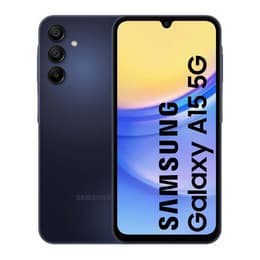
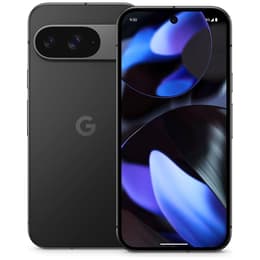
The Samsung Galaxy A15 5G, released in late 2023 and early 2024, and the Google Pixel 9, launched in August 2024, represent distinct approaches to the smartphone experience. While the Galaxy A15 5G focuses on delivering essential features and extended battery life, the Pixel 9 emphasizes advanced computational photography, a streamlined software experience, and long-term software support. Both devices operate on the Android platform, but they offer different user interfaces and ecosystem integrations.

Scores

Durability

The longevity of a smartphone is influenced by its release timeline, software support, and physical durability.

  • Release Timeline & Software Support: The Samsung Galaxy A15 5G, released in late 2023 and early 2024, is promised four major Android OS updates and five years of security updates, extending its support until Android 18 and security patches until 2028. In contrast, the Google Pixel 9, launched in August 2024, offers an industry-leading seven years of OS, security, and Pixel Drop updates, ensuring support until Android 22. This extended commitment means the Pixel 9 will receive software enhancements and security protections for a significantly longer period.
  • Repairability & Practical Lifespan: The Galaxy A15 5G features a primarily plastic build, which can offer some resilience to minor impacts, though specific repairability scores are not widely published. The Pixel 9 has a provisional repairability score of 5 out of 10, indicating a moderate ease of repair. It features a dual-entry design, allowing access to internal components from both the front and back, which can simplify some common repairs like screen or battery replacement. However, strong adhesive for the battery and a potentially fragile display during removal can still present challenges for repair.
  • Durability Features: The Pixel 9 incorporates Corning Gorilla Glass Victus 2 for display protection, contributing to its overall durability against drops and scratches. The Galaxy A15 5G does not specify a particular glass protection, but its construction is noted for feeling dense and solid despite being plastic.

Year of Release

2023

2024

Compatible with latest Update

Yes

Yes

OS

Android

Android

Foldable

No

No

Performance

Performance in daily use is shaped by the device's internal components, affecting app responsiveness, multitasking, and battery efficiency.

  • Processor Capabilities: The Samsung Galaxy A15 5G is equipped with a processor that handles everyday tasks such as social media, web browsing, and casual gaming adequately. However, users may experience some lag during more demanding applications or intensive multitasking. The Google Pixel 9, powered by its custom-designed processor, delivers a smoother and more responsive experience across a wider range of tasks, including more complex applications and AI-driven features.
  • Multitasking & Responsiveness: The Galaxy A15 5G is available with various RAM configurations, including 4GB, 6GB, and 8GB, which can influence its multitasking capabilities. While it can manage switching between several apps without constant reloading, its overall system responsiveness might not be as immediate. The Pixel 9 typically comes with 12GB of RAM, providing substantial headroom for seamless multitasking and fluid navigation, even with numerous applications open simultaneously.
  • Battery Behavior: The Galaxy A15 5G features a 5000mAh battery, consistently delivering excellent battery life that often extends through a full day of heavy use and into a second day for moderate users. The Pixel 9, with its 4700mAh battery, has shown significant improvements in battery endurance compared to previous generations, reliably lasting a full day for most users. Both devices support wired fast charging, with the Galaxy A15 5G supporting 25W and the Pixel 9 supporting 27W, but only the Pixel 9 offers wireless charging capabilities.

Memory (GB)

4 GB

12 GB

Screen quality

The display is a primary interface for smartphone interaction, with differences in technology and specifications impacting the visual experience.

  • Display Technology & Clarity: The Samsung Galaxy A15 5G features a 6.5-inch Super AMOLED display with a Full HD+ resolution (2340x1080 pixels), offering vibrant colors and deep blacks. The Google Pixel 9 comes with a 6.3-inch OLED display, also with a Full HD+ resolution (1080x2424 pixels), providing sharp images and excellent contrast.
  • Brightness & Refresh Rate: The Galaxy A15 5G's screen has a 90Hz refresh rate for smoother scrolling and animations, and it can reach up to 800 nits in High Brightness Mode, making it legible in bright outdoor conditions. The Pixel 9 offers a more adaptive refresh rate, ranging from 60Hz to 120Hz, for a very fluid visual experience. Its display can achieve significantly higher brightness levels, up to 1800 nits for HDR content and a peak brightness of 2700 nits, which enhances visibility in direct sunlight and improves HDR content viewing.
  • Viewing Experience: Both phones provide a clear and engaging viewing experience for media consumption and daily tasks. The Pixel 9's higher peak brightness and adaptive refresh rate contribute to a more premium visual experience, particularly for users who frequently consume HDR content or use their phone outdoors. The Galaxy A15 5G's Super AMOLED panel still offers a good experience for its class, with good color reproduction.

Resolution

1080 x 2340

1080 x 2424

Screen type

Super AMOLED

OLED

Audiovisual

Camera capabilities are a key differentiator, influencing the quality of photos and videos captured in various conditions.

  • Rear Camera System: The Samsung Galaxy A15 5G features a triple-camera setup with a 50-megapixel main sensor, a 5-megapixel ultrawide lens, and a 2-megapixel macro lens. The main camera performs well in good lighting conditions, producing detailed images, but it lacks optical image stabilization (OIS). The ultrawide and macro lenses are functional but offer less detail. The Google Pixel 9 sports a dual-camera system, including a 50-megapixel wide camera with a larger sensor and a 48-megapixel ultrawide camera. The Pixel 9's camera benefits from advanced computational photography, delivering generally great photo quality with strong detail and dynamic range across various lighting scenarios.
  • Low-Light & Video Performance: The Galaxy A15 5G's camera can struggle in low-light environments, and its video recording is limited to 1080p at 30 frames per second. The Pixel 9 excels in low-light photography, leveraging its software processing to produce brighter and clearer images. It also offers 4K video recording at various frame rates, providing more flexibility and higher quality for video content creation.
  • Front Camera & Features: For selfies, the Galaxy A15 5G has a 13-megapixel front camera. The Pixel 9 features a 10.5-megapixel front camera, which also benefits from Google's image processing, resulting in clear and detailed selfies. The Pixel 9 integrates AI-driven photo editing features, enhancing the overall photography experience.

Main camera

50 megapixels

50 megapixels

Front camera

13 megapixels

10.5 megapixels

Miscellaneous

Beyond core specifications, several practical elements contribute to the overall user experience and device utility.

  • Connectivity & Ports: Both devices support 5G connectivity, ensuring access to faster mobile networks. The Galaxy A15 5G includes a 3.5mm headphone jack, a feature absent on the Pixel 9, which relies solely on its USB-C port for audio and charging. Both phones utilize a USB-C port for charging and data transfer, though the Galaxy A15 5G uses USB 2.0, while the Pixel 9's USB-C port typically offers faster data transfer speeds.
  • Biometrics & Sensors: The Galaxy A15 5G features a side-mounted fingerprint sensor for secure unlocking. The Pixel 9 incorporates an in-display fingerprint sensor, offering a more integrated design. Both devices include essential sensors like GPS and NFC for navigation and contactless payments.
  • Design & Handling: The Galaxy A15 5G has dimensions of 160.1 x 76.8 x 8.4 mm and weighs 200 grams, featuring a plastic build with a matte finish and a flat frame. The Pixel 9 is slightly more compact at 152.8 x 72.0 x 8.5 mm and weighs 198 grams. While the Pixel 9's design is often praised, some users have noted its weight, describing it as feeling heavy. The Pixel 9 also supports MagSafe for wireless charging accessories.

Weight

200 g

198 g

Screen size (in)

6.5

6.3

Mobile network

5G

5G

SIM card

Dual Physical SIM

Physical SIM + eSIM

Carrier compatibility

Unlocked

Unlocked

The Samsung Galaxy A15 5G and Google Pixel 9 cater to different user priorities, each offering a distinct set of strengths. Users often praise the Galaxy A15 5G for its exceptional battery life, vibrant Super AMOLED display, and Samsung's commitment to software updates for a budget-friendly device. Common criticisms tend to focus on its performance, which can feel sluggish with demanding tasks, and the quality of its secondary camera lenses.

The Google Pixel 9 receives acclaim for its advanced camera capabilities, smooth and intuitive software experience, and Google's extensive seven-year software support policy. Its improved battery life and bright OLED display are also frequently highlighted as positives. Some users have noted that the device can feel heavy, and while its processor is efficient for daily use, it may not match the raw power of some competitors in intensive gaming scenarios. The in-display fingerprint reader, while improved, can still be inconsistent for some.

Users prioritizing long-lasting battery life, expandable storage, and a 3.5mm headphone jack may find the Samsung Galaxy A15 5G well-suited to their needs. It serves as a reliable daily driver for essential communication and media consumption. Conversely, users who value cutting-edge computational photography, a streamlined Android experience with prompt updates, and a longer overall software support window will likely lean towards the Google Pixel 9. It is also a strong choice for those who appreciate advanced AI features and wireless charging convenience.

For those considering either device, exploring quality-assured refurbished options can provide an eco-friendly alternative, offering access to these technologies while supporting sustainable consumption.


See all articles

Our recent comparisons