
Galaxy A14 5G Vs iPhone 16e

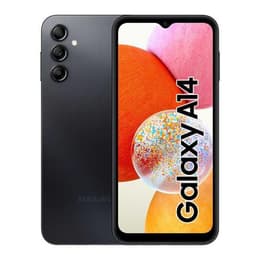
Galaxy A14 5G
Galaxy A14 5G
Starting at

Refurbished price:£80.00

Versus £289.00 new

See options
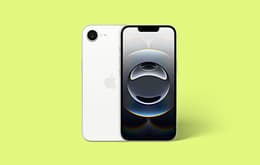
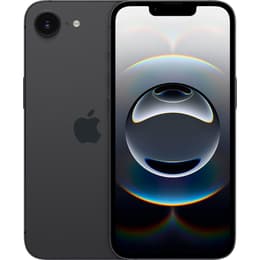
iPhone 16e
iPhone 16e
Starting at

Refurbished price:£359.00

Versus £599.00 new

See options

Ratings

The Samsung Galaxy A14 5G, released in January 2023, is an Android smartphone designed to offer essential features and 5G connectivity. In contrast, the iPhone 16E, introduced in February 2025 as an entry-level model within the iPhone 16 series, operates on Apple's iOS platform. While both devices provide smartphone functionality, they differ significantly in their operating systems, core hardware, and overall user experience, catering to distinct preferences.

Scores

Durability

When considering the practical lifespan of these devices, several factors come into play, including their release timelines, software support, and physical durability.

  • Release Timeline and Software Support: The Galaxy A14 5G launched in early 2023, typically receiving 2-4 major Android OS updates and 4-5 years of security updates from Samsung. This means it has likely received Android 14 and 15, with potential for Android 16, and security updates extending into early 2028. The iPhone 16E, released in February 2025, launched with iOS 18.3 and supports iOS 26. Although it was discontinued in March 2026, Apple generally provides 5-7 years of major iOS updates for its devices, suggesting a longer software support window for the 16E from its release date compared to the A14 5G.
  • Physical Durability: The iPhone 16E features a Ceramic Shield front cover and an IP68 rating for dust and water resistance, indicating a higher level of protection against environmental elements and accidental damage. The Galaxy A14 5G, while robust for its category, does not offer the same advanced ingress protection or specialized display glass.
  • Expected Practical Lifespan: Users prioritizing extended software longevity and enhanced physical resilience may find the iPhone 16E to offer a longer practical lifespan, despite its quick discontinuation. The Galaxy A14 5G provides a solid lifespan within the Android ecosystem, particularly for users who do not require the absolute latest software versions for the longest possible duration.

Year of Release

2023

2025

OS

Android

iOS

Foldable

No

No

Performance

The performance of a smartphone is largely determined by its internal components, influencing how smoothly applications run and how efficiently it handles daily tasks.

  • Processor Capabilities: The iPhone 16E is equipped with an Apple A18 chip, which delivers robust performance for demanding applications, complex multitasking, and graphically intensive gaming. The Galaxy A14 5G utilizes a MediaTek Dimensity 700 or Exynos 1330 processor, providing competent performance for everyday tasks, web browsing, and casual gaming.
  • System Responsiveness and Multitasking: With 8 GB of RAM, the iPhone 16E offers substantial capacity for seamless multitasking and quick app switching, contributing to an overall fluid user experience. The Galaxy A14 5G comes with 4 GB or 6 GB of RAM, which is sufficient for typical smartphone usage but may show more noticeable pauses when handling numerous applications simultaneously or very resource-intensive tasks.
  • Storage Options: The iPhone 16E starts with 128 GB of internal storage and offers configurations up to 512 GB, providing ample space for apps, media, and files. The Galaxy A14 5G offers 64 GB or 128 GB of internal storage, with the added flexibility of expandable storage via a microSD card, which can be beneficial for users with extensive media libraries.

Memory (GB)

4 GB

8 GB

Screen quality

The display is a primary interface for smartphone interaction, and differences in technology, resolution, and brightness can significantly impact the viewing experience.

  • Display Technology and Clarity: The iPhone 16E features a 6.1-inch Super Retina XDR OLED display, known for its deep blacks, high contrast ratio, and vibrant color reproduction. Its resolution of 2532 x 1170 pixels results in a sharp image with approximately 460 pixels per inch. The Galaxy A14 5G has a larger 6.6-inch PLS LCD display with a resolution of 1080 x 2408 pixels, offering good clarity for general use, though LCD technology typically provides less contrast than OLED.
  • Brightness and Refresh Rate: The iPhone 16E's display can reach 800 nits typical brightness and up to 1200 nits peak brightness for HDR content, ensuring good visibility in various lighting conditions. It operates at a standard 60Hz refresh rate. The Galaxy A14 5G features a 90Hz refresh rate, which provides a smoother scrolling experience, but its overall brightness levels are generally lower than the iPhone 16E's OLED panel.
  • Viewing Experience: Users prioritizing superior color accuracy, contrast, and brightness for media consumption and outdoor visibility will find the iPhone 16E's OLED display more appealing. Those who value a larger screen size and a smoother scrolling experience at a lower refresh rate might lean towards the Galaxy A14 5G.

Resolution

1080 x 2408

2532x1170

Audiovisual

Camera capabilities are a significant consideration for many users, influencing the quality of photos and videos captured in various scenarios.

  • Rear Camera System: The iPhone 16E features a 48 MP Fusion main camera with an f/1.6 aperture, optical image stabilization, and the ability to capture super-high-resolution photos. It also offers an integrated 2x Telephoto option through sensor cropping. The Galaxy A14 5G includes a triple camera setup with a 50 MP primary sensor (f/1.8), complemented by 2 MP macro and 2 MP depth sensors.
  • Photography Performance: The iPhone 16E's advanced image processing, including Photonic Engine and Smart HDR 5, contributes to detailed photos with good dynamic range and color accuracy, particularly in challenging lighting. Its 2x telephoto capability offers versatility for zoomed shots. The Galaxy A14 5G's 50 MP main sensor performs well in good lighting conditions, capturing clear images, while its additional macro and depth sensors offer specific functionalities for close-up shots and portrait effects.
  • Video Recording and Front Camera: Both devices offer capable video recording. The iPhone 16E features a 12 MP front camera, while the Galaxy A14 5G has a 13 MP front camera. The iPhone 16E's microphone quality for calls and recording is generally considered to be of high fidelity, and its stereo speakers provide a rich media consumption experience.

Front camera

13 megapixels

TrueDepth 12MP

Miscellaneous

Beyond core performance and display, various practical elements contribute to the overall user experience and device utility.

  • Connectivity and Ports: Both devices support 5G connectivity. The iPhone 16E features Wi-Fi 6 and Bluetooth 5.3, along with a USB-C port for charging and data transfer, though it operates at USB 2.0 speeds. The Galaxy A14 5G supports Wi-Fi 5 and Bluetooth 5.2, and also includes a USB-C port, alongside a traditional 3.5mm headphone jack, which is absent on the iPhone 16E.
  • Biometrics and Special Features: The iPhone 16E relies on Face ID for secure authentication and includes an Action Button for customizable shortcuts. It also features an IP68 rating for dust and water resistance. The Galaxy A14 5G uses a side-mounted fingerprint sensor for unlocking and security.
  • Physical Characteristics: The iPhone 16E is more compact and lighter, measuring 146.7 x 71.5 x 7.8 mm and weighing 167g, making it easier for one-handed use. The Galaxy A14 5G is larger and heavier at 167.7 x 78 x 9.1 mm and 202g, offering a more expansive screen but a less compact feel. The iPhone 16E features an aluminum frame and glass back, while the Galaxy A14 5G has a plastic build.

Weight

201 g

167 g

Screen size (in)

6.6

6.1

Mobile network

5G

5G

SIM card

Dual Physical SIM

eSIM

Carrier compatibility

Unlocked

Unlocked

Connector

USB-C + Jack 3.5mm

USB-C

The Samsung Galaxy A14 5G and iPhone 16E cater to different user priorities within the smartphone market. The Galaxy A14 5G, with its larger LCD display, expandable storage, and traditional headphone jack, is often praised by users for its practical features and solid battery life, making it a reliable choice for everyday communication and media consumption. Some users note its performance is suitable for general tasks but may not excel in highly demanding applications.

The iPhone 16E, despite its relatively short market availability, was lauded for bringing a premium OLED display, a powerful A18 chip, and advanced camera capabilities to a more accessible iPhone form factor. Users appreciated its compact size, robust performance, and the integration of features like Face ID and the Action Button. Criticisms sometimes centered on its 60Hz display refresh rate compared to some Android counterparts, and the lack of MagSafe charging.

Users prioritizing a smooth, high-performance experience with a focus on camera quality, display vibrancy, and a compact, durable design may find the iPhone 16E well-suited to their needs. Its strong software support, typical of Apple devices, also offers long-term usability. Conversely, users who value a larger screen, expandable storage, and the flexibility of the Android ecosystem, along with a headphone jack, might lean towards the Galaxy A14 5G. Both devices represent viable options, and considering refurbished models can provide an eco-friendly, quality-assured alternative for either choice.

See all articles

Our recent comparisons