
Google Pixel Fold Vs iPhone 16

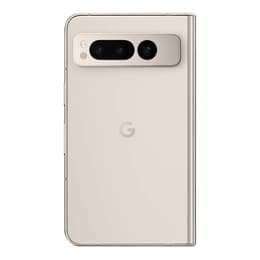
Google Pixel Fold
Google Pixel Fold
Starting at

Refurbished price:£371.00

Versus £1,499.00 new

See options
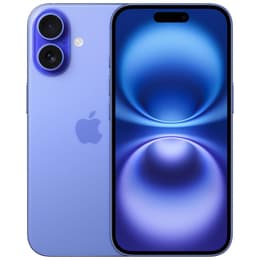
iPhone 16
iPhone 16
Starting at

Refurbished price:£475.00

Versus £699.00 new

See options

Ratings

The Google Pixel Fold, released in June 2023, represents Google's entry into the foldable smartphone market, offering a unique dual-screen experience. In contrast, the iPhone 16, launched in September 2024, continues Apple's traditional smartphone design with a focus on refined performance and camera capabilities. These devices cater to different user preferences, with the Pixel Fold emphasizing screen real estate and multitasking flexibility, while the iPhone 16 prioritizes a streamlined user experience within a conventional form factor. Both run on their respective proprietary operating systems, Android for the Pixel Fold and iOS for the iPhone 16, offering distinct software ecosystems.

Scores

Durability

The longevity of a smartphone is influenced by its physical durability and the duration of software support it receives.

  • Software Support: The Google Pixel Fold is guaranteed five years of OS and security updates from its release, extending its software lifespan until at least June 2028. The iPhone 16, typically, can expect around five to six years of major iOS updates, providing a comparable or slightly longer period of software relevance.
  • Physical Durability: The Pixel Fold features a Gorilla Glass Victus cover display and an IPX8 water resistance rating, indicating protection against submersion. Its internal folding screen, however, uses a plastic protective layer, which is generally less resistant to scratches than glass. The iPhone 16 incorporates a Ceramic Shield front cover and an aluminum frame, along with an IP68 rating for dust and water resistance, offering robust protection against environmental elements.
  • Repairability: The iPhone 16 has shown significant improvements in repairability, earning a score of 7 out of 10 from iFixit, due to easier access to internal components and simplified battery replacement procedures. The Pixel Fold received a repairability score of 6.5 out of 10, with some modularity noted, but the flexible screen remains challenging to replace without potential damage.

Year of Release

2023

2024

Compatible with latest Update

Yes

Yes

Foldable

Yes

No

Performance

Performance is a key differentiator, impacting how smoothly applications run and how efficiently the device handles demanding tasks.

  • Processing Power: The Google Pixel Fold is equipped with a Google Tensor G2 processor, which capably handles daily tasks, moderate multitasking, and most applications with efficiency. The iPhone 16 features Apple's A18 chip, delivering robust performance for demanding applications, graphic-intensive gaming, and seamless multitasking, often with a focus on power efficiency.
  • Multitasking and Responsiveness: The Pixel Fold's 12 GB of RAM supports efficient multitasking, allowing users to switch between applications on its larger internal display without significant slowdowns. The iPhone 16, with its optimized iOS ecosystem and efficient processor, provides a highly responsive user experience, ensuring applications launch quickly and transitions are fluid.
  • Battery Behavior: The Pixel Fold houses a 4821 mAh battery, designed to provide over 24 hours of typical use, with an extreme battery saver mode extending usage significantly. The iPhone 16 features a larger battery compared to its predecessor, offering up to 22 hours of offline video playback, with real-world usage tests indicating solid all-day performance for many users.

Memory (GB)

12 GB

8 GB

Screen quality

The display is a primary interaction point, and both devices offer distinct visual experiences.

  • Display Technology and Size: The Google Pixel Fold features a 5.8-inch OLED cover display and unfolds to a 7.6-inch OLED internal display. Both screens offer vibrant colors and deep blacks. The iPhone 16 comes with a 6.1-inch Super Retina XDR OLED display, known for its high contrast and color accuracy.
  • Resolution and Clarity: The Pixel Fold's cover display has a resolution of 1080 x 2092 pixels (408 ppi), and its internal display is 1840 x 2208 pixels (380 ppi), providing sharp visuals for various content. The iPhone 16 offers a 2556 x 1179 pixel resolution at 460 ppi, resulting in exceptionally crisp text and detailed images.
  • Brightness and Refresh Rate: Both Pixel Fold displays support a 120Hz refresh rate for smooth scrolling and animations, with peak brightness levels of 1550 nits for the cover screen and 1450 nits for the inner screen. The iPhone 16's display has a standard 60Hz refresh rate but boasts a typical maximum brightness of 1000 nits, peaking at 1600 nits for HDR content and up to 2000 nits for outdoor visibility.

Resolution

1840 x 2208

1179 x 2556

Screen type

Foldable OLED

Super Retina XDR OLED

Audiovisual

Camera capabilities are a significant factor for many users, and both devices offer advanced photographic systems.

  • Rear Camera Systems: The Google Pixel Fold features a triple-lens rear camera setup, including a 48MP main sensor, a 10.8MP ultrawide lens, and a 10.8MP telephoto lens with 5x optical zoom. This configuration provides versatility for various shooting scenarios, including distant subjects. The iPhone 16 is equipped with an advanced dual-camera system, featuring a 48MP Fusion Main camera that also enables 2x telephoto capabilities, alongside a 12MP Ultra Wide camera.
  • Photography Features: The Pixel Fold leverages Google's computational photography for detailed images. The iPhone 16 benefits from features like Photonic Engine, Deep Fusion, and Smart HDR 5, which contribute to vibrant colors, improved detail, and better low-light performance. It also supports next-generation portraits and macro photography.
  • Video Recording and Front Cameras: Both devices offer high-quality video recording. The Pixel Fold's cover camera can record 4K video at 30 or 60 frames per second. The iPhone 16 supports Cinematic mode up to 4K Dolby Vision at 30 fps and Action mode up to 2.8K Dolby Vision at 60 fps, along with spatial video recording. For selfies and video calls, the Pixel Fold has a 9.5MP front camera on the cover and an 8MP camera on the inner display, while the iPhone 16 features a 12MP TrueDepth front camera.

Main camera

48 megapixels

48 megapixels

Front camera

8 megapixels

12 megapixels

Miscellaneous

Beyond core features, several practical elements contribute to the overall user experience.

  • Connectivity and Ports: The Google Pixel Fold supports 5G mmWave and Wi-Fi 6, along with a USB-C 3.2 Gen 2 port for charging and data transfer. The iPhone 16 offers advanced connectivity with 5G (sub-6 GHz and mmWave) and Wi-Fi 7, ensuring faster wireless speeds. It also features a USB-C port.
  • Biometric Security and Navigation: The Pixel Fold incorporates a side-mounted fingerprint sensor and Face Unlock for secure access. The iPhone 16 relies on Face ID for secure facial recognition. Both devices offer intuitive navigation through their respective operating systems.
  • Design and Handling: The Pixel Fold, when folded, measures 139.7mm x 79.5mm x 12.1mm and weighs 283 grams, offering a compact yet substantial feel. Unfolded, it becomes a larger tablet-like device. The iPhone 16 has dimensions of 147.6mm x 71.6mm x 7.8mm and weighs 170 grams, providing a more traditional and lighter smartphone experience.

Weight

283 g

170 g

Screen size (in)

7.6

6.1

Mobile network

5G

5G

SIM card

Physical SIM + eSIM

Physical SIM + eSIM

Carrier compatibility

Unlocked

Unlocked

Connector

USB-C

USB-C (USB 2)

Choosing between the Google Pixel Fold and the iPhone 16 involves weighing distinct priorities. Users frequently praise the Pixel Fold for its expansive screen real estate, which enhances multitasking and media consumption, and its pure Android experience. However, some users have reported concerns regarding the durability of the inner screen, potential overheating, and app optimization for the foldable display.

The iPhone 16 is often lauded for its consistent performance, robust camera system with improved features like macro photography and spatial video, and its enhanced repairability. Criticisms sometimes point to the base model's 60Hz display and the perception that it offers incremental rather than revolutionary upgrades compared to previous iPhone generations.

Users prioritizing a large, adaptable screen for productivity and immersive content, coupled with the flexibility of the Android ecosystem, may find the Google Pixel Fold aligns well with their needs. Conversely, individuals who value a highly refined, traditional smartphone experience with strong camera capabilities, long-term software support, and a focus on durability and repairability will likely prefer the iPhone 16. Both devices represent compelling options in their respective categories, and considering a quality-assured refurbished option for either model can be an eco-friendly alternative for making an informed choice.

See all articles

Our recent comparisons