
Google Pixel 9 Pro Vs iPhone 17

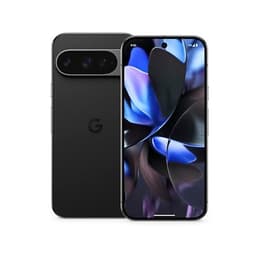
Google Pixel 9 Pro
Google Pixel 9 Pro
Starting at

Refurbished price:£395.25

Versus £917.17 new

See options
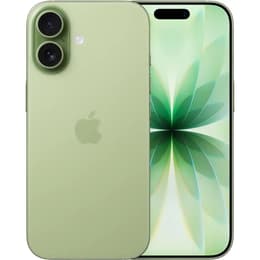
iPhone 17
iPhone 17
Starting at

Refurbished price:£688.00

Versus £799.00 new

See options

Ratings

The Google Pixel 9 Pro, released in late 2024, and the iPhone 17, launched in late 2025, represent distinct approaches to the premium smartphone experience. While both devices offer advanced mobile technology, they differentiate themselves through their operating systems, camera philosophies, and hardware optimizations. The Pixel 9 Pro focuses on deep AI integration and a versatile camera system within the Android ecosystem, whereas the iPhone 17 emphasizes seamless iOS integration, robust performance, and refined audiovisual capabilities.

Scores

Durability

When considering the long-term usability of these devices, both the Google Pixel 9 Pro and the iPhone 17 offer substantial software support and durable designs, though with some differences in their respective ecosystems.

  • Software Longevity: The Google Pixel 9 Pro stands out with a commitment to seven years of OS and security updates, extending its support until at least August 2031. This provides users with an extended period of access to the latest Android features and security enhancements. The iPhone 17, running on iOS 26, is part of Apple's typical support cycle, which generally provides 5-7 years of major iOS updates, ensuring a long lifespan for software features and security patches.
  • Physical Durability: The iPhone 17 incorporates Ceramic Shield glass for enhanced front cover durability and features an IP68 rating for water and dust resistance. The Pixel 9 Pro also includes robust build materials, such as Gorilla Glass Victus 2 for its display, and an IP68 rating, offering comparable protection against environmental elements.
  • Expected Practical Lifespan: Both devices are engineered for sustained performance over several years. The Pixel 9 Pro's extended software support means it will receive functional updates for a longer duration, potentially making it a more future-proof option for users who prioritize the latest software. The iPhone 17, while also receiving extensive updates, benefits from Apple's ecosystem, which often maintains strong performance and resale value over time.

Year of Release

2024

2025

Compatible with latest Update

Yes

Yes

OS

Android

iOS

Foldable

No

No

Performance

Both the Google Pixel 9 Pro and the iPhone 17 deliver powerful performance suitable for demanding applications and multitasking, though they achieve this through different hardware architectures.

  • Processing Power: The Google Pixel 9 Pro is equipped with a current-generation Tensor processor, designed to handle complex AI tasks and everyday operations efficiently. This processor, combined with 16GB of RAM, ensures smooth app loading, fluid multitasking, and responsive gaming experiences. The iPhone 17 features Apple's A19 processor, which provides substantial computational power for graphics-intensive applications and seamless navigation within the iOS environment, supported by 8GB of RAM.
  • Multitasking and Responsiveness: The Pixel 9 Pro's larger RAM capacity allows for a greater number of applications to remain active in the background without needing to reload, benefiting users who frequently switch between apps. User feedback indicates the Pixel 9 Pro maintains a fluid operating system even after a year of use. The iPhone 17's optimized iOS and efficient processor ensure that applications launch quickly and the system remains highly responsive, providing a consistently smooth user experience.
  • Storage Options: The Pixel 9 Pro offers a range of storage configurations including 128GB, 256GB, 512GB, and 1TB, providing flexibility for users with varying storage needs. The iPhone 17 is available with 256GB and 512GB NVMe storage options, catering to users who require ample space for media and applications.

Memory (GB)

16 GB

8 GB

Screen quality

The display quality on both the Google Pixel 9 Pro and the iPhone 17 offers vibrant visuals and excellent clarity, catering to immersive viewing experiences.

  • Display Technology and Clarity: The Google Pixel 9 Pro features a 6.3-inch OLED display with a resolution of 2856 x 1280 pixels, resulting in a pixel density of 495 ppi. This provides sharp text and detailed images. The iPhone 17 sports a 6.3-inch LTPO Super Retina XDR OLED display with a resolution of 1320 x 2868 pixels, offering a pixel density of 460 ppi. Both displays deliver deep blacks and rich colors.
  • Brightness and Refresh Rate: The Pixel 9 Pro's display boasts a 120Hz adaptive refresh rate, capable of scaling down to 1Hz to conserve battery, and reaches a peak brightness of 2000 nits for HDR content, ensuring good visibility in various lighting conditions. The iPhone 17 also features a 120Hz ProMotion display for smooth scrolling and animations, with an impressive peak brightness of 3000 nits, making it highly visible even in bright outdoor environments.
  • Viewing Experience: Users of the Pixel 9 Pro have noted the screen's vibrant colors and excellent brightness for outdoor viewing. The iPhone 17's display is praised for its sharpness, color accuracy, and overall quality, contributing to a premium viewing experience for media consumption and daily use.

Resolution

1280 x 2856

2622x1206

Screen type

LTPO OLED

Super Retina XDR

Audiovisual

Both the Google Pixel 9 Pro and the iPhone 17 offer sophisticated camera systems, each with unique strengths in photography and videography.

  • Rear Camera Systems: The Google Pixel 9 Pro is equipped with a triple-lens rear camera setup, including a 50MP main sensor, a 48MP ultrawide sensor with macro autofocus, and a 48MP telephoto lens offering 5x optical zoom. This configuration allows for versatile shooting, from expansive landscapes to detailed distant subjects. The iPhone 17 features a 48MP Dual Fusion camera system, comprising a main wide lens and an ultrawide lens. It also leverages its main sensor to provide a 12MP optical-quality 2x telephoto option.
  • Photography Features: The Pixel 9 Pro emphasizes computational photography with features like Super Res Zoom (up to 30x digital), Night Sight, Astrophotography, and Pro Controls for manual adjustments. User reviews often highlight the Pixel's natural and consistent photo quality. The iPhone 17 includes advanced features such as Photonic Engine, Deep Fusion, Smart HDR 5, and Night mode, delivering detailed and well-exposed images across various conditions.
  • Video Capabilities and Front Camera: For video, the Pixel 9 Pro offers Video Boost for cloud-based 8K upscaling, Audio Magic Eraser, and 10-bit HDR video. Its front camera is a 42MP sensor with autofocus. The iPhone 17 supports Cinematic mode up to 4K Dolby Vision at 30fps, Action mode up to 2.8K Dolby Vision at 60fps, and Spatial video recording. Its front-facing 18MP Center Stage camera includes autofocus and a wider field of view, enhancing video calls and selfies.

Main camera

50 megapixels

48 megapixels

Front camera

42 megapixels

18 megapixels

Miscellaneous

Beyond their core functionalities, both the Google Pixel 9 Pro and the iPhone 17 incorporate various practical elements that enhance user experience and connectivity.

  • Connectivity and Ports: Both devices support 5G for fast mobile data, along with modern Wi-Fi standards and Bluetooth for wireless connections. The Pixel 9 Pro features a USB-C port for charging and data transfer. The iPhone 17 has also adopted a USB-C port, offering fast charging capabilities.
  • Biometric Security: The Google Pixel 9 Pro utilizes an ultrasonic under-display fingerprint sensor for secure and convenient unlocking. The iPhone 17 relies on its secure facial authentication system, Face ID, for biometric security and privacy.
  • Design and Handling: The Pixel 9 Pro has dimensions of 152.8 x 72 x 8.5 mm. The iPhone 17 is slightly more compact and lighter, measuring 149.6 mm × 71.5 mm × 7.95 mm and weighing 177g, which contributes to comfortable handling for many users. Both phones feature premium build materials, with the Pixel 9 Pro using Gorilla Glass Victus 2 and the iPhone 17 featuring Ceramic Shield Glass 2.

Weight

199 g

177 g

Screen size (in)

6.3

6.3

Mobile network

5G

5G

SIM card

Physical SIM + eSIM

Physical SIM + eSIM

Carrier compatibility

Unlocked

Unlocked

Connector

USB-C

USB-C

The Google Pixel 9 Pro and the iPhone 17 each present a compelling package for users seeking a high-end smartphone, with distinct strengths catering to different preferences. User feedback for the Pixel 9 Pro often praises its exceptional battery life, with many reporting all-day usage and significant screen-on time. Its camera system is consistently lauded for producing natural-looking photos and its advanced AI features. Some users, however, have noted that the phone can get warm during intensive use or charging, and some find the software UI less customizable than desired.

For the iPhone 17, common praise points include its vibrant and sharp display, robust performance, and the quality of its camera, particularly for video recording and selfies. Users appreciate its comfortable size and weight, and the overall fluidity of the iOS experience. Criticisms sometimes revolve around the lack of a dedicated telephoto lens on the base model and occasional software glitches reported by some users.

Users prioritizing extensive software support, advanced AI capabilities, and a versatile camera with strong optical zoom may find the Google Pixel 9 Pro well-suited to their needs. Conversely, individuals who value a highly optimized ecosystem, superior video recording features, and a slightly more compact design might lean towards the iPhone 17. Both devices offer a premium experience, and for those considering a sustainable choice, quality-assured refurbished options for both models provide an eco-friendly alternative to purchasing new.
See all articles

Our recent comparisons