
Google Pixel 9 Pro Fold Vs iPhone 16

Google Pixel 9 Pro Fold
Starting at

Refurbished price:£538.00

Versus £1,739.49 new

See options
iPhone 16
iPhone 16
Starting at

Refurbished price:£475.00

Versus £699.00 new

See options

Ratings

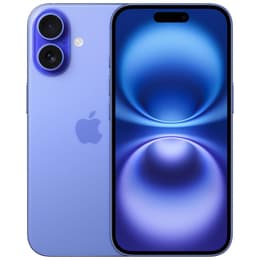
The Google Pixel 9 Pro Fold, released in September 2024, represents Google's latest entry into the foldable smartphone market, offering a unique dual-screen experience. The iPhone 16, also launched in September 2024, continues Apple's tradition of refining its flagship slab smartphone design. These devices cater to different user preferences, with the Pixel 9 Pro Fold emphasizing a versatile, expansive display for multitasking and the iPhone 16 focusing on a streamlined, powerful, and intuitive user experience within a traditional form factor.

Scores

Durability

When considering the long-term usability of these devices, both the Google Pixel 9 Pro Fold and the iPhone 16 offer substantial software support and robust build qualities, though their form factors present different considerations for practical lifespan.

  • Software Longevity: The Google Pixel 9 Pro Fold is notable for its commitment to extended software support, promising seven years of OS, security, and Pixel Drop updates, extending its functional life until approximately 2031. The iPhone 16, running on iOS, typically receives major operating system updates for five to six years from its release, ensuring a long period of current features and security.
  • Physical Durability: The iPhone 16 features a Ceramic Shield front cover and an aluminum design, contributing to its overall resilience against drops and scratches, alongside an IP68 rating for water and dust resistance. The Pixel 9 Pro Fold incorporates Corning Gorilla Glass Victus 2 on its cover screen and Ultra Thin Glass for its inner folding display, paired with an IPX8 water resistance rating. The folding mechanism introduces a unique aspect to its durability, with the hinge designed for fluid movement and the device being notably thinner than its predecessor when folded.
  • Repairability Aspects: While specific repairability scores can vary, both manufacturers design their devices with certain repair considerations. The iPhone 16 has shown improvements in battery removal for servicing. The Pixel 9 Pro Fold's complex folding design may present different challenges for repairs compared to a traditional smartphone.

Year of Release

2024

2024

Compatible with latest Update

Yes

Yes

Foldable

Yes

No

Performance

The performance of both the Google Pixel 9 Pro Fold and the iPhone 16 is optimized for their respective operating systems, delivering smooth and responsive experiences for everyday tasks and demanding applications.

  • Processing Power: The Google Pixel 9 Pro Fold is powered by Google's current-generation Tensor processor, which is specifically engineered to excel in on-device machine learning and artificial intelligence tasks, enabling advanced features and efficient handling of complex AI workloads. The iPhone 16 features Apple's A-series chip, known for its strong overall performance, providing rapid app loading, fluid multitasking, and capable handling of graphics-intensive games and applications.
  • Multitasking and Responsiveness: With 16GB of RAM, the Pixel 9 Pro Fold is well-equipped to manage numerous applications simultaneously, particularly benefiting from its large inner display for split-screen multitasking. The iPhone 16, with its optimized operating system, delivers a highly responsive user experience, ensuring smooth transitions and efficient background app management, even with its typical RAM configuration.
  • Battery Behavior: The Pixel 9 Pro Fold houses a 4650mAh battery, designed to provide ample power for its dual-screen usage, with users reporting improved battery life compared to previous generations. The iPhone 16, with a 3561 mAh battery, offers solid battery performance for a single-screen device, capable of lasting through a full day of typical usage for many users, and supports faster charging to quickly replenish power.

Memory (GB)

16 GB

8 GB

Screen quality

The display technologies in the Google Pixel 9 Pro Fold and the iPhone 16 offer distinct visual experiences, catering to different user needs and preferences.

  • Display Technology and Clarity: The Google Pixel 9 Pro Fold features two OLED displays: a 6.3-inch Actua display on the cover and an expansive 8-inch Super Actua Flex display when unfolded. Both offer vibrant colors and deep blacks, with the inner display providing a tablet-like experience. The iPhone 16 utilizes a 6.1-inch Super Retina XDR OLED display, known for its exceptional color accuracy, high contrast, and sharp resolution, delivering a consistently clear and immersive viewing experience.
  • Brightness and Refresh Rate: Both devices offer impressive brightness levels, with the Pixel 9 Pro Fold's displays reaching up to 2700 nits peak brightness, ensuring good visibility in bright outdoor conditions. The iPhone 16 also achieves up to 2000 nits peak outdoor brightness. The Pixel 9 Pro Fold's inner display boasts an adaptive refresh rate ranging from 1Hz to 120Hz for smooth scrolling and responsive interactions, while its cover screen operates between 60-120Hz. The iPhone 16 maintains a 60Hz refresh rate, which provides a consistent visual experience for most content.
  • Viewing Experience: The Pixel 9 Pro Fold's large, nearly square inner display offers a unique canvas for productivity and media consumption, allowing for comfortable split-screen applications and an expansive viewing area. The iPhone 16's traditional form factor provides a compact yet vibrant display, ideal for one-handed use and delivering a high-quality visual experience for everyday tasks and media.

Resolution

2076 x 2152

1179 x 2556

Audiovisual

Both the Google Pixel 9 Pro Fold and the iPhone 16 are equipped with advanced camera systems designed to capture high-quality photos and videos, each with its own strengths and computational photography capabilities.

  • Rear Camera Systems: The Google Pixel 9 Pro Fold features a versatile triple-camera setup on its rear, including a 48MP wide-angle lens with optical image stabilization, a 10.5MP ultrawide lens with a broad field of view and macro focus capabilities, and a 10.8MP telephoto lens offering 5x optical zoom and up to 20x Super Res Zoom. The iPhone 16 comes with an advanced dual-camera system, featuring a 48MP Fusion Main camera with sensor-shift optical image stabilization that can also achieve 2x telephoto-quality shots through sensor cropping, alongside a 12MP Ultra Wide camera with a 120-degree field of view.
  • Photography Performance: The Pixel 9 Pro Fold leverages Google's computational photography for excellent detail, dynamic range, and color accuracy, particularly in various lighting conditions, and includes AI-powered editing tools. The iPhone 16 also excels in computational photography, delivering sharp images with natural colors and impressive low-light performance, enhanced by features like Photonic Engine and Smart HDR.
  • Video Recording and Features: Both devices are capable of recording high-quality video. The Pixel 9 Pro Fold supports 4K video recording at up to 60 frames per second, with features like Night Sight Video and Audio Magic Eraser. The iPhone 16 offers 4K Dolby Vision video recording at up to 60 frames per second, providing excellent video quality with strong stabilization and cinematic modes.

Front camera

10 megapixels

12 megapixels

Miscellaneous

Beyond their core functionalities, the Google Pixel 9 Pro Fold and the iPhone 16 offer a range of practical features and design elements that influence their overall user experience.

  • Connectivity and Ports: Both devices support modern connectivity standards, including 5G (sub-6 GHz and mmWave) for fast cellular data, Wi-Fi 7 for high-speed wireless internet, and Bluetooth 5.3 for efficient accessory pairing. The Pixel 9 Pro Fold features a USB-C 3.2 port, while the iPhone 16 utilizes a Lightning port for charging and data transfer. Both support eSIM technology. The Pixel also offers satellite messaging for emergency situations.
  • Biometrics and User Interface: The Pixel 9 Pro Fold integrates a power button with a fingerprint sensor for secure unlocking, and its folding interface allows for unique multitasking layouts. The iPhone 16 relies on Face ID for secure facial recognition and features the Dynamic Island for interactive alerts and background activities, along with a customizable Action Button for quick access to preferred functions.
  • Design and Handling: The Pixel 9 Pro Fold, at 257 grams, offers a unique form factor that transforms from a compact smartphone to a larger tablet-like device, providing versatility in usage. Its folded dimensions are 155.2 x 77.1 x 10.5 mm, and unfolded it measures 155.2 x 150.2 x 5.1 mm. The iPhone 16, weighing 170 grams with dimensions of 147.6 x 71.6 x 7.8 mm, maintains a more traditional and compact design, making it comfortable for one-handed operation and pocketability.

Weight

257 g

170 g

Screen size (in)

8.0

6.1

Mobile network

5G

5G

SIM card

Physical SIM + eSIM

Physical SIM + eSIM

Carrier compatibility

Unlocked

Unlocked

Connector

USB-C

USB-C (USB 2)

The Google Pixel 9 Pro Fold and the iPhone 16 cater to distinct user needs, each excelling in different areas. User feedback for the Pixel 9 Pro Fold often highlights its innovative folding display as a major advantage, providing an expansive canvas for productivity and media consumption. The integration of Google's AI features and the extended software support are also frequently praised. Some users, particularly hardcore gamers, have noted that while its processor is highly capable for AI, it might not match the raw gaming performance of some competitors. There have also been occasional mentions of app scaling or minor software bugs on the larger inner display, though Google consistently works to refine the experience.

For the iPhone 16, common praise points include its reliable performance, the quality of its camera system, and the seamless integration within the Apple ecosystem. Users appreciate its compact size and the introduction of features like the Action Button and Camera Control. A frequent point of discussion, however, is the continued use of a 60Hz display, which some users feel is a limitation compared to devices offering higher refresh rates. The battery life is generally considered solid for a device of its size.

Users prioritizing a large, versatile screen for multitasking, content creation, or an immersive viewing experience may find the Google Pixel 9 Pro Fold well-suited to their needs. Its long-term software commitment and advanced AI capabilities also make it an appealing choice for those who value cutting-edge software features. Conversely, users who prefer a traditional, compact smartphone with a highly refined operating system, robust camera performance, and a strong ecosystem will likely lean towards the iPhone 16. It is an excellent option for those seeking a dependable and intuitive device for everyday use. Both models are available as quality-assured refurbished options, providing an eco-friendly alternative for consumers.

See all articles

Our recent comparisons