Google Pixel 8 Vs iPhone 17

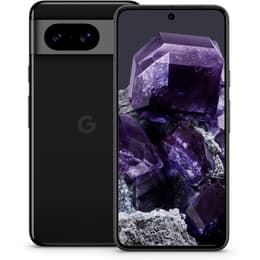
Google Pixel 8
Google Pixel 8
Starting at

Refurbished price:£185.99

Versus £699.99 new

See options
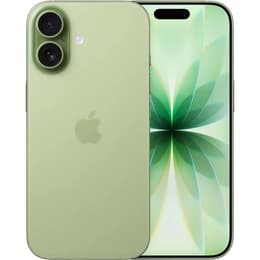
iPhone 17
iPhone 17
Starting at

Refurbished price:£688.00

Versus £799.00 new

See options

Ratings

The Google Pixel 8, released in October 2023, and the iPhone 17, launched in September 2025, represent distinct approaches to the modern smartphone experience. While both devices offer advanced capabilities, they differ significantly in their operating systems, core processing philosophies, and camera systems. The Pixel 8 operates on Android, emphasizing Google's AI and computational photography, whereas the iPhone 17 runs on iOS, focusing on integrated hardware and software performance with Apple's ecosystem.

Scores

Durability

When considering the long-term usability of a smartphone, factors like software support and physical resilience are key. The Pixel 8 and iPhone 17 offer different timelines and approaches to durability.

  • Software Longevity: The Google Pixel 8 was launched with a commitment to seven years of operating system, security, and feature updates, extending its software lifespan significantly [31]. The iPhone 17, released two years later, typically receives 5-6 years of major iOS updates from its launch date, meaning its support will extend further into the future than the Pixel 8's. [3, 19]
  • Physical Durability: The Pixel 8 features Corning Gorilla Glass Victus for screen protection and an aluminum frame, offering robust everyday resistance [11]. The iPhone 17 introduces Ceramic Shield 2 for enhanced scratch resistance and improved outdoor brightness, alongside a durable build. [3, 7]
  • Repairability: Both devices are designed with modern smartphone construction, which can present challenges for user-level repairs. Professional repair services are generally recommended for both models to ensure proper functionality and maintain water resistance.

Year of Release

2023

2025

Compatible with latest Update

Yes

Yes

OS

Android

iOS

Foldable

No

No

Performance

Performance in smartphones is about more than just raw speed; it encompasses how smoothly the device handles daily tasks, demanding applications, and multitasking. The Pixel 8 and iPhone 17 approach this with different underlying architectures.

  • Processing Power: The Google Pixel 8 is powered by Google's Tensor G3 processor, designed to optimize on-device artificial intelligence and machine learning tasks, resulting in efficient handling of features like advanced photo editing and real-time language processing [10, 31]. The iPhone 17 features Apple's A19 chip, which provides substantial improvements in processing speeds and graphical performance, ensuring smooth operation for demanding applications and high-fidelity gaming. [3, 7, 17, 19]
  • Multitasking and Storage: Both devices come with 8GB of RAM, allowing for efficient multitasking and app switching [11, 19]. The Pixel 8 offers storage options of 128GB and 256GB, while the iPhone 17 starts at 256GB and goes up to 512GB, providing ample space for applications, media, and files. [3, 11, 19]
  • Battery Behavior: The Pixel 8 is equipped with a 4575 mAh battery, designed to provide over 24 hours of typical use, with an Extreme Battery Saver mode extending this significantly [4, 11, 34]. The iPhone 17 has a 3692 mAh battery, but with optimizations from its A19 chip and iOS, it is expected to deliver longer overall battery life compared to previous iPhone models. [3, 5, 19]

Memory (GB)

8 GB

8 GB

Screen quality

The visual experience is a primary interaction point for any smartphone, and both the Pixel 8 and iPhone 17 offer high-quality displays with distinct characteristics.

  • Display Technology and Clarity: The Google Pixel 8 features a 6.2-inch OLED display with a 2400x1080 pixel resolution, offering vibrant colors and deep blacks [10, 11]. The iPhone 17 comes with a slightly larger 6.3-inch Super Retina XDR OLED display, providing a resolution of 2622 × 1206 pixels and a pixel density of 460 PPI for sharp visuals. [3, 19]
  • Brightness and Refresh Rate: The Pixel 8's display can reach a peak brightness of up to 2000 nits, ensuring good visibility even in bright outdoor conditions [4, 31]. It also features a Smooth Display with a variable refresh rate of 60-120Hz for fluid scrolling and responsiveness [4]. The iPhone 17 incorporates ProMotion technology, offering a 120Hz refresh rate across all models for exceptionally smooth motion, along with improved outdoor brightness for better viewing in various lighting environments. [3, 8]
  • Viewing Experience: Both phones provide an immersive viewing experience suitable for media consumption and daily use. The iPhone 17's slightly larger screen and higher pixel density contribute to a detailed visual output. [3, 19]

Resolution

1080 x 2400

2622x1206

Screen type

OLED

Super Retina XDR

Audiovisual

Both the Google Pixel 8 and iPhone 17 are designed to deliver advanced photographic capabilities, though they leverage different strengths in hardware and software processing.

  • Rear Camera System: The Google Pixel 8 features a dual-camera system with a 50MP main sensor and a 12MP ultrawide lens, known for its computational photography that enhances details and color accuracy [10, 34]. The iPhone 17 is equipped with a 48MP main camera, which, combined with Apple's image processing, aims to capture detailed photos and videos. [13, 19]
  • Front Camera and Video: The Pixel 8 includes an 11MP front-facing camera suitable for selfies and video calls [10, 34]. The iPhone 17 features an 18-megapixel selfie camera, offering higher resolution for front-facing photography and improved clarity for video conferencing. [3] Both devices offer high-quality video recording capabilities, with the iPhone 17 supporting 4K Dolby Vision video. [7]
  • Audio Experience: Both smartphones provide clear microphone quality for calls and recordings. The speaker output on both is designed for a balanced media consumption experience, with the iPhone 17 likely benefiting from continuous audio advancements.

Main camera

50 megapixels

48 megapixels

Front camera

10.5 megapixels

18 megapixels

Miscellaneous

Beyond the core specifications, several practical elements contribute to the overall user experience and daily utility of these devices.

  • Connectivity Standards: The Google Pixel 8 supports Wi-Fi 6E and Bluetooth 5.3, providing fast and reliable wireless connections [15, 23]. The iPhone 17 steps up to Wi-Fi 7 and incorporates an Apple-designed N1 networking chip, promising even faster speeds and improved efficiency for wireless communication. [3, 8]
  • Physical Ports and Biometrics: The Pixel 8 features a USB-C port for charging and data transfer, along with an optical in-screen fingerprint sensor for secure unlocking [11, 23]. The iPhone 17 also utilizes a USB-C port, aligning with modern connectivity standards, and relies on Face ID for secure authentication. [3, 8, 19]
  • Design and Handling: The Pixel 8 has dimensions of 150.5 x 70.8 x 8.9 mm and weighs 187g, offering a comfortable in-hand feel [10, 11]. The iPhone 17 is slightly larger and heavier at 149.6 mm × 71.5 mm × 7.95 mm and 177g, but its design is refined for a balanced grip. [19] Both devices feature IP68 water and dust resistance. [11]

Weight

187 g

177 g

Screen size (in)

6.2

6.3

Mobile network

5G

5G

SIM card

Physical SIM + eSIM

Physical SIM + eSIM

Carrier compatibility

Unlocked

Unlocked

The Google Pixel 8 and iPhone 17 cater to users with differing priorities, reflecting their respective ecosystems and design philosophies. User feedback for the Pixel 8 often praises its exceptional camera capabilities, particularly its computational photography features, and the clean Android experience with timely updates. Some users have noted improvements in connectivity compared to earlier Pixel models. [25, 28]

For the iPhone 17, common praise points revolve around its integrated performance, the fluidity of iOS, and the expected advancements in display technology and camera quality. The shift to USB-C and the inclusion of ProMotion across all models are also frequently highlighted as significant improvements. [3, 8, 14]

Users prioritizing a device with a strong emphasis on AI-driven features, a long software support window, and a pure Android experience may find the Google Pixel 8 well-suited to their needs. Conversely, those who value a highly integrated ecosystem, robust processing power for demanding tasks, and a refined user interface with consistent performance will likely lean towards the iPhone 17. Both devices offer compelling features, and choosing between them often comes down to personal preference for operating system and specific feature sets. For those seeking a more sustainable choice, both models are available as quality-assured refurbished options, extending their lifecycle and reducing electronic waste.


See all articles

Our recent comparisons