
Google Pixel 7 Pro Vs iPhone 14 Plus

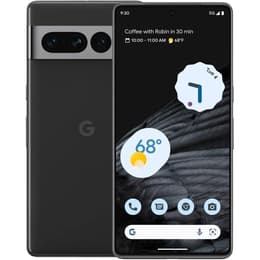
Google Pixel 7 Pro
Google Pixel 7 Pro
Starting at

Refurbished price:£169.75

Versus £899.99 new

See options
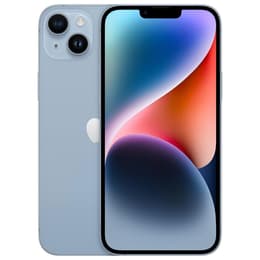
iPhone 14 Plus
iPhone 14 Plus
Starting at

Refurbished price:£242.00

Versus £699.00 new

See options

Ratings

The Google Pixel 7 Pro and the iPhone 14 Plus, both released in late 2022, represent distinct approaches to the large-screen smartphone experience. While the Pixel 7 Pro emphasizes advanced computational photography and a high-refresh-rate display, the iPhone 14 Plus focuses on robust battery endurance and a streamlined user experience. Both devices run on their respective flagship operating systems, Android and iOS, offering different ecosystems and software philosophies.

Scores

Durability

When considering the longevity of these devices, both offer substantial software support and physical resilience, though with some differences in repairability and expected update cycles.

  • Software Support: The Google Pixel 7 Pro launched with Android 13 and is expected to receive five years of OS and security updates from its October 2022 release. The iPhone 14 Plus, released in October 2022 with iOS 16, typically receives iOS updates for approximately five to six years from its launch, potentially offering a slightly longer period of major OS upgrades. [1, 4, 5, 7, 17]
  • Physical Durability: Both smartphones feature an IP68 rating for dust and water resistance, indicating protection against immersion. The Pixel 7 Pro utilizes Corning Gorilla Glass Victus for its display, which performs as expected in scratch tests, showing marks at level 6 and deeper grooves at level 7 on the Mohs scale. However, durability tests have indicated that the Pixel 7 Pro's frame can exhibit significant bending under pressure, particularly near the camera bar, which could compromise its water resistance over time. The iPhone 14 Plus features a Ceramic Shield front and a glass back with an aluminum design. [1, 6, 13, 34, 36, 37, 42]
  • Repairability: The iPhone 14 Plus has been noted for improved repairability compared to previous iPhone Pro models, featuring removable front and back panels that make certain repairs, like replacing the back glass, more accessible. It received a repairability score of 7/10. In contrast, the Pixel 7 Pro received a repairability score of 5.5/10, with some components like the charging port and back screen noted as difficult to repair due to strong adhesives and soldered connections. [10, 11, 19, 32, 40, 44]

Year of Release

2022

2022

Compatible with latest Update

Yes

Yes

OS

Android

iOS

Foldable

No

No

Performance

The performance of these devices is driven by their respective processors, influencing everything from app responsiveness to battery efficiency and multitasking capabilities.

  • Everyday Responsiveness: The Google Pixel 7 Pro, powered by its custom-designed processor, delivers smooth performance for daily tasks, app loading, and general navigation. Users generally experience a fluid interface and efficient handling of common applications. [15] The iPhone 14 Plus, equipped with a powerful processor, provides a highly responsive and consistent user experience, handling demanding applications and multitasking with ease. [4, 5, 21]
  • Multitasking and Storage: The Pixel 7 Pro comes with 12GB of RAM, which contributes to its ability to manage numerous applications simultaneously without significant slowdowns. It offers storage options of 128GB, 256GB, and 512GB. [2, 6, 17] The iPhone 14 Plus features 6GB of RAM, which, combined with its optimized operating system, allows for efficient multitasking. It is available with 128GB, 256GB, or 512GB of internal storage. [1, 4, 5, 21]
  • Battery Behavior: The Pixel 7 Pro houses a 5000 mAh battery. While it can last a full day for moderate users, some reports indicate that heavy usage, especially with the display at high brightness, can lead to more frequent charging. [8, 12, 23, 25, 30] The iPhone 14 Plus is equipped with a 4325 mAh battery and is widely praised for its exceptional battery life, often lasting through a full day of heavy use and sometimes extending beyond, making it a strong contender for users prioritizing endurance. [9, 20, 24, 26, 39]

Memory (GB)

12 GB

6 GB

Screen quality

The visual experience on both devices is a key differentiator, with each offering distinct display technologies and characteristics.

  • Display Technology and Clarity: The Google Pixel 7 Pro features a 6.7-inch LTPO AMOLED display with a resolution of 1440 x 3120 pixels, resulting in a sharp pixel density of approximately 512 ppi. This technology provides vibrant colors and deep blacks. [3, 6, 13] The iPhone 14 Plus sports a 6.7-inch Super Retina XDR OLED display with a resolution of 2778 x 1284 pixels, offering a pixel density of 458 ppi. This OLED panel delivers excellent contrast, accurate colors, and deep blacks. [16, 34]
  • Brightness and Refresh Rate: The Pixel 7 Pro's display offers an adaptive refresh rate that can dynamically adjust between 10Hz and 120Hz, providing smooth scrolling and animations while conserving power. It can reach a typical brightness of 1000 nits and a peak brightness of 1500 nits, ensuring good visibility even in bright outdoor conditions. [3, 14, 15, 27] The iPhone 14 Plus has a standard 60Hz refresh rate, which provides a smooth enough experience for most everyday tasks but lacks the fluidity of higher refresh rate displays. Its display reaches 800 nits of typical maximum brightness and 1200 nits for peak HDR content. [16, 29, 34]
  • Viewing Experience: Both devices offer large 6.7-inch screens, providing ample space for media consumption and productivity. The Pixel 7 Pro's higher resolution and adaptive refresh rate contribute to a more immersive and fluid visual experience, particularly for content with fast-moving visuals. The iPhone 14 Plus, while having a lower refresh rate, still delivers a high-quality viewing experience with its vibrant OLED panel and excellent color reproduction. [3, 16, 29, 34]

Resolution

1440 x 3120

1284 x 2778

Screen type

LTPO AMOLED

Super Retina XDR OLED

Audiovisual

Both smartphones offer capable camera systems, but they excel in different areas, catering to varying photographic preferences.

  • Rear Camera System: The Google Pixel 7 Pro features a versatile triple-camera setup, including a 50 MP wide lens, a 48 MP telephoto lens with 5x optical zoom, and a 12 MP ultrawide lens. This configuration allows for a wide range of photographic styles, from expansive landscapes to detailed zoomed-in shots. [6, 7, 13] The iPhone 14 Plus comes with a dual-camera system, comprising a 12 MP wide lens and a 12 MP ultrawide lens. This setup is designed for reliable everyday photography with consistent image quality. [21, 24]
  • Low-Light and Video Performance: The Pixel 7 Pro is highly regarded for its computational photography, particularly its Night Sight mode, which excels at capturing bright and detailed images in very low-light conditions. While video quality has improved, some users note that low-light video can still exhibit more noise compared to some competitors. [28, 33, 41, 45, 47] The iPhone 14 Plus delivers strong performance in well-lit conditions, producing natural-looking photos and videos. Its video recording capabilities are generally stable, but its low-light video performance, especially with the ultrawide lens, may struggle in extremely dark environments. [35, 46]
  • Front Camera and Audio: The Pixel 7 Pro includes a 10.8 MP front camera, suitable for selfies and video calls. [6] The iPhone 14 Plus features a 12 MP front camera with autofocus and optical image stabilization, providing clear and detailed self-portraits and video calls. [24, 35] Both devices offer stereo speakers for media consumption, and their microphones are generally capable for calls and recordings. [6]

Main camera

50 megapixels

12 megapixels

Front camera

10.8 megapixels

12 megapixels

Miscellaneous

Beyond core performance, several practical features and design elements contribute to the overall user experience of these smartphones.

  • Connectivity and Ports: Both the Google Pixel 7 Pro and the iPhone 14 Plus support 5G connectivity, ensuring access to fast mobile data networks. The Pixel 7 Pro uses a USB-C port for charging and data transfer. The iPhone 14 Plus utilizes Apple's Lightning port. Neither device includes a traditional 3.5mm headphone jack. [6, 17, 24]
  • Biometric Security: The Pixel 7 Pro features an under-display optical fingerprint scanner for secure unlocking and authentication. [17] The iPhone 14 Plus relies on Face ID, Apple's facial recognition system, for biometric security. [34]
  • Design and Handling: The Pixel 7 Pro weighs 212 grams and has dimensions of 162.9 x 76.6 x 8.9 mm. It features a distinctive camera bar across its rear. [13, 17] The iPhone 14 Plus weighs 203 grams and measures 160.8 x 78.1 x 7.8 mm. Its design is characterized by flat edges and a notch at the top of the display. [5, 34] Both devices offer a large form factor, which can be beneficial for media consumption but may require two-handed use for some users.

Weight

212 g

203 g

Screen size (in)

6.7

6.7

Mobile network

5G

5G

SIM card

Physical SIM + eSIM

Physical SIM + eSIM

Carrier compatibility

Unlocked

Unlocked

The Google Pixel 7 Pro and the iPhone 14 Plus cater to users with differing priorities, each offering a compelling set of features.

Users frequently praise the Pixel 7 Pro for its exceptional camera capabilities, particularly its low-light photography and advanced computational features. Its high-resolution, high-refresh-rate display is also a common highlight, offering a smooth and vibrant visual experience. Some criticisms occasionally point to its battery life under heavy load and its repairability challenges. [8, 10, 12, 15, 23, 25, 28, 30, 41]

The iPhone 14 Plus is widely lauded for its outstanding battery life, often cited as one of the best among recent iPhones, providing extended usage throughout the day. Its consistent performance and the reliability of the iOS ecosystem are also frequently praised. A common point of feedback is the standard 60Hz refresh rate display, which some users might find less fluid compared to devices with higher refresh rates. [9, 20, 26, 29, 39]

Users prioritizing a versatile camera system with advanced computational photography and a fluid, high-refresh-rate display may find the Google Pixel 7 Pro well-suited to their needs. Conversely, users who value exceptional battery endurance, a highly stable operating system, and a more straightforward user experience might lean towards the iPhone 14 Plus. Both devices are available as quality-assured refurbished options, providing an eco-friendly alternative for consumers.

See all articles

Our recent comparisons