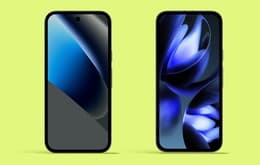
Compare models

Google Pixel 6A Vs iPhone Air

  • 1-year minimum warranty
  • Free delivery on all items
  • Free 30-day returns
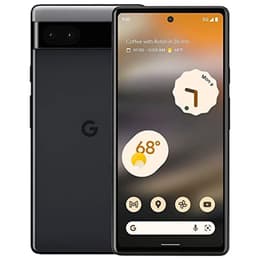
Google Pixel 6A
Starting at

Refurbished price:£91.00

Versus £459.00 new

See options
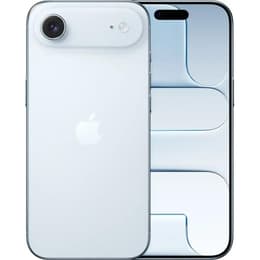
iPhone Air
Starting at

Refurbished price:£603.00

Versus £1,099.00 new

See options

Differences at a glance

The Google Pixel 6A (2022) and the iPhone Air (2025) are two distinct smartphones representing different eras, design philosophies, and device classes. While the Google Pixel 6A focuses on delivering core everyday essentials in a compact format, the iPhone Air prioritizes ultra-slim engineering and advanced processing capabilities. They also operate on entirely different software platforms, utilizing Android and iOS respectively, which shapes the user navigation and application ecosystem experience.

Available Models

Colour

Storage (GB)

Scores

Durability

Comparing the release timelines and structural design of both models reveals stark differences in software support longevity, materials, and overall device lifespan expectations.

  • Release timeline and age: The Google Pixel 6A launched in 2022, whereas the iPhone Air arrived in late 2025, placing them several generations apart in terms of active market lifecycle.
  • Software support and longevity: The iPhone Air benefits from a much later release date and extended update schedules, whereas the Pixel 6A approaches the latter stages of its guaranteed software and security patch window.
  • Build and repairability: The iPhone Air utilizes a titanium frame and specialized glass protection designed for durability, while the Pixel 6A features an aluminum frame and plastic back construction with standard water and dust resistance ratings.

Year of Release

2022

2025

Compatible with latest Update

Yes

Yes

OS

Android

iOS

Foldable

No

No

Performance

Daily speed, hardware configurations, and battery endurance vary significantly based on the internal architecture and generation gap between these two smartphones.

  • Processing capabilities: The iPhone Air handles demanding apps, heavy multitasking, and intensive gaming effortlessly, while the Pixel 6A manages routine tasks, web browsing, and moderate multitasking smoothly with its older processing setup.
  • Storage and memory: The iPhone Air offers high-capacity storage tiers starting at larger baselines paired with ample memory for complex tasks, whereas the Pixel 6A provides a fixed, moderate storage capacity with standard memory allocation.
  • Battery behavior: The Pixel 6A relies on a larger battery capacity that typically sustains a full day of mixed standard usage, while the iPhone Air features a thinner physical battery profile that requires careful power management during heavy workdays.

Screen quality

Display characteristics differ markedly in physical dimensions, refresh rates, and viewing clarity under various lighting conditions.

  • Display technology and smoothness: The iPhone Air incorporates an advanced OLED panel featuring a high refresh rate for fluid scrolling and animations, whereas the Pixel 6A uses a standard OLED screen capped at a traditional lower refresh rate.
  • Brightness and outdoor visibility: The iPhone Air reaches exceptionally high peak brightness levels for clear visibility in direct sunlight, while the Pixel 6A offers adequate outdoor viewing performance suitable for everyday environments.
  • Size and viewing experience: The iPhone Air provides a larger screen canvas for media consumption and reading, while the Pixel 6A offers a more compact footprint that is easier to manage with a single hand.

Resolution

1080 x 2400

2736x1260

Screen type

OLED

Super Retina XDR

Audiovisual

Media capture hardware and audio output configurations present distinct trade-offs for photography enthusiasts and multimedia consumers.

  • Camera systems: The iPhone Air utilizes a single high-resolution wide-angle sensor backed by advanced computational photography, while the Pixel 6A employs a dual-lens setup combining a main sensor with an ultra-wide option.
  • Video and low-light performance: Both devices deliver clear low-light photos and stable video recording, though the newer processing hardware on the iPhone Air provides enhanced detail retention and dynamic range in challenging lighting.
  • Audio and media output: The iPhone Air features a single speaker configuration tailored for slim dimensions, while the Pixel 6A offers stereo sound output for casual media viewing.

Main camera

12.2 megapixels

48 megapixels

Front camera

8 megapixels

18 megapixels

Miscellaneous

Practical physical traits, connectivity standards, and daily usability features differ notably between the compact build of the older Google model and the ultra-thin profile of the Apple device.

  • Connectivity and ports: The iPhone Air supports modern wireless communication standards alongside a standard USB-C port, matching the USB-C connectivity found on the Pixel 6A for charging and data transfer.
  • Biometrics and sensors: The Pixel 6A uses an in-display fingerprint sensor for authentication, whereas the iPhone Air relies entirely on facial recognition technology.
  • Handling and dimensions: The iPhone Air introduces a remarkably thin and lightweight titanium build, whereas the Pixel 6A maintains a thicker, traditional profile with a balanced weight distribution in the hand.

Weight

250 g

165 g

Screen size (in)

6.1

6.5

Mobile network

5G

5G

SIM card

Physical SIM + eSIM

eSIM

Carrier compatibility

Unlocked

Unlocked

Connector

USB-C

USB-C

What the community thinks

User feedback from online communities highlights distinct preferences for each device. Owners of the Google Pixel 6A frequently praise its reliable daily performance, compact proportions, and straightforward software experience. Conversely, users of the iPhone Air often emphasize appreciation for its featherlight, ultra-slim form factor and high-end processing power, though some note that battery endurance under heavy use requires attention.

Users prioritizing a compact device with a traditional fingerprint sensor and a straightforward interface for everyday tasks will find the Google Pixel 6A well-suited to their needs. Meanwhile, users prioritizing cutting-edge processing speed, a large high-refresh-rate screen, and an exceptionally thin titanium build may lean toward the iPhone Air. For those exploring sustainable purchasing routes, opting for a quality-assured refurbished option provides an eco-friendly alternative that extends device life cycles without compromising on performance expectations.