

Google Pixel 6 Vs Google Pixel 9

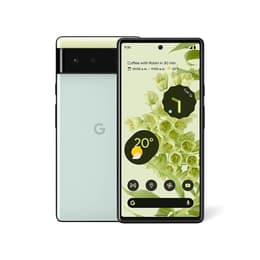
Google Pixel 6
Google Pixel 6
Starting at

Refurbished price:£101.00

Versus £649.99 new

See options
Google Pixel 9
Google Pixel 9
Starting at

Refurbished price:£327.25

Versus £890.22 new

See options

Ratings

The Google Pixel 6, released in October 2021, and the Google Pixel 9, launched in August 2024, represent different generations within Google's smartphone lineup. While both devices operate on the Android platform, the Pixel 9 introduces a more advanced processor, an updated camera system, and a significantly longer software support period. These distinctions cater to varying user priorities, from those seeking established performance to those desiring the latest technological advancements and extended longevity.

Scores

Durability

The practical lifespan of a smartphone is heavily influenced by its release timeline and the duration of software support it receives. The Pixel 6 and Pixel 9 offer different expectations in this regard.

  • Release and Support: The Pixel 6, launched in October 2021, originally received three years of OS updates and five years of security updates. Google later extended this to five years of both OS and security updates, meaning its last Android update was in 2026, with security updates concluding around October 2026. In contrast, the Pixel 9, released in August 2024, benefits from Google's updated policy, promising seven years of both OS and security updates, extending its support until August 2031.
  • Physical Durability: Both devices feature robust builds with IP68 ratings for dust and water resistance. The Pixel 6 incorporates Gorilla Glass Victus on the front and Gorilla Glass 6 on the back, providing a good level of scratch and drop protection. The Pixel 9 upgrades to Corning Gorilla Glass Victus 2 for enhanced durability against drops and scratches.
  • Repairability: While specific repairability scores can vary, both Pixel models are designed with components that can be replaced by trained technicians, contributing to their potential for a practical lifespan beyond their software support, especially when considering quality-assured refurbished options.

Year of Release

2021

2024

Compatible with latest Update

Yes

Yes

OS

Android

Android

Foldable

No

No

Performance

Performance in a smartphone encompasses its ability to handle daily tasks, demanding applications, and multitasking efficiently. Both the Pixel 6 and Pixel 9 are powered by Google's custom-designed processors, offering distinct levels of capability.

  • Processing Power: The Pixel 6 features Google's first-generation Tensor processor, which delivers smooth performance for everyday applications, web browsing, and moderate gaming. The Pixel 9, equipped with the Tensor G4, offers a notable increase in processing power, resulting in faster app loading times, more fluid multitasking, and improved handling of graphically intensive games and advanced AI features.
  • System Responsiveness and Multitasking: The Pixel 6 comes with 8GB of RAM, providing adequate capacity for most users' multitasking needs. The Pixel 9 steps up to 12GB of RAM, which further enhances its ability to keep multiple applications open and switch between them without noticeable slowdowns. Users of the Pixel 9 have reported a generally smooth interface, though some noted occasional UI lag or stuttering in specific third-party applications or during prolonged heavy use, such as extended gaming sessions or when using Android Auto.
  • Battery Behavior: The Pixel 6 houses a 4614 mAh battery, which generally provides a full day of use for many users, though some early reviews and long-term users noted that heavy 5G usage or intensive tasks could lead to more frequent charging. The Pixel 9 features a 4700 mAh battery, and while it benefits from the more efficient Tensor G4 processor, user experiences regarding battery life have been mixed, with some reporting excellent endurance and others experiencing quicker drain, particularly with heavy use or when the device heats up.

Memory (GB)

8 GB

12 GB

Screen quality

The display is a primary interface for smartphone interaction, and both Pixel models offer vibrant viewing experiences with notable differences in technology and capabilities.

  • Display Technology and Clarity: The Pixel 6 features a 6.4-inch OLED display with a Full HD+ resolution (1080 x 2400 pixels), providing clear and colorful visuals for everyday content consumption. The Pixel 9 comes with a 6.3-inch Actua OLED display, also with a Full HD+ resolution (1080 x 2424 pixels), offering comparable clarity but with advancements in overall display quality.
  • Brightness and Refresh Rate: The Pixel 6's display has a 90Hz refresh rate, contributing to a smoother scrolling experience than standard 60Hz panels, and reaches up to 800 nits of peak brightness, making it visible in most outdoor conditions. The Pixel 9 elevates the experience with a 120Hz refresh rate, providing even smoother animations and responsiveness. Its Actua display boasts significantly higher brightness, reaching up to 1800 nits for HDR content and a peak of 2700 nits, which greatly enhances outdoor visibility and HDR content viewing.
  • Screen Construction and Features: The Pixel 6 utilizes a rigid OLED panel, which, while capable, can exhibit slightly lower contrast and more varied viewing angles compared to flexible OLEDs. The Pixel 9's display, while also OLED, incorporates newer technology and includes an 'Adaptive Touch' feature that adjusts touch sensitivity based on environmental factors like wet fingers or screen protectors.

Resolution

1080 x 2400

1080 x 2424

Screen type

AMOLED

OLED

Audiovisual

Google Pixel phones are renowned for their camera capabilities, and both the Pixel 6 and Pixel 9 continue this tradition, each bringing advancements to mobile photography and videography.

  • Rear Camera System: The Pixel 6 features a dual-camera setup with a 50MP main sensor and a 12MP ultrawide lens. It excels in computational photography, offering features like Magic Eraser and Night Sight for impressive low-light performance. The Pixel 9 also has a dual rear camera system, comprising a 50MP wide camera and a 48MP ultrawide camera with Macro Focus. This newer system offers upgraded lenses for sharper images, particularly in low light, and enhanced computational photography features.
  • Front Camera and Video: The Pixel 6 includes an 8MP front-facing camera, suitable for video calls and selfies. It supports 4K video recording at 60 frames per second with its main rear camera. The Pixel 9 upgrades the front camera to a 10.5MP sensor and introduces advanced video capabilities such as Super Res Zoom Video and Video Boost for upscaling to 8K resolution, alongside improved Night Sight for video.
  • Photography Features and User Experience: Both phones leverage Google's AI for features like Real Tone for accurate skin representation. The Pixel 9 introduces new AI editing tools like 'Add Me' and 'Reimagine'. While the Pixel 6's camera app is generally responsive, some Pixel 9 users have noted occasional sluggishness in the camera app and prolonged processing times for photos. Additionally, the Pixel 9's portrait mode defaults to 1.5x or 2x zoom, requiring manual editing for 1x portraits.

Main camera

50 megapixels

50 megapixels

Front camera

8 megapixels

10.5 megapixels

Miscellaneous

Beyond core performance and display, several practical elements contribute to the overall user experience and differentiate these two Pixel smartphones.

  • Connectivity and Ports: The Pixel 6 supports 5G connectivity, Wi-Fi 6E, and Bluetooth 5.2, offering modern wireless standards for its time. It features a USB-C 3.1 port for charging and data transfer. The Pixel 9 maintains 5G capabilities and likely includes newer Wi-Fi standards (expected Wi-Fi 7) and Bluetooth versions (expected Bluetooth 5.4), providing faster and more stable wireless connections. It also uses a USB-C port, likely with updated specifications.
  • Biometric Security and Design: Both devices incorporate in-display fingerprint sensors. The Pixel 6 uses an optical sensor. The Pixel 9 features an ultrasonic in-display fingerprint sensor, which users generally find to be faster and more accurate. The Pixel 6 has dimensions of 158.6 x 74.8 x 8.9 mm and weighs 207g. The Pixel 9 is slightly more compact and lighter at 152.8 x 72 x 8.5 mm and 198g, potentially offering a more comfortable in-hand feel for some users.
  • Charging and Audio: Both phones support fast wired charging, wireless charging, and reverse wireless charging. The Pixel 6 offers 30W wired fast charging and 12W wireless charging. The Pixel 9 provides 27W wired fast charging, with similar wireless charging speeds, though some users have expressed that the charging speed feels slow compared to other contemporary flagship devices. Both models include stereo speakers for an enhanced audio experience.

Weight

207 g

198 g

Screen size (in)

6.4

6.3

Mobile network

5G

5G

SIM card

Physical SIM + eSIM

Physical SIM + eSIM

Carrier compatibility

Unlocked

Unlocked

The Google Pixel 6 and Pixel 9 offer distinct propositions for smartphone users, reflecting the advancements made over several generations. The Pixel 6, while an older model, is still praised for its capable camera system and solid performance for everyday tasks. Users often highlight its strong computational photography features and its original battery life as key strengths. However, some long-term users have noted a decline in battery performance over time and the eventual end of major software updates.

The Pixel 9, as the newer device, brings significant upgrades, particularly in its processing power, display brightness, and an extended software support commitment. Its camera system is more refined, offering advanced AI features and improved video capabilities. User feedback for the Pixel 9 often commends its excellent display, camera quality, and overall smooth interface. However, some common concerns include reports of the device heating up during moderate to heavy use, inconsistent battery life for power users, and charging speeds that, while improved, may not match the fastest competitors. Some users also report occasional app optimization issues that can affect the perceived smoothness of the 120Hz display.

Users prioritizing long-term software support, cutting-edge performance, and the latest camera innovations will find the Pixel 9 well-suited to their needs. Its brighter display and more robust build materials also cater to those seeking a premium and durable experience. Conversely, users who value a more established and still capable device for essential smartphone functions, and who may not require the absolute latest features or extended software longevity, might consider the Pixel 6. For those looking for an eco-friendly and quality-assured alternative, both models are available as refurbished options, providing a sustainable choice for different budgets and preferences.


See all articles

Our recent comparisons