
Compare models
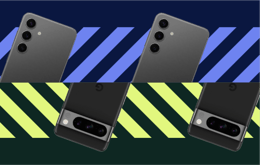
Galaxy S26 Ultra Vs Google Pixel 8 Pro
- 1-year minimum warranty
- Free delivery on all items
- Free 30-day returns
Differences at a glance
The Samsung Galaxy S26 Ultra (2026) and the Google Pixel 8 Pro (2023) represent different generations and design philosophies in the modern smartphone landscape. While the Galaxy S26 Ultra offers cutting-edge hardware enhancements and a built-in stylus, the Google Pixel 8 Pro focuses on refined computational photography and clean software integration. Both devices run on the Android operating system, though their update timelines and specific interface customizations differ significantly.
Available Models
Colour
Storage
Scores
Durability
When evaluating long-term utility and support, both manufacturers provide extensive software maintenance windows, though release years place them at different points in their lifecycles.
- Software support windows: Both devices receive multi-year operating system upgrades and security patches, with the newer model extending software support further into the future.
- Repairability and build resilience: Each phone incorporates reinforced glass and metal frames designed to withstand daily wear, alongside standardized repair pathways through quality-assured refurbished options that extend device longevity.
- Expected lifespan: Hardware durability ensures both models maintain reliable daily functionality for years, with long-term viability depending primarily on battery health over time.
Year of Release
2026
2023
Compatible with latest Update
Yes
Yes
OS
Android
Android
Foldable
No
No
Performance
System responsiveness and day-to-day multitasking capabilities vary based on internal hardware iterations and software optimization.
- Multitasking and app switching: Ample system memory across both devices allows seamless switching between demanding productivity applications and media streaming tools without noticeable stutter.
- Battery behavior and endurance: Battery capacity and power efficiency deliver a full day of mixed usage under normal conditions, though heavy gaming or navigation tasks require more frequent charging.
- Storage configurations: Multiple internal storage tiers accommodate large media libraries and offline file storage, matching different user space requirements.
Screen quality
Display technologies on both handsets prioritize high peak brightness and sharp resolutions for clear outdoor legibility and vibrant media consumption.
- Panel technology and clarity: High-resolution OLED displays deliver deep contrast levels and crisp text rendering for reading, browsing, and watching video content.
- Refresh rate smoothness: Adaptive refresh rates scale smoothly from low Hertz for static reading up to high Hertz for fluid scrolling and responsive gaming interactions.
- Outdoor visibility: High maximum brightness thresholds ensure screens remain easily readable under direct sunlight or bright outdoor environments.
Resolution
1440 x 3120
1344 x 2992
Audiovisual
Image capture and media creation philosophies differ between the hardware-focused multi-lens array of the Ultra and the software-driven processing of the Pixel.
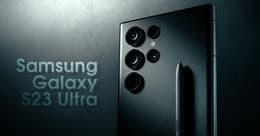
- Lens versatility: The Galaxy S26 Ultra features a versatile multi-lens system including high-magnification telephoto options, while the Pixel 8 Pro utilizes a triple-lens setup optimized for computational depth.
- Low-light and everyday photography: Both models capture sharp, detailed images in challenging lighting conditions, utilizing distinct processing styles for color accuracy and shadow detail.
- Video and audio recording: High-definition video stabilization and clear microphone pickup support reliable content creation and clear voice calls in noisy environments.
Front camera
12.0
10.5 megapixels
Miscellaneous
Physical handling characteristics and connectivity standards define the practical daily ergonomics of each smartphone.
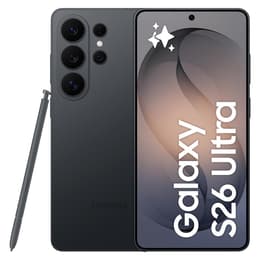
- Dimensions and handling: The Galaxy S26 Ultra features a larger, squared-off chassis with an integrated stylus silo, whereas the Pixel 8 Pro opts for a more rounded profile with a distinctive camera bar.
- Connectivity and ports: Modern wireless standards, including 5G and Wi-Fi compatibility, pair with standard USB-C ports for fast charging and data transfer.
- Biometric security: Secure screen-integrated fingerprint sensors and facial recognition options provide quick, convenient device unlocking.
Weight
214 g
213 g
Screen size (in)
6.9
6.7
Mobile network
5G
5G
SIM card
Physical SIM + eSIM
Physical SIM + eSIM
Carrier compatibility
Unlocked
Unlocked
Connector
USB-C
USB-C
What the community thinks
User discussions across community forums frequently praise the Galaxy S26 Ultra for its expansive display, versatile zoom capabilities, and integrated productivity stylus, though some users note its large physical footprint can feel heavy during prolonged one-handed use. Conversely, the Google Pixel 8 Pro receives widespread recognition for its intuitive software interface, natural photo rendering, and clean user experience, with occasional user remarks centering on moderate charging speeds compared to newer market hardware. Users who prioritize maximum screen estate, advanced telephoto zoom versatility, and stylus integration may prefer the Galaxy S26 Ultra, while users who value streamlined software features and computational photography will find the Google Pixel 8 Pro well-suited to their needs. Exploring a sustainable choice through a quality-assured refurbished option provides a reliable path to acquiring either device while reducing electronic waste. Ultimately, the choice depends on whether hardware versatility or software simplicity aligns more closely with individual daily habits.