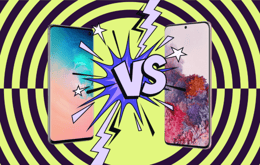

Galaxy S10 Vs iPhone 11 Pro Max

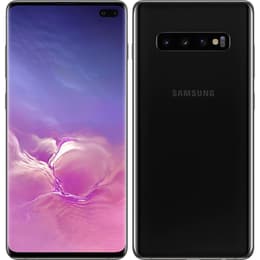
Galaxy S10
Galaxy S10
Starting at

Refurbished price:£108.00

Versus £639.00 new

See options
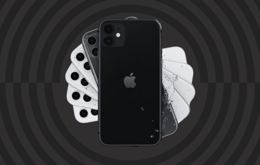
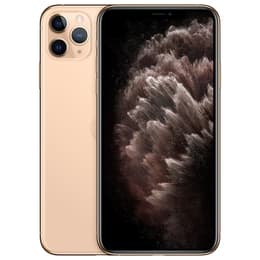
iPhone 11 Pro Max
iPhone 11 Pro Max
Starting at

Refurbished price:£181.00

Versus £749.00 new

See options

Ratings

The Samsung Galaxy S10, released in March 2019, and the iPhone 11 Pro Max, launched in September 2019, represent flagship smartphones from their respective manufacturers. While both devices offer premium experiences, they differ significantly in their operating systems, display technologies, and camera philosophies. The Galaxy S10 operates on the Android platform, offering a customizable user experience, while the iPhone 11 Pro Max runs on Apple's iOS, known for its integrated ecosystem and streamlined interface.

Scores

Durability

When considering the long-term usability of these devices, their release timelines and software support are key factors. The Galaxy S10, launched in March 2019, originally ran on Android 9.0 Pie and received major updates up to Android 12, with Samsung committing to three generations of Android updates and four years of security updates for the series. The iPhone 11 Pro Max, released in September 2019, debuted with iOS 13 and is compatible with the latest iOS 26, indicating a longer period of software support from Apple.

  • Software Longevity: The iPhone 11 Pro Max generally offers a longer software support lifespan, receiving updates to the latest iOS versions for an extended period compared to the Galaxy S10's Android update cycle.
  • Repairability: The Galaxy S10 received a repairability score of 3 out of 10 from iFixit, noting challenges with battery replacement, a soldered charging port, and a fused ultrasonic fingerprint sensor. In contrast, the iPhone 11 Pro Max scored 6 out of 10, with iFixit highlighting easier access for display and battery repairs, though it still uses proprietary screws.
  • Physical Durability: Both devices feature an IP68 rating for water and dust resistance, meaning they can withstand immersion in water. The iPhone 11 Pro Max is specifically rated for a maximum depth of 4 meters for up to 30 minutes.

Year of Release

2019

2019

Compatible with latest Update

No

Yes

OS

Android

iOS

Foldable

No

No

Performance

The performance of a smartphone is crucial for daily tasks, from launching applications to managing multiple processes simultaneously. Both the Galaxy S10 and iPhone 11 Pro Max were designed to handle demanding applications and multitasking efficiently, though they approach this with different hardware configurations.

  • System Responsiveness: The iPhone 11 Pro Max delivers responsive performance for demanding tasks and smooth multitasking, ensuring applications launch quickly and run without significant delays. The Galaxy S10 also handles demanding apps and multitasking smoothly, providing a capable user experience.
  • Memory and Storage: The Galaxy S10 typically comes with 8GB of RAM and offers storage options of 128GB or 512GB, with the added flexibility of expandable storage via a microSD card. The iPhone 11 Pro Max features 4GB of RAM and is available with 64GB, 256GB, or 512GB of internal storage, but does not support expandable storage.
  • Battery Behavior: The Galaxy S10 is equipped with a 3400 mAh battery, with user reports indicating that heavy usage may require more frequent charging. The iPhone 11 Pro Max has a larger 3969 mAh battery, and users often report impressive battery life, capable of lasting through a full day of heavy use.

Memory (GB)

8 GB

4 GB

Screen quality

The visual experience is a primary interaction point for any smartphone, and both devices offer high-quality displays, though with distinct characteristics. The Galaxy S10 features a Dynamic AMOLED panel, while the iPhone 11 Pro Max utilizes a Super Retina XDR OLED display.

  • Display Technology and Clarity: The Galaxy S10 boasts a 6.1-inch Dynamic AMOLED display with a resolution of 1440 x 3040 pixels, resulting in a pixel density of 550 pixels per inch (ppi). The iPhone 11 Pro Max features a slightly larger 6.5-inch Super Retina XDR OLED display with a resolution of 1242 x 2688 pixels and a pixel density of 458 ppi. Both displays offer vibrant colors and deep blacks.
  • Brightness and HDR: The Galaxy S10 supports HDR10+ and can reach peak brightness levels around 800 nits. The iPhone 11 Pro Max supports HDR10 and Dolby Vision, with a typical brightness of 800 nits and a peak brightness of up to 1200 nits for HDR content, offering enhanced visibility in bright conditions.
  • Refresh Rate: Both the Galaxy S10 and the iPhone 11 Pro Max feature a standard 60 Hz refresh rate, providing a smooth visual experience for most everyday interactions.

Resolution

1440 x 3040

1242 x 2688

Screen type

Dynamic AMOLED

Super Retina XDR OLED

Audiovisual

Photography and videography capabilities are often a deciding factor for smartphone users, and both the Galaxy S10 and iPhone 11 Pro Max offer versatile camera systems designed to capture high-quality images and videos. Each device employs a triple-lens setup on the rear, but with some differences in their approach to image processing and features.

  • Camera System Configuration: The Galaxy S10 features a triple rear camera system consisting of a 12MP wide-angle lens with a variable aperture (f/1.5-2.4) and optical image stabilization (OIS), a 12MP telephoto lens (f/2.4) with OIS and 2x optical zoom, and a 16MP ultrawide lens (f/2.2). The iPhone 11 Pro Max also has a triple rear camera setup, including a 12MP wide-angle lens (f/1.8) with OIS, a 12MP telephoto lens (f/2.0) with OIS and 2x optical zoom, and a 12MP ultrawide lens (f/2.4).
  • Photography Features: The iPhone 11 Pro Max introduced features like Night mode for improved low-light photography and Deep Fusion for advanced image processing, which enhances detail and reduces noise in various lighting conditions. The Galaxy S10 includes features like Super Steady video for smoother recordings. Both offer capable front-facing cameras for selfies and video calls.
  • Audio Experience: The Galaxy S10 retains a 3.5mm headphone jack, offering traditional wired audio connectivity, and features a speaker. The iPhone 11 Pro Max does not include a headphone jack but provides stereo speakers with spatial audio for an immersive media consumption experience.

Main camera

12 megapixels

12 megapixels

Front camera

10 megapixels

12 megapixels

Miscellaneous

Beyond core performance and display, several practical elements contribute to the overall user experience, including connectivity, physical design, and biometric security. Both devices offer modern connectivity options and robust build quality, but with distinct design choices.

  • Connectivity and Ports: Both phones support Wi-Fi 6 (802.11ax) and Bluetooth 5.0. The Galaxy S10 features a USB-C port for charging and data transfer, alongside a 3.5mm headphone jack. The iPhone 11 Pro Max uses Apple's proprietary Lightning port and does not include a headphone jack.
  • Biometric Security: The Galaxy S10 incorporates an ultrasonic in-display fingerprint sensor for secure unlocking. The iPhone 11 Pro Max relies on Face ID, Apple's facial recognition system, for biometric authentication.
  • Design and Handling: The Galaxy S10 measures 149.9 x 70.4 x 7.8 mm and weighs 157g, featuring a glass front and back with an aluminum frame. The iPhone 11 Pro Max is larger and heavier at 158.0 x 77.8 x 8.1 mm and 226g, constructed with a stainless steel frame and a textured matte glass back.

Weight

175 g

226 g

Screen size (in)

6.1

6.5

Mobile network

4G

4G

SIM card

Physical SIM

Physical SIM + eSIM

Carrier compatibility

Unlocked

Unlocked

Connector

USB-C + Jack 3.5mm

Lightning

Users often praise the Samsung Galaxy S10 for its vibrant Dynamic AMOLED display, the inclusion of a 3.5mm headphone jack, and expandable storage, which offers flexibility for media enthusiasts and those needing extra space. Some common criticisms have revolved around its battery life for heavy users and its lower repairability score compared to some competitors.

The iPhone 11 Pro Max is frequently lauded for its exceptional camera system, particularly its Night mode and video capabilities, as well as its robust performance and impressive battery longevity. User feedback sometimes points to its larger size and weight, and the reliance on the Lightning port as potential considerations.

Users prioritizing a highly customizable Android experience, expandable storage, and the convenience of a headphone jack may find the Galaxy S10 well-suited to their needs. Conversely, users who value a streamlined iOS ecosystem, advanced camera features, strong performance, and extended software support might lean toward the iPhone 11 Pro Max. Both devices remain capable smartphones, and choosing a quality-assured refurbished option can be an eco-friendly alternative for acquiring either model.


See all articles

Our recent comparisons