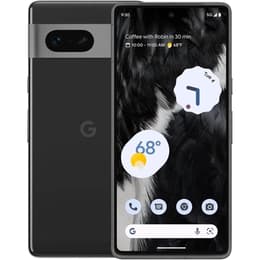

Galaxy Z Flip6 Vs Google Pixel 7

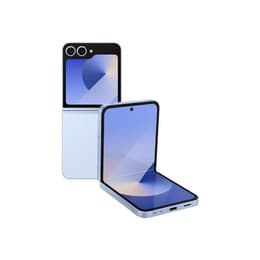
Galaxy Z Flip6
Galaxy Z Flip6
Starting at

Refurbished price:£338.00

Versus £1,011.35 new

See options
Google Pixel 7
Google Pixel 7
Starting at

Refurbished price:£140.99

Versus £649.99 new

See options

Ratings

The Samsung Galaxy Z Flip6, released in July 2024, and the Google Pixel 7, launched in October 2022, represent distinct approaches to smartphone design and functionality. While both operate on the Android platform, the Z Flip6 offers a unique foldable form factor with updated internal components, whereas the Pixel 7 provides a traditional smartphone experience known for its software and camera capabilities. The primary differentiators lie in their physical design, processing power, and software longevity.

Scores

Durability

The release timelines and software support policies significantly impact the expected practical lifespan of these devices.

  • Release and Support: The Galaxy Z Flip6, being a 2024 release, benefits from Samsung's commitment to seven years of software updates, encompassing both Android OS upgrades and security patches. This extends its support well into the future. In contrast, the Google Pixel 7, released in 2022, is guaranteed five years of OS and security updates, with support expected to conclude around October 2027.
  • Physical Durability: The Galaxy Z Flip6 features Corning Gorilla Glass Victus 2 on its cover screen and back panel, along with an Ultra-Thin Glass (UTG) for its inner foldable display, which has been improved for reduced crease visibility and enhanced durability. It also carries an IP48 rating for dust and water resistance. The Pixel 7 utilizes Gorilla Glass Victus for its front and back, encased in an aluminum frame. However, its camera bar has been noted as prone to scratches, and some durability tests indicated a degree of flex that could potentially compromise water resistance.
  • Repairability: While specific repairability scores can vary, the foldable nature of the Z Flip6 introduces complexities not present in traditional slab phones like the Pixel 7. However, both manufacturers offer repair services and parts availability.

Year of Release

2024

2022

Compatible with latest Update

Yes

Yes

OS

Android

Android

Foldable

Yes

No

Performance

Performance is a key area where the newer Galaxy Z Flip6 demonstrates advancements over the Google Pixel 7, particularly in raw processing power and multitasking capabilities.

  • Processing Power: The Galaxy Z Flip6 is equipped with a current-generation processor, providing substantial improvements in speed and efficiency for demanding applications and gaming. The Pixel 7, powered by its custom-designed processor, handles everyday tasks smoothly and efficiently, with a focus on AI-driven features.
  • Multitasking and Responsiveness: With 12 GB of RAM, the Galaxy Z Flip6 offers more headroom for extensive multitasking and running numerous applications simultaneously without slowdowns. The Pixel 7 comes with 8 GB of RAM, which is sufficient for most user needs, providing a responsive experience for typical smartphone usage.
  • Battery Behavior: The Galaxy Z Flip6 houses a 4000 mAh battery, with tests indicating it can last over 16 hours in web browsing scenarios and around 10 hours during 3D gaming, often providing all-day power for many users. The Pixel 7 has a 4355 mAh battery. Its battery life varies, with some tests showing around 7 to 10 hours of web browsing and video playback, and around 5 hours for gaming, suggesting it may require more frequent charging for heavy users.

Memory (GB)

12 GB

8 GB

Screen quality

The display experience on these two devices differs significantly due to their fundamental design philosophies.

  • Display Technology and Form Factor: The Galaxy Z Flip6 features a 6.7-inch Foldable Dynamic AMOLED 2X main display, offering vibrant colors and deep blacks, characteristic of AMOLED technology. Its unique folding design allows for a compact form factor when closed. The Pixel 7 has a 6.3-inch flat OLED display, providing a traditional, uniterrupted viewing surface.
  • Resolution and Clarity: Both devices offer Full HD+ resolutions, with the Z Flip6's main display at 2640 x 1080 pixels and the Pixel 7 at 2400 x 1080 pixels, ensuring sharp and clear visuals for everyday content consumption.
  • Brightness and Refresh Rate: The Z Flip6's main display boasts a high peak brightness of 2600 nits and an adaptive refresh rate of up to 120Hz, contributing to smooth scrolling and excellent visibility even in bright outdoor conditions. The Pixel 7's display reaches a peak brightness of 1400 nits and features a 90Hz refresh rate, offering a smooth experience, though it may be less bright in direct sunlight compared to the Z Flip6. The Z Flip6 also includes a 3.4-inch Super AMOLED cover display with a 60Hz refresh rate for quick interactions when folded.

Resolution

1080 x 2640

1080 x 2400

Screen type

Foldable Dynamic LTPO AMOLED 2X

AMOLED

Audiovisual

Both the Galaxy Z Flip6 and the Google Pixel 7 offer capable camera systems, though they approach photography with different strengths.

  • Rear Camera Systems: The Galaxy Z Flip6 features a dual-camera setup on the rear, consisting of a 50 MP wide-angle lens and a 12 MP ultra-wide-angle lens, providing versatility for various shooting conditions. The Google Pixel 7 also comes with a dual-camera system, featuring a 50 MP wide lens and a 12 MP ultrawide lens, renowned for its computational photography capabilities that enhance image quality.
  • Photography Performance: The Z Flip6's upgraded camera offers improved image capture, suitable for a range of everyday and low-light scenarios. The Pixel 7 is widely praised for its consistent and high-quality photos, particularly in challenging lighting, due to its advanced image processing.
  • Video Recording and Front Camera: Both devices are capable of high-quality video recording. For selfies and video calls, the Z Flip6 has a 10 MP front camera, while the Pixel 7 features a 10.8 MP ultrawide front camera.
  • Audio Experience: Both smartphones provide clear audio for calls and media consumption. The Pixel 7's speakers deliver a satisfactory media experience.

Main camera

50 megapixels

50 megapixels

Front camera

10 megapixels

10.8 megapixels

Miscellaneous

Beyond core performance and display, several practical elements contribute to the overall user experience of these devices.

  • Connectivity: Both the Galaxy Z Flip6 and the Google Pixel 7 support 5G connectivity, ensuring fast mobile data speeds. They also include modern Wi-Fi standards and Bluetooth for wireless connections to accessories and networks.
  • Ports and Biometrics: The Galaxy Z Flip6 typically features a USB-C port for charging and data transfer. It incorporates a side-mounted fingerprint sensor for secure unlocking. The Pixel 7 also uses a USB-C port and offers both an under-display fingerprint sensor and face unlock for convenient access.
  • Physical Characteristics: The Galaxy Z Flip6, when unfolded, measures approximately 165.1 x 71.9 x 6.9 mm and weighs around 187 grams, offering a full-sized screen experience that folds down to a compact form factor. The Pixel 7 is a more traditional slab phone, measuring about 155.6 x 73.2 x 8.7 mm and weighing 197 grams, providing a comfortable in-hand feel for many users.
  • Build Materials: The Z Flip6 combines an aluminum frame with Gorilla Glass Victus 2 and its unique UTG foldable display. The Pixel 7 features an aluminum frame with Gorilla Glass Victus on both the front and back.

Weight

187 g

197 g

Screen size (in)

6.7

6.3

Mobile network

5G

5G

SIM card

Physical SIM + eSIM

Physical SIM + eSIM

Carrier compatibility

Unlocked

Unlocked

The Samsung Galaxy Z Flip6 and the Google Pixel 7 cater to different user preferences, primarily distinguished by their form factor and release generation. Users often praise the Z Flip6 for its innovative foldable design, which offers a large screen experience in a highly portable package, along with its robust performance and extended software support. Some users, however, might find the foldable nature introduces a different set of durability considerations compared to traditional phones. The Pixel 7 is frequently lauded for its exceptional camera quality, clean Android software experience, and consistent performance for everyday tasks. Common user feedback for the Pixel 7 sometimes points to its battery life requiring more attention for heavy usage and the camera bar's susceptibility to scratches.

Users prioritizing the latest processing power, extended software longevity, and a unique, compact foldable design will find the Galaxy Z Flip6 well-suited to their needs. Its larger, brighter main display and improved battery life also make it a strong contender for those who consume a lot of media or require a device that can last through a busy day. Conversely, users who value a traditional smartphone form factor, a highly refined camera system with advanced computational photography, and a pure Android software experience may lean toward the Google Pixel 7. It remains a capable device for general use, especially for those who appreciate Google's software ecosystem and AI features.

For those considering either of these devices, exploring quality-assured refurbished options can provide an eco-friendly alternative, offering access to these technologies while supporting sustainable consumption.
See all articles

Our recent comparisons