
Compare models

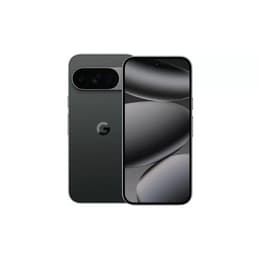
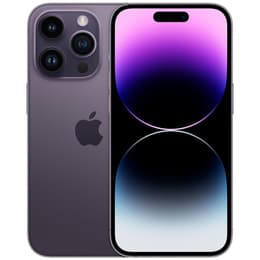
Google Pixel 10 Pro Vs iPhone 14 Pro

  • 1-year minimum warranty
  • Free delivery on all items
  • Free 30-day returns
Google Pixel 10 Pro
Starting at

Refurbished price:£533.00

Versus £1,196.66 new

See options
iPhone 14 Pro
Starting at

Refurbished price:£360.00

Versus £1,099.00 new

See options

Differences at a glance

The Google Pixel 10 Pro (2025) and the Apple iPhone 14 Pro (2022) represent distinct generations and operating systems in the high-end smartphone market. While both devices cater to users seeking advanced mobile technology, they differ significantly in their launch timelines, software ecosystems, and hardware approaches. The Google Pixel 10 Pro operates on Android, offering deep integration with intelligent assistant tools, whereas the iPhone 14 Pro runs iOS, emphasizing a streamlined interface and long-term ecosystem consistency.

Available Models

Colour

Storage (GB)

Scores

Durability

Evaluating the lifespan and software support of these two devices reveals differences stemming from their respective release years and update policies.

  • Release timeline: The iPhone 14 Pro debuted in late 2022, while the Google Pixel 10 Pro arrived in late 2025, giving the Google device a three-year advantage in hardware age.
  • Software longevity: Google provides extensive multi-year software and security updates for its flagship line, aligning closely with Apple's traditional long-term support window for pro-tier models.
  • Expected practical lifespan: Users can expect both smartphones to handle daily tasks effectively for several years, though the newer release date of the Pixel 10 Pro ensures extended software relevance.

Year of Release

2025

2022

Compatible with latest Update

Yes

Yes

OS

Android

iOS

Foldable

No

No

Performance

Both smartphones handle demanding daily tasks, heavy multitasking, and immersive gaming smoothly, though they rely on different hardware architectures to achieve system responsiveness.

  • System responsiveness: Both devices switch between open applications quickly and maintain steady performance during resource-intensive tasks like video editing or mobile gaming.
  • Multitasking capacity: The Pixel 10 Pro features generous system memory to keep numerous apps active simultaneously, while the iPhone 14 Pro utilizes optimized memory management within iOS to maintain fluid performance.
  • Battery behavior: The Pixel 10 Pro incorporates a larger battery capacity that accommodates a full day of mixed usage, while the iPhone 14 Pro relies on hardware efficiency to sustain daily operation under similar workloads.

Screen quality

Visual clarity and display performance are strong points for both models, utilizing advanced panel technology to deliver sharp images and smooth motion.

  • Display technology: Both phones utilize vibrant OLED panels with deep black levels, high contrast ratios, and adaptive refresh rates scaling up to 120 Hz for fluid scrolling.
  • Outdoor visibility: High peak brightness levels on both displays ensure that content remains legible and clear even under direct sunlight or bright ambient lighting.
  • Viewing experience: The Pixel 10 Pro offers a slightly larger 6.3-inch screen workspace, whereas the iPhone 14 Pro provides a compact 6.1-inch viewing area with a pill-shaped interactive cutout at the top.

Resolution

1280x2856

1179 x 2556

Screen type

OLED

LTPO Super Retina XDR OLED

Audiovisual

Photography and video capabilities are central to both flagship handsets, offering versatile triple-lens configurations for diverse shooting scenarios.

  • Camera systems: Both devices feature high-resolution main sensors, ultra-wide lenses, and telephoto options equipped with optical zoom capabilities for distant subjects.
  • Low-light performance: Advanced image processing algorithms on both phones capture clear details and balanced colors in challenging lighting environments without excessive noise.
  • Audio and video: High-quality microphone arrays and stereo speakers support crisp media playback, clear voice calls, and stable video recording features.

Front camera

42 megapixels

12 megapixels

Miscellaneous

Practical daily usability is shaped by physical dimensions, connectivity standards, and build materials across both handsets.

  • Build and handling: The iPhone 14 Pro utilizes textured glass and a stainless steel frame, whereas the Pixel 10 Pro features aluminum framing and durable glass panels, resulting in very similar overall weights around 206 to 207 grams.
  • Connectivity: Both models support widespread 5G networks, modern Wi-Fi standards, and Bluetooth connectivity for accessory pairing.
  • Security sensors: The iPhone 14 Pro uses facial recognition technology, while the Pixel 10 Pro integrates an optical fingerprint scanner beneath the display alongside facial unlock features.

Weight

207 g

206 g

Screen size (in)

6.3

6.1

Mobile network

5G

5G

SIM card

Physical SIM + eSIM

Physical SIM + eSIM

Carrier compatibility

Unlocked

Unlocked

Connector

USB-C

Lightning

What the community thinks

Choosing between the Google Pixel 10 Pro and the iPhone 14 Pro depends heavily on user preference for operating systems and hardware age. Users prioritizing a recent release year, Android customisation, and deep integration with intelligent assistant tools may find the Google Pixel 10 Pro well-suited to their workflow. Conversely, users who prefer the iOS environment, structured ecosystem continuity, and compact device ergonomics often lean toward the iPhone 14 Pro as a quality-assured refurbished option.

Reviewers and everyday users frequently praise the Pixel 10 Pro for its versatile camera software and modern display brightness, while noting that its physical profile is slightly thicker. For the iPhone 14 Pro, community feedback highlights reliable build quality and fluid daily performance, though some users mention that battery capacity on older units may require mid-day charging during heavy use. Ultimately, both devices offer robust feature sets for prospective buyers exploring sustainable technology choices.