Galaxy S25 Vs Galaxy Z Fold5

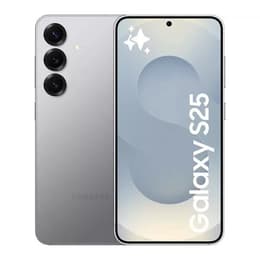
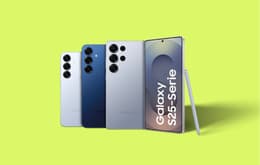
Galaxy S25
Galaxy S25
Starting at

Refurbished price:£435.00

Versus £766.13 new

See options
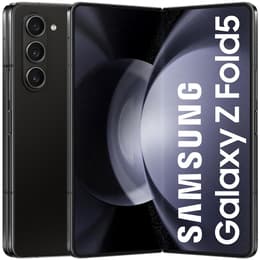
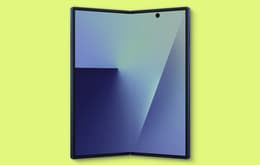
Galaxy Z Fold5
Galaxy Z Fold5
Starting at

Refurbished price:£413.00

Versus £1,770.61 new

See options

Ratings

The Samsung Galaxy S25, a traditional slab-style smartphone released in early 2025, offers a refined flagship experience, while the Samsung Galaxy Z Fold5, launched in mid-2023, presents a unique foldable design that transforms from a compact phone into a larger tablet-like display. These devices cater to different user preferences, primarily distinguished by their form factor and the generational advancements in the S25.

Scores

Durability

When considering the long-term usability of these devices, several factors come into play, including their release timelines, software support, and physical resilience.

  • Release Timeline: The Galaxy S25, released in February 2025, benefits from being a newer device, offering a longer period of guaranteed software updates and security patches compared to the Galaxy Z Fold5, which was released in August 2023.
  • Software Longevity: The Galaxy S25 launched with Android 15 and is expected to receive up to seven major Android upgrades, extending its functional lifespan significantly. The Galaxy Z Fold5, initially running Android 13, will have a shorter update cycle remaining.
  • Physical Durability: The Galaxy S25 features an IP68 rating for dust and water resistance and is protected by Corning Gorilla Glass Victus 2, offering robust protection against everyday hazards. The Galaxy Z Fold5, while offering IPX8 water resistance, lacks official dust resistance due to its folding mechanism, and its internal foldable screen requires more careful handling.

Year of Release

2025

2023

OS

Android

Android

Foldable

No

Yes

Performance

Both devices deliver high-level performance suitable for demanding applications and multitasking, though the newer Galaxy S25 incorporates a more recent generation of internal components.

  • Processing Power: The Galaxy S25 is equipped with a current-generation processor, providing enhanced speed and efficiency for running complex applications, advanced AI features, and graphics-intensive games. The Galaxy Z Fold5 utilizes a powerful processor from the previous generation, which still handles demanding tasks smoothly and efficiently.
  • Multitasking Capabilities: Both models come with 12GB of RAM, ensuring fluid transitions between multiple open applications and efficient background process management. This ample memory allows users to switch between productivity tools, entertainment, and communication apps without experiencing slowdowns.
  • Storage Options: Both devices offer various internal storage configurations, starting from 128GB for the base Galaxy S25 and 256GB for the Galaxy Z Fold5, extending to 1TB on some variants, providing ample space for applications, media, and documents.

Memory (GB)

12 GB

12 GB

Screen quality

The display experience is a primary differentiator, with the Galaxy S25 offering a traditional, high-quality flat screen and the Galaxy Z Fold5 providing a unique dual-screen foldable setup.

  • Display Technology and Size: The Galaxy S25 features a single 6.2-inch Dynamic LTPO AMOLED 2X display, offering vibrant colors and deep blacks in a conventional smartphone form. The Galaxy Z Fold5 boasts two Dynamic AMOLED 2X displays: a 6.2-inch cover screen for phone-like usage and a larger 7.6-inch foldable main screen that provides a tablet-like experience when unfolded.
  • Resolution and Brightness: The Galaxy S25's display offers a Full HD+ resolution (2340x1080 pixels) and a peak brightness of 2600 nits, ensuring clear visuals even in bright outdoor conditions. The Galaxy Z Fold5's main screen has a higher resolution (2176x1812 pixels) and a peak brightness of 1750 nits, providing an expansive and detailed viewing area.
  • Refresh Rate and Smoothness: Both devices feature a 120Hz adaptive refresh rate, contributing to smooth scrolling, responsive touch interactions, and fluid animations across their respective displays.

Resolution

1080x2340

1812 x 2176

Screen type

Dynamic LTPO AMOLED 2X

Foldable Dynamic AMOLED 2X

Audiovisual

Both smartphones offer capable camera systems, but the Galaxy S25 benefits from newer hardware and software optimizations, while the Z Fold5 provides unique photographic flexibility due to its form factor.

  • Rear Camera System: The Galaxy S25 is equipped with a triple rear camera setup, including a 50MP main sensor, a 12MP ultrawide, and a 10MP telephoto lens with 3x optical zoom, enhanced by newer AI processing for improved image quality. The Galaxy Z Fold5 also features a triple rear camera system with a 50MP main sensor, a 12MP ultrawide, and a 10MP telephoto lens with 3x optical zoom, relying on software algorithms and its powerful processor for image enhancements.
  • Video Recording: Both devices are capable of recording high-resolution video, including 8K at 24fps or 30fps, and 4K at 60fps, offering detailed and stable video capture. The Galaxy S25 includes features like 10-bit HDR capture by default and improved AI for video processing.
  • Front-Facing Cameras: The Galaxy S25 features a 12MP front camera for clear selfies and video calls. The Galaxy Z Fold5 offers a 10MP camera on its cover screen and a 4MP under-display camera on the main foldable screen, providing versatility for different selfie scenarios.

Miscellaneous

Beyond core specifications, several practical elements contribute to the overall user experience and differentiate these two Samsung devices.

  • Connectivity Standards: The Galaxy S25 supports the latest Wi-Fi 7 and Bluetooth 5.4 standards, offering faster wireless speeds and improved connectivity range compared to the Galaxy Z Fold5's Wi-Fi 6E and Bluetooth 5.3. The S25 also introduces satellite connectivity for emergency SMS messaging in cellular dead zones.
  • Physical Design and Handling: The Galaxy S25 maintains a traditional smartphone form factor, with a weight of approximately 162 grams and a slim profile, making it comfortable for one-handed use. The Galaxy Z Fold5, due to its foldable design, is heavier at 253 grams and thicker when folded, but offers the unique advantage of a large, tablet-like screen when unfolded.
  • Ports and Sensors: Both devices feature a USB Type-C port for charging and data transfer. The Galaxy S25 includes an ultrasonic in-screen fingerprint sensor, while the Galaxy Z Fold5 uses a side-mounted fingerprint sensor. The Z Fold5 also supports S Pen input, though the stylus is sold separately.

Weight

162 g

150 g

Screen size (in)

6.2

7.6

Mobile network

5G

4G

SIM card

Physical SIM + eSIM

Dual Physical SIM + eSIM

Carrier compatibility

Unlocked

Unlocked

The Samsung Galaxy S25 and Galaxy Z Fold5 cater to distinct user needs, primarily defined by their form factors and release timelines. Users often praise the Galaxy S25 for its cutting-edge performance, extended software support, and robust build in a familiar design. Common feedback highlights its advanced camera capabilities and bright, vibrant display as key strengths. Some users, however, might find its design to be an incremental update from previous generations.

Conversely, the Galaxy Z Fold5 is frequently lauded for its innovative foldable design, offering unparalleled versatility for multitasking and media consumption on its expansive inner screen. Its ability to transform from a compact phone to a tablet is a significant draw. Criticisms sometimes point to its bulkier profile when folded and the inherent durability considerations of a foldable display.

Users prioritizing the latest processing power, a traditional smartphone experience with maximum software longevity, and enhanced durability will find the Galaxy S25 well-suited to their needs. Its advanced camera system and connectivity options also appeal to those seeking a top-tier conventional device. For individuals who value a large, immersive display for productivity and entertainment, and appreciate the unique flexibility of a foldable device, the Galaxy Z Fold5 remains a compelling choice. Its dual-screen functionality offers a distinct advantage for specific workflows, despite being an older model.

Both devices represent premium offerings from Samsung, and considering a quality-assured refurbished option for either model can be an eco-friendly alternative for consumers.
See all articles

Our recent comparisons