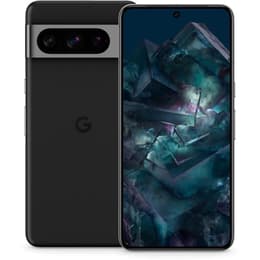


Google Pixel 8 Pro Vs iPhone 15 Plus

Google Pixel 8 Pro
Google Pixel 8 Pro
Starting at

Refurbished price:£253.00

Versus £960.91 new

See options
iPhone 15 Plus
iPhone 15 Plus
Starting at

Refurbished price:£345.00

Versus £799.00 new

See options

Ratings

The Google Pixel 8 Pro (released October 2023) and the iPhone 15 Plus (released September 2023) are contemporary large-screen smartphones, each offering a distinct user experience rooted in their respective operating systems. While both devices provide robust performance and advanced camera systems, the Pixel 8 Pro emphasizes AI-driven features and extended software support, whereas the iPhone 15 Plus focuses on a streamlined user interface and strong battery endurance.

Scores

Durability

When considering the long-term viability of these devices, their release timelines and software support policies are key differentiators.

  • Release Timeline: Both devices were released in late 2023, making them current-generation options. The iPhone 15 Plus launched in September 2023, followed by the Google Pixel 8 Pro in October 2023.
  • OS Support Duration: Google has committed to an extensive seven years of OS, security, and feature updates for the Pixel 8 Pro, extending support until October 2030. Apple typically provides five to six years of major iOS updates for its iPhones, with security updates often extending longer. The iPhone 15 Plus is expected to receive updates until approximately 2035, based on historical patterns.
  • Repairability: The iPhone 15 series initially received a repairability score of 4 out of 10, which was later promoted to 7 out of 10 due to improvements in repair processes and parts availability. Information regarding the Pixel 8 Pro's repairability score is less consistently available, though Google has committed to making parts available for seven years to match its software commitment.

Year of Release

2023

2023

Compatible with latest Update

Yes

Yes

Foldable

No

No

Performance

Both smartphones offer capable performance for daily tasks, but they approach processing power and efficiency with different architectures.

  • Processor Capabilities: The Google Pixel 8 Pro features a current-generation processor designed with a strong emphasis on artificial intelligence and machine learning tasks, contributing to advanced computational photography and on-device AI features. The iPhone 15 Plus utilizes a powerful processor from the previous generation, known for its efficiency and robust performance across a wide range of applications and gaming.
  • Multitasking and Responsiveness: The Pixel 8 Pro is equipped with 12GB of RAM, which supports smooth multitasking and handling of demanding applications. The iPhone 15 Plus comes with 6GB of RAM, and its optimized operating system ensures efficient app management and overall system responsiveness.
  • Battery Behavior: The iPhone 15 Plus is noted for its extended battery life, with users often reporting it can last through a full day of heavy use and potentially two days with lighter usage. The Pixel 8 Pro, with its larger battery capacity, also offers strong all-day battery performance, though some users have noted it can get warm during intensive tasks or on 5G networks, which can impact battery drain.

Memory (GB)

12 GB

6 GB

Screen quality

The visual experience on both devices is characterized by large, vibrant displays, though with some key differences in technology and refresh rates.

  • Display Technology and Clarity: The Google Pixel 8 Pro features a 6.7-inch Super Actua LTPO OLED display with a resolution of 2992 x 1344 pixels, offering sharp images and deep blacks. The iPhone 15 Plus also has a 6.7-inch Super Retina XDR OLED display with a resolution of 2796 x 1290 pixels, providing excellent color accuracy and contrast.
  • Brightness Levels: The Pixel 8 Pro can reach a peak brightness of up to 2400 nits, making it highly visible in bright outdoor conditions. The iPhone 15 Plus offers a peak outdoor brightness of up to 2000 nits, ensuring good readability in various lighting environments.
  • Refresh Rate: A notable difference is the refresh rate; the Pixel 8 Pro features an adaptive refresh rate that can scale from 1Hz to 120Hz, providing smooth scrolling and animations while conserving power. The iPhone 15 Plus has a standard 60Hz refresh rate, which is consistent for everyday use but may not appear as fluid as higher refresh rate displays.

Resolution

1344 x 2992

1290 x 2796

Screen type

LTPO OLED

Super Retina XDR OLED

Audiovisual

Both smartphones are equipped with advanced camera systems designed to capture high-quality photos and videos, each with its own strengths.

  • Camera System Configuration: The Google Pixel 8 Pro boasts a versatile triple-camera setup, including a 50MP main sensor, a 48MP ultrawide lens, and a 48MP telephoto lens with 5x optical zoom. The iPhone 15 Plus features a dual-camera system with a 48MP main camera and a 12MP ultrawide camera, utilizing a quad-pixel sensor for enhanced detail and a 2x telephoto option enabled by the main sensor.
  • Photography Performance: The Pixel 8 Pro is praised for its computational photography, delivering consistent and detailed images, particularly with its AI-driven features like Magic Eraser and Best Take. The iPhone 15 Plus also excels in capturing crisp images with good color reproduction, with improvements in low-light performance and next-generation portraits.
  • Video Recording Quality: Both devices offer high-quality video recording capabilities. The iPhone 15 Plus provides excellent video stabilization and clean detail, though features like ProRes are reserved for Pro models. The Pixel 8 Pro also records 4K video at various frame rates, with its video stabilization generally performing well, though some users note it can be less stable at higher zoom levels.

Main camera

50 megapixels

48 megapixels

Front camera

10.5 megapixels

12 megapixels

Miscellaneous

Beyond core performance and display, several practical elements contribute to the overall user experience of these devices.

  • Connectivity: The Google Pixel 8 Pro supports Wi-Fi 7 and Bluetooth 5.3, offering advanced wireless connectivity. The iPhone 15 Plus includes Wi-Fi 6 and Bluetooth 5.3. Both devices support 5G connectivity.
  • Port Type: The Pixel 8 Pro features a USB-C 3.2 port, allowing for faster data transfer speeds. The iPhone 15 Plus has transitioned to a USB-C 2.0 port, which offers universal compatibility but with slower data transfer rates compared to its Pro counterparts.
  • Biometric Security: The Pixel 8 Pro offers both an in-display fingerprint sensor and face unlock for secure access. The iPhone 15 Plus relies on Face ID for biometric authentication.
  • Build Materials and Dimensions: The Pixel 8 Pro features Gorilla Glass Victus 2 on the front and back with an aluminum frame, weighing 213g. The iPhone 15 Plus uses Ceramic Shield on the front and color-infused glass on the back with an aluminum frame, weighing 201g. The iPhone 15 Plus is slightly thinner and lighter.

Weight

213 g

201 g

Screen size (in)

6.7

6.7

Mobile network

5G

5G

SIM card

Physical SIM + eSIM

Physical SIM + eSIM

Carrier compatibility

Unlocked

Unlocked

User feedback for the Google Pixel 8 Pro often highlights its exceptional camera capabilities, particularly its computational photography features and AI integrations. Many users appreciate the clean Android experience and the extended software support commitment from Google. However, some criticisms have surfaced regarding potential heating during intensive use and occasional modem performance issues.

The iPhone 15 Plus receives consistent praise for its outstanding battery life, often cited as one of the best among current smartphones, and its vibrant display. Users also value the seamless integration within the Apple ecosystem and the reliable performance for everyday tasks. A common point of discussion, however, is the standard 60Hz refresh rate, which some users accustomed to higher refresh rates on other devices find less fluid.

Users prioritizing advanced AI features, a versatile camera system with strong zoom capabilities, and a long-term software commitment may find the Google Pixel 8 Pro well-suited to their needs. Conversely, users who value exceptional battery endurance, a highly intuitive operating system, and a robust ecosystem for media consumption and communication may lean toward the iPhone 15 Plus. Both devices offer a quality-assured refurbished option, providing an eco-friendly alternative for consumers seeking reliable technology. The choice between them ultimately depends on individual preferences for operating system, specific feature priorities, and overall user experience.


See all articles

Our recent comparisons