Compare models
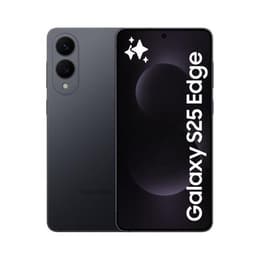
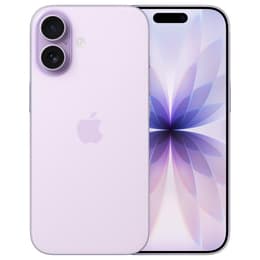
Galaxy S25 Edge Vs iPhone 17
- 1-year minimum warranty
- Free delivery on all items
- Free 30-day returns
Differences at a glance
The Samsung Galaxy S25 Edge (2025) and the Apple iPhone 17 (2025) are premium smartphones positioned at the forefront of their respective platform ecosystems. While both devices deliver high-end mobile experiences, they differ fundamentally in form factor, operating system environment, and everyday capability. The Galaxy S25 Edge runs on Android with Samsung's custom interface, focusing on a slim chassis and high-resolution imaging, whereas the iPhone 17 operates on iOS within Apple's tightly integrated hardware and software ecosystem.
Available Models
Colour
Storage
Scores
Durability
Evaluating the lifespan and durability of these devices involves examining their software update roadmaps, build materials, and expected structural longevity for daily use.
- Software support timelines: Both manufacturers provide long-term software update commitments, though Apple typically maintains firmware updates for a slightly broader window, while Samsung supports its flagship models with extensive operating system upgrades and security patches.
- Build resilience: The Galaxy S25 Edge utilizes a titanium frame paired with reinforced front and rear glass sheets, while the iPhone 17 features a robust aluminum and glass construction with specialized drop protection layers.
- Practical longevity: Both smartphones feature robust internal components and generous memory capacities that ensure they remain responsive and reliable over several years of standard use.
Year of Release
2025
2025
OS
Android
iOS
Foldable
No
No
Performance
Performance capabilities dictate how smoothly each device handles intensive multitasking, gaming, and everyday utility tasks under varied user demands.
- System responsiveness: Both devices handle demanding applications, heavy multitasking, and immersive mobile gaming smoothly, maintaining high frame rates and quick load times without noticeable stutter.
- Memory and storage management: The Galaxy S25 Edge provides ample memory headroom for background tasks, while the iPhone 17 relies on deep hardware-software optimization to maintain efficient multitasking workflows.
- Power efficiency: Battery endurance varies under heavy load conditions, with both units requiring daily charging for intensive use cases like navigation or continuous video streaming.
Screen quality
Display characteristics define visual clarity, outdoor visibility, and media consumption comfort across different lighting environments.
- Display technology: Both models feature advanced organic light-emitting diode panels that deliver deep contrast levels, rich color reproduction, and wide viewing angles.
- Brightness and outdoor visibility: High peak brightness capabilities ensure that on-screen content remains legible under direct sunlight, while adaptive refresh rates optimize smoothness during scrolling and gaming.
- Viewing dimensions: The Galaxy S25 Edge offers a slightly larger screen real estate suited for media consumption, whereas the iPhone 17 balances a compact footprint with high pixel density for sharp text rendering.
Resolution
1440x3120
2622x1206
Audiovisual
Imaging hardware and audio-visual output shape the multimedia capabilities for capturing memories and consuming entertainment.
- Primary photography: The Galaxy S25 Edge emphasizes a very high-resolution main sensor for detailed cropping and sharp captures, while the iPhone 17 utilizes dual high-resolution lenses optimized for balanced color fidelity and low-light performance.
- Video recording: Both smartphones offer stable video capture modes with high dynamic range and clear audio recording through multi-microphone arrays.
- Media audio output: Integrated stereo speakers on both devices provide balanced sound reproduction suitable for casual video viewing and hands-free calls.
Miscellaneous
Practical daily usability elements encompass connectivity standards, physical dimensions, security features, and port configurations.
- Connectivity and ports: Both devices support modern fifth-generation cellular networks, advanced Wi-Fi standards, and universal charging ports for rapid power replenishment.
- Security and authentication: The Galaxy S25 Edge offers facial recognition alongside an in-display biometric sensor, whereas the iPhone 17 relies on secure three-dimensional facial mapping technology.
- Ergonomics: The Galaxy S25 Edge focuses on an exceptionally thin profile and lightweight titanium build, while the iPhone 17 maintains a classic, balanced rectangular slate form factor.
Weight
163 g
177 g
Screen size (in)
6.7
6.3
Mobile network
5G
5G
SIM card
Dual Physical SIM + eSIM
Physical SIM + eSIM
Carrier compatibility
Unlocked
Unlocked
Connector
USB-C
USB-C
What the community thinks
User feedback from online communities highlights distinct preferences for each device based on platform loyalty and physical design priorities. Owners of the Galaxy S25 Edge frequently praise its ultra-slim profile, vibrant large display, and detailed main camera output, though some note that battery endurance can be stretched thin under heavy workloads. Conversely, iPhone 17 users appreciate the smooth software integration, reliable battery management, and balanced dual-camera versatility, while occasionally pointing out limitations in hardware customization.
Users prioritizing a larger screen workspace, Android versatility, and a lightweight frame may prefer the Galaxy S25 Edge, while users invested in the iOS ecosystem who value long-term software continuity and balanced daily ergonomics will lean toward the iPhone 17. For buyers seeking a quality-assured refurbished option, exploring eco-friendly alternatives on Back Market can provide a reliable path to owning either device.