

Galaxy S23+ Vs Google Pixel 9

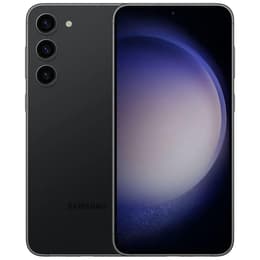
Galaxy S23+
Galaxy S23+
Starting at

Refurbished price:£257.00

Versus £1,199.99 new

See options
Google Pixel 9
Google Pixel 9
Starting at

Refurbished price:£331.00

Versus £892.46 new

See options

Ratings

The Samsung Galaxy S23 Plus, released in February 2023, and the Google Pixel 9, launched in August 2024, represent two distinct approaches to the premium smartphone experience. While both devices operate on the Android platform, they offer different strengths in terms of hardware, software philosophy, and overall user experience. The primary differentiators lie in their release timelines, camera systems, and Google's emphasis on artificial intelligence integration in the Pixel 9.

Scores

Durability

The longevity of a smartphone is influenced by its release timeline, software support, and physical durability. These factors determine how long a device remains functional and receives essential updates.

  • Release Timeline and OS Support: The Galaxy S23 Plus, released in February 2023, launched with Android 13 and is promised 4 years of operating system updates and 5 years of security updates, with support expected to end around 2028. [3] In contrast, the Google Pixel 9, released in August 2024 with Android 14, offers a significantly longer support period, promising 7 years of OS, security, and Pixel Feature Drop updates. [21, 25] This means the Pixel 9 will receive software support for several years beyond the S23 Plus.
  • Repairability and Durability: Both devices feature robust builds designed for everyday use. The Galaxy S23 Plus incorporates an Armor Aluminum frame and Corning Gorilla Glass Victus 2 on both the front and back, along with an IP68 rating for dust and water resistance. [3, 5, 6, 19] The Pixel 9 also utilizes Gorilla Glass Victus 2 for its display and has an IP68 rating, with a design that includes flat sides. [16, 23, 26, 33] Both are built to withstand typical daily wear and tear, though the Pixel 9's flat-sided design might be preferred by some for its perceived durability. [33]
  • Expected Practical Lifespan: Given the extended software support, the Pixel 9 is designed to remain current and secure for a longer period, making it a suitable choice for users who prioritize maximum software longevity. The Galaxy S23 Plus, while still receiving updates for a considerable time, will reach its end-of-support earlier.

Year of Release

2023

2024

Compatible with latest Update

Yes

Yes

OS

Android

Android

Foldable

No

No

Performance

Performance in modern smartphones is about more than just raw speed; it encompasses how smoothly the device handles daily tasks, manages power, and responds to user input.

  • Processor Capabilities: The Galaxy S23 Plus is powered by a processor optimized for Samsung devices, which handles demanding applications and multitasking efficiently. [2, 3, 5, 6] The Pixel 9 features Google's custom-designed processor, engineered to excel in artificial intelligence tasks and deliver a responsive user experience, particularly with Google's integrated AI features. [1, 9, 21, 25] Both processors are capable of running current applications and games smoothly.
  • Battery Behavior: Both devices are equipped with a 4700 mAh battery. [4, 13, 15, 25] User experiences with the Galaxy S23 Plus often report it lasting a full day, and sometimes even two days with lighter usage. [11, 29] The Pixel 9 also generally provides good all-day battery life, with some users noting significant improvements over previous Pixel generations. [14, 20, 21, 31]
  • Storage and Responsiveness: The Galaxy S23 Plus offers storage options starting from 256GB, with a 512GB option also available. [5, 6, 15] The Pixel 9 comes with 12GB of RAM and storage options including 128GB and 256GB. [9, 13, 25, 26] Both devices provide ample storage for most users and maintain overall system responsiveness for everyday tasks and multitasking.

Memory (GB)

8 GB

12 GB

Screen quality

The display is a primary interface for smartphone interaction, and differences in technology, resolution, and brightness can significantly impact the viewing experience.

  • Display Technology and Clarity: The Galaxy S23 Plus features a 6.6-inch Dynamic AMOLED 2X display, offering vibrant colors and deep blacks. [2, 3, 6, 19] The Pixel 9 comes with a 6.3-inch Actua OLED display, also known for its color accuracy and contrast. [13, 25, 39] Both provide clear visuals for typical viewing, with the Pixel 9 having a slightly higher pixel density due to its smaller screen size. [39]
  • Brightness Levels: For outdoor visibility, the Galaxy S23 Plus can reach a peak brightness of 1750 nits. [2, 3, 5, 6] The Pixel 9's Actua display offers even higher peak brightness, reaching up to 2700 nits in certain conditions and 1800 nits for HDR content, which can enhance visibility in bright sunlight. [13, 25, 39]
  • Refresh Rate and Smoothness: Both phones feature a 120Hz refresh rate for smooth scrolling and fluid animations. The Galaxy S23 Plus has an adaptive refresh rate that can scale from 48Hz to 120Hz to optimize battery life. [5, 6] The Pixel 9's display switches between 60Hz and 120Hz, providing a smooth experience for most content. [13, 25, 39]

Resolution

1080 x 2340

1080 x 2424

Screen type

Dynamic AMOLED 2X

OLED

Audiovisual

Camera capabilities are a key consideration for many users, with both Samsung and Google offering distinct strengths in mobile photography.

  • Rear Camera Systems: The Galaxy S23 Plus is equipped with a versatile triple-camera system, including a 50MP main sensor with optical image stabilization, a 12MP ultrawide lens, and a 10MP telephoto lens offering 3x optical zoom. [2, 3, 6, 15] This setup provides flexibility for various shooting scenarios, including zoomed-in shots. The Pixel 9 features an advanced dual-rear camera system, comprising a 50MP wide camera and a 48MP ultrawide camera with Macro Focus. [9, 13, 22, 25] The Pixel 9 emphasizes computational photography and AI enhancements for image processing. [7, 10, 21, 22, 28]
  • Photography Performance: The Galaxy S23 Plus is noted for its improved low-light performance, referred to as 'Nightography,' and its ability to capture detailed images across its lenses. [5] The Pixel 9 is highly praised for its consistent image quality, particularly its HDR processing and AI-driven features that enhance photos and videos. [10, 21, 22, 28]
  • Video Recording and Front Camera: Both devices offer strong video recording capabilities. The Galaxy S23 Plus can record video at up to 8K resolution at 30 frames per second. [5] The Pixel 9 records video at up to 4K at 60 frames per second. [1, 10] For selfies, the Galaxy S23 Plus has a 12MP front camera, while the Pixel 9 features a 10.5MP front camera, both capable of producing clear self-portraits. [3, 9, 13, 15, 22]

Main camera

50 megapixels

50 megapixels

Front camera

12 megapixels

10.5 megapixels

Miscellaneous

Beyond the core features, several practical elements contribute to the overall user experience and daily convenience of a smartphone.

  • Connectivity and Ports: Both the Galaxy S23 Plus and the Pixel 9 support modern connectivity standards, including 5G and Wi-Fi. The Galaxy S23 Plus supports Wi-Fi 6, while the Pixel 9 includes Wi-Fi 7 and Bluetooth 5.3. [26, 32] Both devices utilize a USB-C port for charging and data transfer, and neither includes a traditional headphone jack. [4]
  • Dimensions and Handling: The Galaxy S23 Plus measures 157.8 x 76.2 x 7.6 mm and weighs 196g, offering a larger form factor. [6, 15, 32] The Pixel 9 is slightly more compact at 152.8 x 72.0 x 8.5 mm and weighs 198g. [1, 25] The choice between the two may depend on preference for screen size versus one-handed usability.
  • Security and Build Materials: Both phones prioritize security with advanced features. The Galaxy S23 Plus uses an ultrasonic in-screen fingerprint sensor. [3] The Pixel 9 is expected to feature an upgraded ultrasonic fingerprint scanner for faster and more secure unlocking. [26] Both devices feature durable glass and aluminum constructions, with the Galaxy S23 Plus using Armor Aluminum and Gorilla Glass Victus 2, and the Pixel 9 also featuring Gorilla Glass Victus 2. [3, 5, 6, 16, 23, 26, 33]

Weight

196 g

198 g

Screen size (in)

6.6

6.3

Mobile network

5G

5G

SIM card

Dual Physical SIM + eSIM

Physical SIM + eSIM

Carrier compatibility

Unlocked

Unlocked

Connector

USB-C

USB-C

When evaluating the Samsung Galaxy S23 Plus and the Google Pixel 9, user feedback highlights distinct strengths for each device. Users often praise the Galaxy S23 Plus for its consistent performance, vibrant display, and reliable battery life, with many reporting it comfortably lasting a full day of use. [11, 29] Its versatile camera system, including a dedicated telephoto lens, is also a frequent point of appreciation for those who value optical zoom. [2, 3, 6]

The Google Pixel 9, on the other hand, receives significant acclaim for its exceptional camera capabilities, particularly its computational photography and integrated AI features that enhance image quality and offer unique editing tools. [7, 10, 21, 22, 28] Its extended software support policy is a major draw for users who prioritize long-term updates and security. [21, 25] While some early discussions on forums mentioned battery life concerns for the Pixel 9, many users have reported good all-day endurance. [14, 20, 21, 31]

Users prioritizing a larger display, a dedicated telephoto camera, and a slightly more established ecosystem might find the Galaxy S23 Plus well-suited to their needs. Its robust build and consistent performance make it a reliable daily driver. Conversely, users who value cutting-edge computational photography, a longer software support window, and deep integration of artificial intelligence will likely lean towards the Google Pixel 9. Its focus on a pure Android experience and AI-driven features offers a distinct advantage for those who appreciate Google's software innovations.

Both devices offer compelling features, and choosing between them often comes down to individual priorities. For those considering a quality-assured refurbished option, both the Galaxy S23 Plus and the Pixel 9 can be found, providing a sustainable choice for acquiring a high-performance smartphone.


See all articles

Our recent comparisons