Galaxy S23 FE Vs Galaxy S25

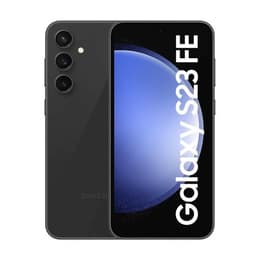
Galaxy S23 FE
Galaxy S23 FE
Starting at

Refurbished price:£175.00

Versus £605.75 new

See options
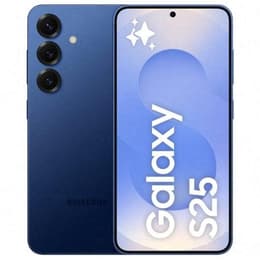
Galaxy S25
Galaxy S25
Starting at

Refurbished price:£435.00

Versus £766.13 new

See options

Ratings

The Samsung Galaxy S23 FE, released in late 2023, and the Samsung Galaxy S25, launched in early 2025, represent different tiers within Samsung's smartphone lineup. While both devices operate on the Android platform with Samsung's One UI, the Galaxy S25 introduces a newer generation of hardware and an extended software support policy. Key distinctions lie in their processing power, display technology, and overall software longevity, catering to users with varying priorities for performance and long-term use.

Scores

Durability

The practical lifespan of a smartphone is significantly influenced by its release timeline and the manufacturer's commitment to software updates.

  • Release and Software Support: The Galaxy S23 FE was released in October 2023, launching with Android 13 and receiving subsequent updates to Android 16 by late 2025. Samsung typically provides 4 generations of OS updates and 5 years of security updates for its S23 series devices, meaning support for the S23 FE is expected to conclude around late 2028 for OS updates and late 2029 for security patches. [22, 24, 27, 30] In contrast, the Galaxy S25, released in February 2025 with Android 15, benefits from Samsung's extended policy of 7 years of both OS and security updates, projecting support until early 2032. [1, 2, 13, 29]
  • Durability Features: Both devices offer a degree of physical resilience. The Galaxy S23 FE features Corning Gorilla Glass 5 on both its front and back panels, along with an IP68 rating for dust and water resistance. [4, 5, 10, 22] The Galaxy S25 elevates this with Corning Gorilla Glass Victus 2 for its display and back, also maintaining an IP68 rating. [1, 8]
  • Repairability and Longevity: While specific repairability scores can vary, the newer Galaxy S25's extended software support inherently contributes to a longer practical lifespan for users who prioritize up-to-date features and security. The S25's more advanced build materials may also offer enhanced resistance to daily wear and tear.

Year of Release

2023

2025

OS

Android

Android

Foldable

No

No

Performance

The core performance of a smartphone impacts everything from app responsiveness to handling demanding tasks.

  • Processing Power: The Galaxy S23 FE is powered by either an Exynos 2200 or a Snapdragon 8 Gen 1 processor, depending on the region. [4, 5, 17] While capable for everyday use, some users have reported that the Exynos variant can experience heating and occasional performance throttling during intensive tasks like extended gaming or heavy camera use. [6, 15] The Galaxy S25 features a newer, custom-tuned Snapdragon 8 Elite processor, which is designed to offer significant performance improvements and greater power efficiency across all global variants. [1, 2, 12, 29]
  • Multitasking and Responsiveness: The Galaxy S23 FE comes with 8GB of RAM, which is sufficient for most multitasking scenarios. [3, 5, 22] The Galaxy S25, however, is equipped with 12GB of RAM as standard across all models, providing more headroom for running numerous applications simultaneously and ensuring smoother transitions between them. [1, 2, 8, 29] This increased RAM, combined with the more powerful processor, contributes to a noticeably more fluid and responsive user experience, particularly for power users.
  • Storage Options: Both devices offer internal storage options typically starting at 128GB and extending to 256GB. The Galaxy S25 also has a 512GB option. Neither model supports expandable storage via a microSD card. [1, 2, 3, 5, 8, 22]

Memory (GB)

8 GB

12 GB

Screen quality

The display is a primary interface for smartphone interaction, and both devices offer vibrant viewing experiences with some notable differences.

  • Display Technology and Clarity: Both the Galaxy S23 FE and Galaxy S25 feature Dynamic AMOLED 2X displays, known for their deep blacks and vibrant color reproduction. Both offer a Full HD+ resolution (2340x1080 pixels), providing sharp and clear visuals for text and media. [1, 2, 4, 5, 7, 8, 10, 12, 22, 29]
  • Brightness and Outdoor Visibility: The Galaxy S23 FE achieves a peak brightness of 1450 nits, which allows for decent visibility in most outdoor conditions. [3, 5, 10] The Galaxy S25 significantly enhances this with a peak brightness of 2600 nits, ensuring superior readability even under direct sunlight. [1, 2, 8, 12, 29]
  • Refresh Rate and Size: Both phones feature an adaptive 120Hz refresh rate, which contributes to smooth scrolling and fluid animations. [4, 5, 7, 10, 12, 22, 29] The Galaxy S23 FE has a 6.4-inch display, offering a slightly larger viewing area. [3, 4, 5, 7, 10, 22] The Galaxy S25 comes with a more compact 6.2-inch display. [1, 2, 8, 11, 12, 29]

Resolution

1080 x 2340

1080x2340

Screen type

Dynamic AMOLED 2X

Dynamic LTPO AMOLED 2X

Audiovisual

Both smartphones are equipped with versatile camera systems designed to capture a range of photographic and videographic content.

  • Rear Camera Systems: The Galaxy S23 FE features a triple-camera setup on the rear: a 50MP main sensor with optical image stabilization (OIS), a 12MP ultrawide lens, and an 8MP telephoto lens capable of 3x optical zoom. [3, 4, 5, 7, 9, 10, 14, 22] The Galaxy S25 also sports a triple-camera array, comprising a 50MP wide-angle main camera, a 12MP ultrawide camera with a 120-degree field of view, and a 10MP telephoto camera offering 3x optical zoom. [1, 2, 8, 11]
  • Front Camera and Video Capabilities: For selfies and video calls, the Galaxy S23 FE includes a 10MP front-facing camera. [4, 10, 22] The Galaxy S25 upgrades this to a 12MP front-facing camera. [1, 2, 8, 11] Both devices are capable of recording video at up to 8K resolution, with the S23 FE supporting 24fps and the S25 supporting 30fps, offering slightly smoother high-resolution video capture. [1, 4, 7, 10]
  • Image Processing and Features: The Galaxy S25 benefits from Samsung's newer ProVisual Engine, an AI-based imaging system designed to enhance image quality through features like adaptive scene optimization and noise reduction. [1] While the S23 FE also offers strong camera performance, particularly in daylight, some user reviews note that Samsung's typical color saturation can be present. [5, 10]

Miscellaneous

Beyond the core components, several practical elements contribute to the overall user experience and device utility.

  • Connectivity and Ports: Both the Galaxy S23 FE and Galaxy S25 support 5G connectivity, along with modern Wi-Fi standards and Bluetooth for wireless connections. [1, 11, 22] The S23 FE uses a USB Type-C port, and the S25 also features a USB Type-C port. [11, 14]
  • Biometric Security: For secure unlocking, both smartphones incorporate an in-display fingerprint sensor. The Galaxy S25 also includes an ultrasonic in-screen fingerprint sensor. [1, 5]
  • Design and Handling: The Galaxy S23 FE has dimensions of approximately 158.0 x 76.5 x 8.2 mm and weighs 209g. [4, 17] The Galaxy S25 is a more compact device, measuring approximately 146.8 x 70.6 x 7.1 mm and weighing 162g, making it noticeably lighter and potentially easier for one-handed use. [1, 11] The S23 FE features an aluminum frame and Gorilla Glass 5, while the S25 also uses an aluminum body with Gorilla Glass Victus 2 for enhanced durability. [1, 4, 5]

Weight

209 g

162 g

Screen size (in)

6.4

6.2

Mobile network

5G

5G

SIM card

Dual Physical SIM

Physical SIM + eSIM

Carrier compatibility

Unlocked

Unlocked

The Samsung Galaxy S23 FE and Galaxy S25 cater to slightly different user needs, primarily distinguished by their release timing and the advancements introduced in the newer model. Users often praise the Galaxy S23 FE for its capable camera system and vibrant display, offering a solid experience for everyday tasks and media consumption. [5, 10] However, common criticisms for the S23 FE frequently revolve around its battery life, with some users reporting it struggles to last a full day, and occasional heating issues, particularly with the Exynos processor variant. [6, 9, 15, 19]

The Galaxy S25, as a newer generation device, generally receives acclaim for its significantly improved processor, which delivers smoother performance and better thermal management. Its brighter display and extended software support are also strong points. While specific user feedback on the S25 is still accumulating, its enhanced specifications and longer update commitment are designed to address common concerns about device longevity and sustained performance.

Users prioritizing the absolute latest performance, a more compact design, and the longest possible software support will find the Galaxy S25 well-suited to their needs. Its advanced processor and extended update policy make it a strong choice for those who keep their devices for several years. Conversely, users who value a slightly larger screen and a capable camera system for general use, and who may not require the very latest processing power or the longest software support, might find the Galaxy S23 FE to be a practical option. For those considering a quality-assured refurbished option, both models offer an eco-friendly alternative to purchasing new, allowing for informed and sustainable choices.

See all articles

Our recent comparisons