
Galaxy S21 Ultra 5G Vs Xiaomi Redmi Note 11 Pro 5G

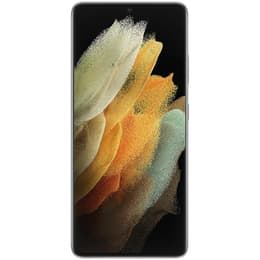
Galaxy S21 Ultra 5G
Galaxy S21 Ultra 5G
Starting at

Refurbished price:£186.00

Versus £1,800.00 new

See options
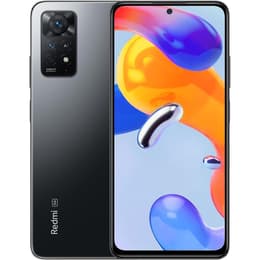
Xiaomi Redmi Note 11 Pro 5G
Starting at

Refurbished price:£102.00

Versus £599.00 new

See options

Ratings

The Samsung Galaxy S21 Ultra 5G, released in January 2021, and the Xiaomi Redmi Note 11 Pro 5G, launched in January 2022, are both smartphones offering 5G connectivity. While the Galaxy S21 Ultra 5G was positioned as a premium flagship device at its release, the Redmi Note 11 Pro 5G aimed to deliver a strong feature set in a more accessible package. Both devices run on the Android operating system, but they cater to different user expectations regarding performance, camera capabilities, and overall user experience.

Scores

Durability

When considering the long-term usability of these devices, several factors come into play, including their release timelines, software support, and physical durability.

  • Release Timeline and Software Support: The Galaxy S21 Ultra 5G, being released in early 2021, has already received several major Android updates, moving from Android 11 at launch to Android 14. Samsung typically provides four generations of Android OS updates and five years of security updates for its flagship devices. The Redmi Note 11 Pro 5G, launched a year later in early 2022 with Android 11, generally receives fewer major OS updates, often around two years, which means its software support window will close sooner than the S21 Ultra 5G's.
  • Physical Durability: The Galaxy S21 Ultra 5G features Corning Gorilla Glass Victus on both its front and back, along with an aluminum frame, offering robust protection against drops and scratches. It also boasts an IP68 rating for dust and water resistance, meaning it can withstand submersion in up to 1.5 meters of water for 30 minutes. The Redmi Note 11 Pro 5G uses Corning Gorilla Glass 5 for its display and has an IP53 rating, providing protection against dust and splashes but not full water immersion.
  • Expected Practical Lifespan: Users prioritizing extended software longevity and higher-grade physical protection may find the Galaxy S21 Ultra 5G to be a more suitable option for long-term use. The Redmi Note 11 Pro 5G, while durable for everyday use, may see its software support end sooner, potentially impacting its usability for those who prefer the latest Android features and security patches.

Year of Release

2021

2022

Compatible with latest Update

Yes

No

OS

Android

Android

Foldable

No

No

Performance

The performance of a smartphone is crucial for daily tasks, from navigating apps to demanding gaming sessions. These two devices offer different levels of processing power and memory configurations.

  • Processor Capabilities: The Galaxy S21 Ultra 5G is equipped with a high-end processor from its generation, enabling it to handle intensive applications, complex multitasking, and graphically demanding games with fluidity. Users can expect quick app loading times and smooth transitions between tasks. The Redmi Note 11 Pro 5G features a mid-range processor designed for efficient 5G connectivity and capable performance for everyday use. It manages common apps and web browsing smoothly, but may show limitations with very intensive gaming or heavy video editing.
  • RAM and Storage: The Galaxy S21 Ultra 5G typically comes with 12GB or 16GB of RAM, providing substantial headroom for keeping many applications open simultaneously without performance degradation. Storage options range from 128GB to 512GB, though it lacks expandable storage. The Redmi Note 11 Pro 5G offers 6GB or 8GB of RAM, which is sufficient for most multitasking needs. It provides 64GB or 128GB of internal storage, with the added flexibility of a microSD card slot for expansion up to 1TB.
  • Battery Behavior: Both phones house a 5000mAh battery. The Galaxy S21 Ultra 5G generally offers good battery life, often lasting a full day of moderate to heavy use, though its high-resolution, high-refresh-rate display and 5G connectivity can impact endurance. The Redmi Note 11 Pro 5G is noted for its strong battery endurance, with many users reporting it can last up to two days on a single charge with typical usage, partly due to its efficient processor. It also supports significantly faster 67W wired charging, capable of reaching 50% in about 15 minutes and a full charge in around 42 minutes. The S21 Ultra 5G supports 25W wired charging and 15W wireless charging.

Memory (GB)

12 GB

6 GB

Screen quality

The display is a primary interface for smartphone interaction, and both devices offer vibrant viewing experiences with distinct characteristics.

  • Display Technology and Resolution: The Galaxy S21 Ultra 5G features a 6.8-inch Dynamic AMOLED 2X display with a Quad HD+ resolution of 3200 x 1440 pixels, resulting in a very high pixel density for exceptionally sharp images and text. The Redmi Note 11 Pro 5G comes with a 6.67-inch Super AMOLED display offering a Full HD+ resolution of 1080 x 2400 pixels. While still clear, its pixel density is lower than the S21 Ultra 5G.
  • Refresh Rate and Brightness: Both phones offer a smooth 120Hz refresh rate for fluid scrolling and animations. The S21 Ultra 5G's refresh rate is adaptive, meaning it can scale down to conserve battery life when static content is displayed. The Redmi Note 11 Pro 5G's 120Hz refresh rate is not adaptive, requiring manual switching to 60Hz for battery savings. In terms of brightness, the S21 Ultra 5G can reach a peak of 1500 nits, ensuring excellent visibility even in bright outdoor conditions. The Redmi Note 11 Pro 5G offers a peak brightness of 1200 nits, which is also very good for outdoor use.
  • Viewing Experience: The Galaxy S21 Ultra 5G's higher resolution and adaptive refresh rate provide a more refined and power-efficient visual experience, particularly noticeable with high-quality media and detailed content. The Redmi Note 11 Pro 5G's AMOLED display still delivers vibrant colors and deep blacks, offering a satisfying viewing experience for general use and media consumption.

Resolution

1440 x 3200

1080 x 2400

Screen type

Dynamic AMOLED 2X

Super AMOLED

Audiovisual

Camera capabilities are a significant consideration for many users, and these two smartphones approach photography and videography with different strengths.

  • Rear Camera Systems: The Galaxy S21 Ultra 5G features a versatile quad-camera setup, including a 108MP main sensor, a 12MP ultrawide lens, and two 10MP telephoto lenses offering 3x and 10x optical zoom, respectively. This configuration allows for exceptional detail, wide-angle shots, and significant optical zoom capabilities. The Redmi Note 11 Pro 5G has a triple-camera system with a 108MP main sensor, an 8MP ultrawide lens, and a 2MP macro lens. Its main camera performs well in good lighting, capturing crisp images with vivid colors.
  • Low-Light and Video Performance: The S21 Ultra 5G excels in various lighting conditions, including low light, and offers advanced features like 8K video recording at 24fps and 4K at 60fps. Its multiple telephoto lenses provide flexibility for distant subjects. The Redmi Note 11 Pro 5G's main camera can produce decent night images with its dedicated low-light mode. However, its video recording is limited to 1080p at 30fps across all cameras, lacking 4K capability, which is a notable difference.
  • Front Camera and Audio: The Galaxy S21 Ultra 5G is equipped with a 40MP front camera, capable of detailed selfies and 4K video recording. The Redmi Note 11 Pro 5G has a 16MP front camera that delivers good image quality for selfies. Both devices offer stereo speakers for an enhanced media consumption experience. The Redmi Note 11 Pro 5G is also noted for good audio recording quality in videos.

Main camera

108 megapixels

108 megapixels

Front camera

40 megapixels

16 megapixels

Miscellaneous

Beyond core specifications, practical elements like connectivity, physical design, and additional features contribute to the overall user experience.

  • Connectivity and Ports: Both devices support 5G connectivity for fast mobile data speeds. The Galaxy S21 Ultra 5G supports Wi-Fi 6E and Bluetooth 5.2, offering advanced wireless capabilities. It features a USB-C 3.2 port for faster data transfer. The Redmi Note 11 Pro 5G supports Wi-Fi (ac) and Bluetooth 5.1. It includes a USB-C 2.0 port and retains a 3.5mm headphone jack, which is absent on the S21 Ultra 5G.
  • Sensors and Biometrics: The Galaxy S21 Ultra 5G features an ultrasonic in-display fingerprint sensor and supports face recognition. It also supports the S Pen, though the stylus is sold separately. The Redmi Note 11 Pro 5G uses a side-mounted fingerprint sensor and AI Face Unlock for security.
  • Weight, Dimensions, and Build Materials: The Galaxy S21 Ultra 5G measures 165.1 x 75.6 x 8.9 mm and weighs between 227-229 grams, giving it a substantial feel. Its build includes a premium aluminum frame and Gorilla Glass Victus on both sides. The Redmi Note 11 Pro 5G is slightly smaller and lighter at 164.2 x 76.1 x 8.1 mm and 202 grams. It features a glass back, often with a matte finish, and a polycarbonate frame.

Weight

227 g

202 g

Screen size (in)

6.8

6.67

Mobile network

5G

5G

SIM card

Dual Physical SIM + eSIM

Dual Physical SIM

Carrier compatibility

Unlocked

Unlocked

User feedback for the Samsung Galaxy S21 Ultra 5G often highlights its exceptional display, powerful camera system with versatile zoom capabilities, and robust performance for demanding tasks. Common praises include its vibrant screen clarity and smooth adaptive refresh rate, making it suitable for media consumption and productivity. Some users have noted that while its battery life is generally good, the high-resolution display and 5G usage can lead to faster drainage, and the lack of a charger in the box was a point of criticism for some. The in-display fingerprint sensor has also received mixed reviews regarding its reliability.

The Xiaomi Redmi Note 11 Pro 5G is frequently praised for its impressive battery life, often lasting up to two days, and its very fast 67W charging speed. Its bright AMOLED display with a 120Hz refresh rate is also a strong point, offering a smooth visual experience. Criticisms often revolve around its processor, which, while capable for daily use, may not satisfy users looking for top-tier gaming performance or 4K video recording capabilities, which are absent. Some users also noted that it launched with an older Android version compared to its release date.

Users prioritizing a premium, feature-rich experience with advanced camera capabilities, a higher-resolution display, and longer software support may prefer the Samsung Galaxy S21 Ultra 5G. Its robust build and comprehensive feature set make it well-suited for professionals, content creators, or anyone seeking a flagship-level device. Conversely, users who prioritize exceptional battery life, very fast charging, and a solid display for everyday tasks and media consumption, without needing the absolute highest performance or advanced video features, may find the Xiaomi Redmi Note 11 Pro 5G to be a more practical choice. It offers a strong balance of features for students or general users looking for a reliable daily driver. Both devices, when considered as quality-assured refurbished options, present an eco-friendly alternative for consumers.

See all articles

Our recent comparisons