Galaxy S21 Ultra 5G Vs Galaxy S9

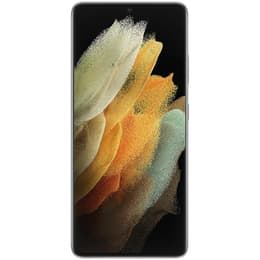
Galaxy S21 Ultra 5G
Galaxy S21 Ultra 5G
Starting at

Refurbished price:£187.00

Versus £1,800.00 new

See options
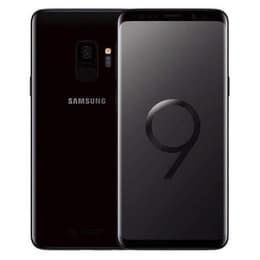
Galaxy S9
Galaxy S9
Starting at

Refurbished price:£77.00

Versus £449.00 new

See options

Ratings

The Samsung Galaxy S21 Ultra 5G, released in January 2021, and the Samsung Galaxy S9, launched in March 2018, represent different generations within Samsung's flagship smartphone series. While both devices offered premium experiences at their respective launches, the S21 Ultra 5G introduces significant advancements in camera technology, display capabilities, and overall processing power. Both run on the Android operating system, though with different versions and update lifecycles.

Scores

Durability

When considering the practical lifespan of these devices, their release timelines and software support are key differentiators.

  • Release and Software Support: The Galaxy S9, released in March 2018, launched with Android 8.0 Oreo and received major OS updates up to Android 10. Its official security updates concluded around April 2022. In contrast, the Galaxy S21 Ultra 5G, launched in January 2021 with Android 11, has received updates up to Android 14 and is expected to continue receiving security updates for a longer period, typically five years from its release. This means the S21 Ultra 5G offers a considerably longer period of official software and security support.
  • Physical Durability: Both models feature an IP68 rating for dust and water resistance, indicating protection against immersion in up to 1.5 meters of water for 30 minutes. However, the Galaxy S21 Ultra 5G incorporates Gorilla Glass Victus on both its front and back, offering enhanced drop and scratch resistance compared to the Gorilla Glass 5 found on the Galaxy S9.
  • Expected Practical Lifespan: The Galaxy S21 Ultra 5G, being a newer device with extended software support and more robust glass protection, is likely to offer a longer practical lifespan for users who prioritize the latest software features and security patches. The Galaxy S9, while still functional, will not receive new official Android versions or security updates, which can impact its long-term usability and security.

Year of Release

2021

2018

Compatible with latest Update

Yes

No

OS

Android

Android

Foldable

No

No

Performance

The performance capabilities of the Galaxy S21 Ultra 5G and Galaxy S9 reflect the advancements in mobile technology over several years.

  • Processing Power: The Galaxy S21 Ultra 5G is equipped with a more advanced 5nm octa-core processor, providing substantial improvements in speed and efficiency for demanding applications and multitasking. The Galaxy S9, featuring an octa-core processor that was a flagship for its time, handles everyday tasks smoothly but may show limitations with newer, more intensive applications or heavy multitasking.
  • Multitasking and Storage: The S21 Ultra 5G offers significantly more RAM, with options typically starting at 12GB and going up to 16GB, allowing for seamless switching between numerous applications. The Galaxy S9 comes with 4GB of RAM, which is sufficient for general use but can lead to more frequent app reloads when many applications are open simultaneously. Storage options on the S21 Ultra 5G range from 128GB to 512GB, while the S9 offered 64GB, 128GB, or 256GB, with the added flexibility of microSD card expansion up to 400GB, a feature not present on the S21 Ultra 5G.
  • Battery Behavior: The Galaxy S21 Ultra 5G features a larger 5000 mAh battery, designed to support its more powerful components and larger display, often providing extended usage throughout a day. The Galaxy S9 has a 3000 mAh battery, which for its time offered adequate power, but heavy users may find themselves needing to recharge more frequently, especially as the battery ages.

Memory (GB)

12 GB

4 GB

Screen quality

Both devices feature high-quality AMOLED displays, but the newer Galaxy S21 Ultra 5G incorporates more advanced display technology.

  • Display Technology and Clarity: The Galaxy S21 Ultra 5G boasts a 6.8-inch Dynamic AMOLED 2X display, offering a QHD+ resolution of 3200x1440 pixels. This results in exceptionally sharp images and vibrant colors. The Galaxy S9 features a 5.8-inch Super AMOLED display with a QHD+ resolution of 2960x1440 pixels, providing a clear and colorful viewing experience.
  • Brightness and Smoothness: The S21 Ultra 5G's display can reach a peak brightness of 1500 nits, making it highly visible even in bright outdoor conditions, and features an adaptive refresh rate up to 120Hz for smoother scrolling and more fluid animations. The Galaxy S9's display offers a peak brightness of around 864 to 1100 nits and a standard 60Hz refresh rate, which is still good for most viewing but less fluid than the S21 Ultra 5G.
  • Viewing Experience: The larger screen size of the S21 Ultra 5G provides a more expansive viewing area for media consumption and productivity. Both displays feature curved edges, contributing to an immersive visual experience.

Resolution

1440 x 3200

1440 x 2960

Screen type

Dynamic AMOLED 2X

Super AMOLED

Audiovisual

The camera systems on the Galaxy S21 Ultra 5G and Galaxy S9 reflect significant generational improvements in mobile photography.

  • Rear Camera System: The Galaxy S21 Ultra 5G features a versatile quad-camera setup, including a 108MP main sensor with optical image stabilization (OIS), a 12MP ultrawide lens, and two 10MP telephoto lenses offering 3x and 10x optical zoom, both with OIS. This allows for exceptional detail, wide-angle shots, and impressive zoom capabilities. The Galaxy S9 has a single 12MP main camera with OIS and a unique variable aperture (f/1.5-2.4), which adjusts to lighting conditions to capture more light in dim environments.
  • Photography Performance: The S21 Ultra 5G excels in capturing detailed images across various lighting conditions, with its high-resolution main sensor and dedicated telephoto lenses providing flexibility for different photographic scenarios, including improved low-light performance and a laser autofocus sensor to enhance focus speed and accuracy. The Galaxy S9's variable aperture was a notable innovation for its time, improving low-light photos, but it lacks the versatility and advanced computational photography of the S21 Ultra 5G.
  • Video Recording and Front Camera: The S21 Ultra 5G supports 8K video recording at 24fps and 4K at 60fps, along with a 40MP front camera for high-resolution selfies and video calls. The Galaxy S9 can record 4K video at 60fps and features an 8MP front camera. The S21 Ultra 5G also offers advanced video features like 8K Video Snap, allowing users to extract high-resolution stills from video.

Main camera

108 megapixels

12 megapixels

Front camera

40 megapixels

8 megapixels

Miscellaneous

Beyond core features, several practical elements distinguish the Galaxy S21 Ultra 5G and Galaxy S9.

  • Connectivity and Ports: The Galaxy S21 Ultra 5G supports 5G connectivity, Wi-Fi 6E, and Bluetooth 5.2, offering faster network speeds and more efficient wireless connections. It features a USB-C port for charging and data transfer. The Galaxy S9 supports 4G LTE, Wi-Fi 5, and Bluetooth 5.0. It also uses a USB-C port but notably includes a 3.5mm headphone jack, which is absent on the S21 Ultra 5G.
  • Biometrics and User Interaction: The S21 Ultra 5G incorporates an ultrasonic fingerprint sensor embedded under the display, along with face recognition for secure unlocking. It also supports the S Pen, offering additional functionality for note-taking and drawing, though the S Pen is sold separately. The Galaxy S9 features a rear-mounted fingerprint sensor, an iris scanner, and face recognition.
  • Physical Design and Handling: The Galaxy S21 Ultra 5G is a larger and heavier device, measuring 165.1 x 75.6 x 8.9 mm and weighing around 227-229 grams, which might impact one-handed use for some users. The Galaxy S9 is more compact and lighter at 147.7 x 68.7 x 8.5 mm and 163 grams, making it easier to handle and pocket.

Weight

227 g

163 g

Width

7,56 cm

6,87 cm

Height

16,15 cm

14,77 cm

Depth

0,89 cm

0,85 cm

Screen size (in)

6.8

5.8

Mobile network

5G

4G

SIM card

Dual Physical SIM + eSIM

Physical SIM

Carrier compatibility

Unlocked

Unlocked

Connector

USB-C

USB-C + Jack 3.5mm

User sentiment for the Galaxy S21 Ultra 5G often highlights its exceptional camera system, particularly its zoom capabilities and overall image quality, as a major strength. Users also frequently praise its vibrant and smooth display, along with its robust performance for demanding tasks. Some common feedback points include its larger size and weight, which can be a consideration for those preferring a more compact device.

For the Galaxy S9, users often appreciated its compact design, the inclusion of a 3.5mm headphone jack, and its camera's variable aperture, which was innovative for its time. However, common criticisms in the current landscape revolve around its aging software support, which has ended for major Android versions and security updates, and its battery life, which may not meet the demands of modern heavy usage.

Users prioritizing cutting-edge camera technology, a large, high-refresh-rate display, and long-term software support will find the Galaxy S21 Ultra 5G well-suited to their needs. It is ideal for those who engage in intensive multitasking, mobile gaming, or professional-level photography and videography. Conversely, users who prefer a more compact device, value a traditional headphone jack, and have more modest performance requirements for everyday communication and media consumption might still find the Galaxy S9 a suitable option, especially if considering a quality-assured refurbished option. The choice between these two devices ultimately depends on individual priorities regarding features, size, and longevity.
See all articles

Our recent comparisons